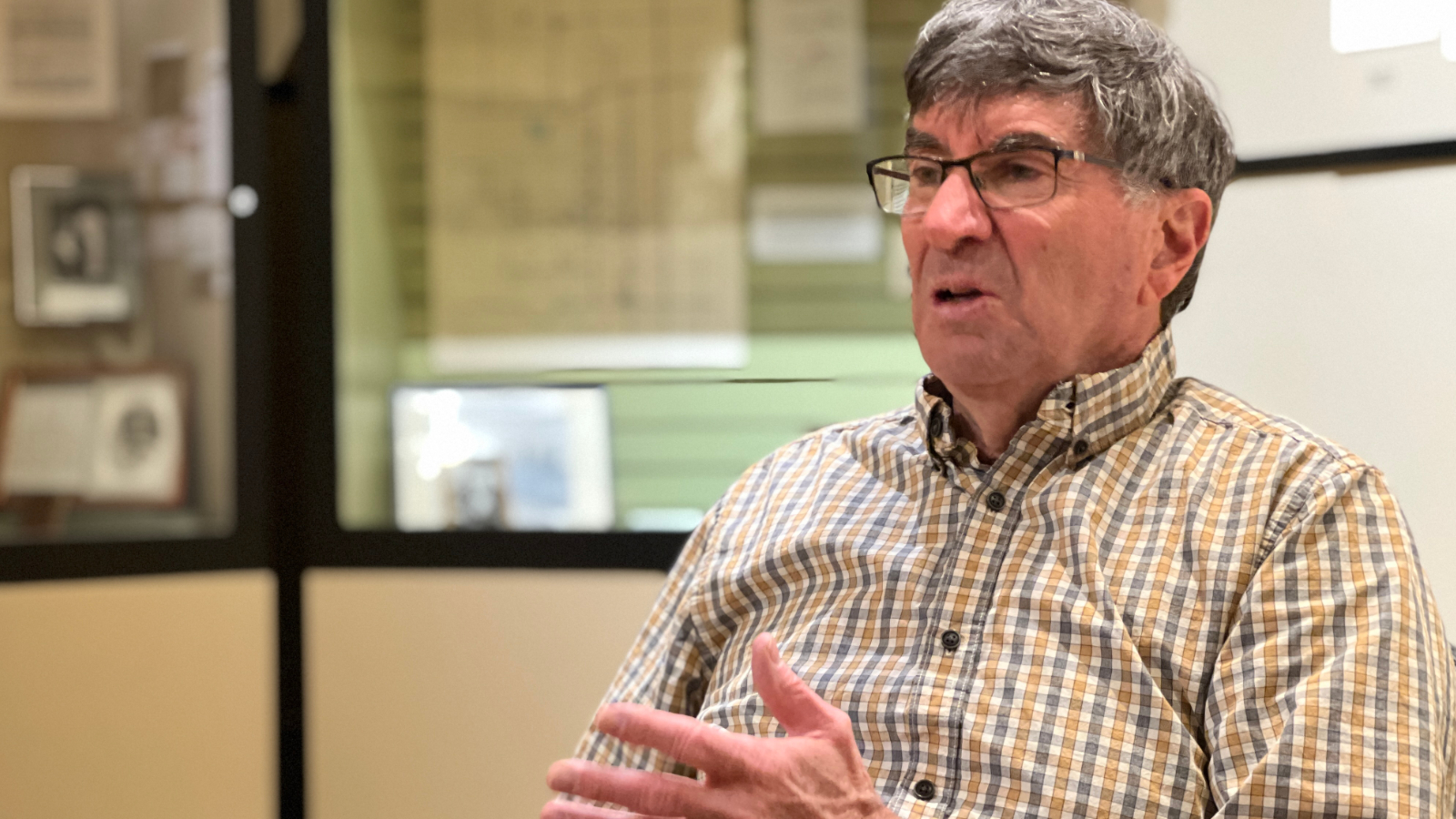
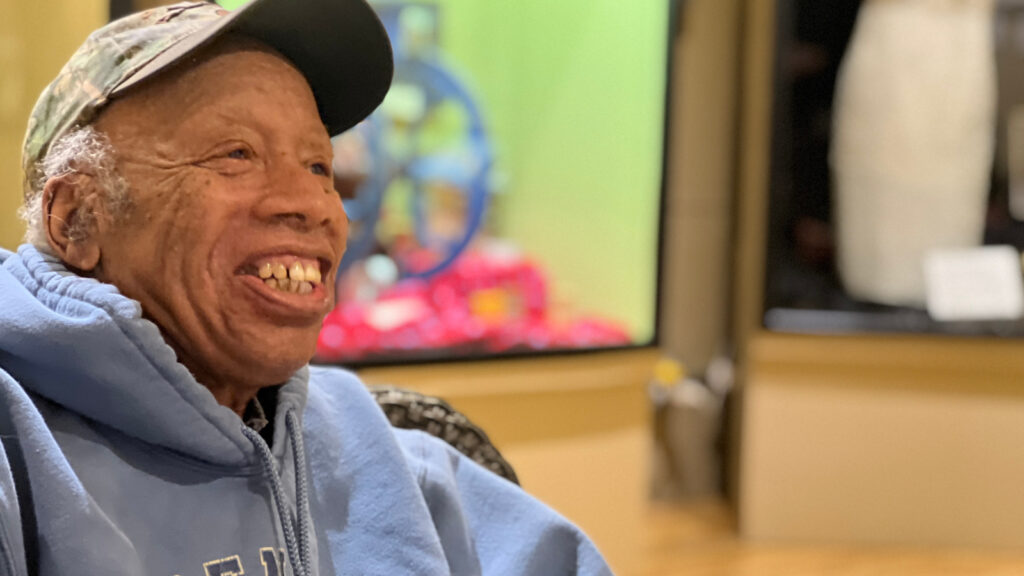
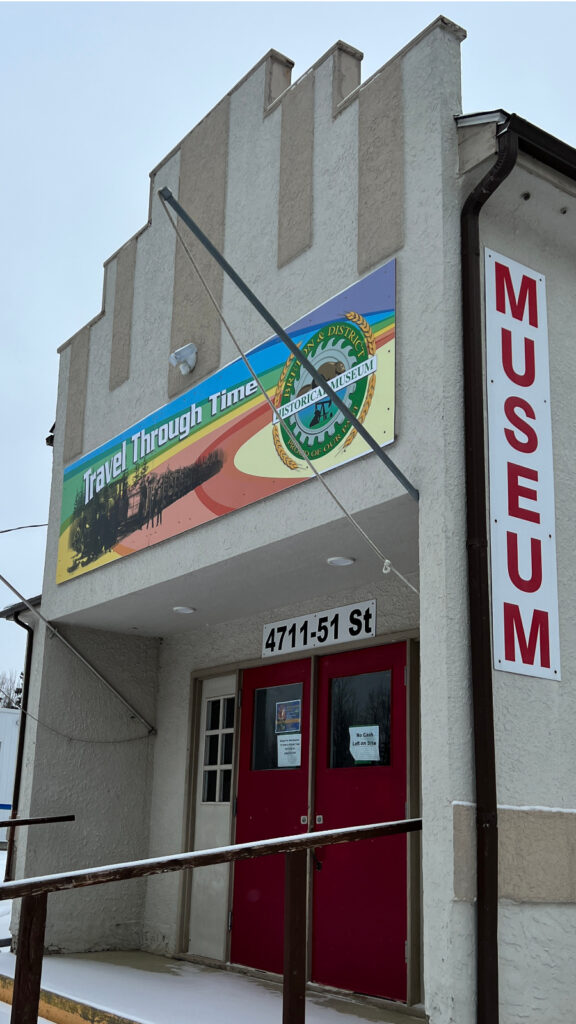
February is Black History Month. Local historian Allan Goddard has dedicated over three decades to keeping the memory of Keystone settlers and the history of Breton alive. We sat down with him for a question and answer session to get insight on his journey.
How long have you been involved in the Breton Historical Society?
I became involved with the Historical Society in the fall of 1987.That makes it about 35 years that I have been involved with the Historical Society. At that time Gwen Hooks was President of the Society. Over the years I held the positions of President and Treasurer on the Historical Society Board. For quite a number of years the Board served both the role of the governing body of the museum and also acted as administration to carry out the day-to-day activities of the museum. In about 2009 I resigned as a board member and took on the role of museum manager/curator. The museum was growing, which required more time to meet the administrative duties, also the level of expertise needed to meet the higher standards of the Recognized Museum Program required someone with at least a basic knowledge of museum standards. I have remained in this role since then.

Church of God
Drayton Valley Church of God. Our Worship Services usually include: traditional hymns, praise choruses, and contemporary songs, prayer, scripture, and a sermon.

Valley Dental
Facebook Email LinkedIn WhatsApp Get your perfect smile with specialists in service Click Here Add

Emmaus Lutheran Church
A community of faith passionately walking the road of life with the Lord Jesus. Phone: 780-542-5101, Drayton Valley Alberta

B.D. Lock and Key Ltd.
Share on facebook Facebook Share on email Email Share on linkedin LinkedIn Share on whatsapp

Drayton Valley & District Community Learning Association
Learn. Feel Good. Repeat. OUR VISION: Our community actively empowers adults to be successful through
What got you involved in the society in the first place?
I think it was an ad in maybe the Breton Booster, or just a poster around Breton that the Society was in the initial stages of starting a museum in Breton and looking for volunteers to help with establishing the museum. The Society had recently entered into a lease with the then Leduc School Division for the use of the two-room school located on the Breton Elementary school site. The school division had stopped using the building prior to this for school classes, I think the playschool had occupied the building at the last but must have moved from the building as the building was vacant when the historical Society leased it. It needed a lot of upgrades over the years. From reviewing some of the records and minutes of the Society it appears that the topic of establishing a museum had been talked about at various times previous to 1987.
I had always had an interest in history from the time I had been small. Both my father and my mother’s family had been longtime residents of the Carnwood and Moose Hill area. They both had homesteaded in the early 1920’s. As a young child, I can remember asking my mom to tell me about the “olden days”. So when this opportunity came with the Breton museum I thought here is a cute little project that I can volunteer a couple hours a month to help them out. I can paint a wall, do minor carpentry, well it has taken on a life of its own in the years since then. I didn’t know anything about what it took to operate a museum… none of the people involved did. It was a steep learning curve for everyone. It has become clear over the years/decades since then that there is much more to running a museum than putting some old items out in a cabinet or on a shelf for people to look at to be a museum. It’s about having the artifacts help tell a story.
How has black history impacted the Village of Breton and the place it has in Alberta’s history?
The Board of the Society, soon after establishing the museum,received some advice from the Historic Resource’s Branch of the Alberta government about starting a museum. One of the things they talked about was to determine what themes /stories you want to tell in your museum. I believe the Board of the time did a good job in considering this question. While most small rural museums focus on the settlement history of their community and Breton was no different to some extent, the Board settled on 4 themes. They asked themselves what area of the Breton district history can we focus on that will set us apart from the museum down the road.
The first theme determined was the history of the Keystone community, established by African American settlers from Oklahoma and a few other states that migrated to Alberta from about 1909-1912. While this initially followed the settlement story of homesteading it has become a much more complex story that goes beyond just the hardships of establishing a homestead and life at the time in Alberta, and the Breton community. When the museum started documenting this story 30 some years ago the story of black history in Alberta was scarcely mentioned. What I have come to realize and appreciate, there is much more to this story than a small group of early settlers. This is a story about the immigration policy of Canada at the time, and how many segments of society pushed back against this group. It started to become clear that the story of Canada as a kind nation that welcomed all groups of immigrants with open arms has started to unravel as we start to research the topic deeper. There have also been success stories that need to be told. The story of Keystone, and the other communities in Alberta and Saskatchewan settled by this group is more than just local in scope. It is part of Alberta history, as well as Canada’s story, with connections back to Oklahoma and the reason this group was leaving the State.
We try to ask visitors to the museum what brought you to the museum today. A vast majority will say they wanted to learn about the black history of the area. This theme has definitely brought the museum, and by extension the community a higher profile beyond just the local community.
The second theme decided on, was the lumbering industry which played a significant role in the development of the area until the late 1940’s. It was the primary economic driver of the area, once rail service was established in 1926.
The third theme was Agriculture, while this was a more generic theme the Board’s focus was to tell the story of the Breton SoilPlots and the challenges of farming on gray wooded soils. This theme has yet to be fully developed by the museum.
The final theme was Community, this encompasses a lot of different elements and like all the themes is ongoing and can vary from year to year.
I come from a generation that thought the microwave oven was the pinnacle of human achievement. And as for the fax machine? Oh, Lordy, what a time to be alive!
But now, a mere five and a bit decades later, the machines are on the rise. Artificial Intelligence is here. The robots are coming!
AI can do a lot of things. Those things include writing. And writing is what I do too.
I’ve steered well clear of using AI in my work, because, frankly, using it as a journalist feels fundamentally dishonest. It’s like getting your mom to do your homework.
But I have an enquiring mind. I want to know. So I decided to take a peek at what the machine mind could come up with.
There’s a tempting little button at the bottom of the page on which I create my weekly quota of wit, wisdom, and whimsy. I clicked on it, and it came back with a cheerful invitation: ‘Describe any changes you want to make.’
Well, with a half finished document and a deadline approaching, you don’t have to ask me twice.
Make this longer,’ I typed. ‘And funnier.’
The AI dutifully spat out its revised text. I read it and it made me sad. I suppose achieving one out of two isn’t bad for a machine. It certainly made it longer. But the language was all wrong and the humour was about as funny as a rectal exam from a leper.
In my work as a columnist I always aim for that sweet spot on the dividing line between ‘smartassed’ and ‘snarky.’ The trick is to try to sound like you don’t care who you offend while simultaneously being very, very careful not to actually offend anyone at all.
AI’s contribution certainly succeeded in adding length. The tone was also close to spot-on. It sounded like a man in late middle age trying to get things done in a hurry so he can head off to the pub.
But AI’s composition included very little wit and hardly any whimsy at all. And while the words sort of made sense, it almost looked like something that had been written in another language and then translated into English by someone with his mind on other things.
It’s not that my own work is any kind of masterpiece. Most weeks, if I manage to come up with something I’d rate as a six out of ten I’m happy. I’m not sure I’ve ever written anything that deserves more than an eight. But AI’s efforts looked more than a little garbled and, where it did make sense, it was more than a little cliched. And as a journalist, I avoid cliches like the plague.
So my plan to spend the remaining time between now and retirement sitting on a beach, occasionally instructing my computer to write 500 words complaining about potholes/taxes/the weather is on hold for now. AI may be the future, but it’s got a long way to go before it can match the miracle of the microwave.
Local baseball player, Caedyn Colford, has recently started his summer baseball season playing in front of thousands of Edmonton Riverhawks fans.
Colford has been playing baseball since he was three-years-old. He has been playing college-level baseball in the United States for a few years. Two years ago, he decided to move closer to home. Now he plays baseball year-round between two different teams.
“It was pretty cool, a little nerve-wracking,” says Colford. “I’ve never played in front of 6,000 fans. It was a really cool experience, and being able to do it in front of friends and family made it that much better.”
Since the fall of 2023, Colford has been playing for the Edmonton Collegiate Hawks, which runs under the Canadian College Baseball Conference, during the school year, and the Edmonton Riverhawks in the West Coast League over the summer. During the 2026 season, Colford set a new record for single-season home runs with 15 home runs, and the team took silver at the finals in Lethbridge May 21-24.
Jake Lanferman, the head coach for both the Edmonton Collegiate Hawks and the Edmonton Riverhawks, says he was impressed by Colford’s performance.
“He had 12 [home runs] in the regular season, and three in the playoffs,” says Lanferman. “He had a really strong year.”
The ERH play in the West Coast League, says Lanferman, and by playing for the Riverhawks, Colford will be performing in front of scouts for Major League Baseball.
“He’s always had power in his bat,” says Lanferman. “This year he really showcased that well. He led the team in multiple categories, but he also led the team as a leader off the field.”
Lanferman says as coach for the Hawks and the Riverhawks, he gets to see the local talent and tries to bring on as many of them as he can for the Riverhawks, though there are players from other areas as well.
“He’s got a strong glove; he’s a power hitter; he changes approaches here, so he hits for more contact and more average, too,” says Lanferman. “He’s done a really good job of promoting himself and playing good baseball.”
Colford says playing for the league can be tough, but he tries to stay humble and not let his success go to his head.
One of the main reasons he decided to stay in Edmonton was that he wanted to attend the Northern Alberta Institute of Technology (NAIT). Currently, he’s enrolled in their electrical program and works a job while playing baseball.
Colford’s mother, Krista, says the family loves having him close to home.
“There’s nothing better than watching your kids play a sport that they love and succeed,” she says.
Krista says the dream of these players is to just continue playing baseball. Having them in their own backyard allows them to play the sport they love without having to be away from the support of loved ones.
“The skill level and quality of baseball that these kids are playing here is equivalent to playing junior college baseball in the States,” says Krista.
The next home game for the Riverhawks is on June 9. Tickets can be purchased on their website, www.riverhawksbaseball.com.
Interesting times in Alberta
Here we go then. In October we’ll be heading to the polls to vote on the future of this province with respect to its role in Canada.
Sort of.
This is not a referendum on whether Alberta should leave Canada. This is a referendum on whether Alberta should have a different, separate referendum on whether Alberta should leave Canada at some indefinite point in the future.
Hmmm.
If Premier Danielle Smith called the vote in order to take the wind from the sails of separatists within her own party, there’s an obvious and not terribly promising comparison in recent history.
That obvious comparison is with the United Kingdom’s decision to leave the European Union. Prime Minister David Cameron decided to call a referendum on the issue in order to quiet a noisy section of his party. Cameron campaigned to stay in the EU, as did both the major opposition parties. What could possibly go wrong? Just about everything. The vote was lost. Cameron had to quit. And then: turmoil. The aftermath was reminiscent of that scene from the Simpsons where Sideshow Bob repeatedly steps on a series of rakes, each one of which hits him squarely in the face. It’s hilarious when it happens to someone else, but if it’s your face getting the rake handle treatment, you might not like it so much.
Since then the UK has stumbled along in a manner that makes headless chickens look like they’ve really got it together. And they’ve gone through a series of prime ministers none of whom have done much to impress. That list includes, at the absolute lowest point, a woman by the name of Liz Truss who did a pretty good job of tanking the economy in spite of only being in charge for about 20 minutes.
So not great then.
But enough of laughing at other people’s misfortunes. What does this all mean for Alberta, or for Canada, or for both?
What the Brexit experience teaches us that seismic events have repercussion upon repression upon repercussion.
If the separatist side loses the vote they are unlikely to just go away. Two lost referendums in the the late 20th Century did little to dampen the enthusiasm of the Parti Quebecois. Quebec and Alberta are very different places but there’s no reason to believe that the outcome of a defeat here will be any different than it was for our friends to the east. A loss would see the separatist side withdraw and regroup before attempting to start the whole process again using what they’ve learned the first time around as a spring board.
And if the separatist side wins and we vote to have that second referendum then, well, all bets are off.
In the meantime we have several months of uncertainty that will only serve to weaken Canada’s hand in negotiations with the United States, or anyone else for that matter. Meanwhile here in Alberta we can expect increasingly shrill rhetoric and mounting conflict between now and October, culminating in a vote that, either way, is going to leave some people extremely unhappy.
Doesn’t sound great, does it?
Event supports school in Ghana
The Awaso Canadian Academy Foundation had another successful fundraiser to support a school in Ghana last weekend.
Anne Murphy, one of the volunteer organizers and master of ceremonies for the event, says it was such a success because the community came together to make it possible.
“There were a lot of volunteers on board. We want to thank the very generous donors who contributed from the community in live and silent auction items,” says Murphy. “There were many volunteers who were available and really helped to get the event organized.”
During the evening there was a silent auction, a live auction, a game of Deal or No Deal, and student sponsorship packages available. They also had four more people sign up to sponsor a student for a year.
“It’s a one-time payment of $400, and students get what they need,” says Murphy. “That includes daily meals, supplies, and school uniforms.”
Murphy says every penny raised goes to the school. Volunteers who travel to Ghana to volunteer there pay their own way, and the entire organization is composed of volunteers.
“We have no overhead costs and any of the trips, including the very last group which went in January of 2025, all of our travel expenses from our committee end has always been done on our own, independently,” she says.
Emphasizing that all the money goes to the school is important, says Murphy, and she says that’s not common with non-profit organizations. She says many solid sponsorships have come on board due to the fact that ACAF keeps none of the money.
The academy in Awaso, Ghana was the dream of Father Paul Mensah, the priest for the St. Anthony Catholic Church, in 2000. He shared stories about his hometown, Awaso, with his parishioners, and they made his dream a reality.
The first visit to Awaso was in 2007, and by 2010 they had built two classrooms for girls in the community. Since then, they have been adding pieces to the school.
Over the years, there have been many additions to the building and many student success stories.
“Since adding a junior high, the students graduating from Grade 9 have graduated with distinction, giving them all the opportunity to move to a good high school in the larger cities and do extremely well academically,” says Murphy. “Now the school is seeing the fruits of its labour, as alumni are returning to encourage the students to reach their potential.”
Since their last fundraiser in 2024, the ACAF has funded two major updates regarding the academy. One was an upgrade to the water filtration system to provide safe drinking water to the students and the staff. They also drilled a new well that has purification equipment.
They also provided safe drinking water to the entire community.
“This necessitated the improvement of road access, the upgrading of the existing generator, and additional equipment and tanks, as well as the purchase of recyclable water bottles and dispensers so the community can come get their water there,” she says.
The second update is that the school is now offering a music program thanks to a generous donation.
“Last year, the academy purchased new instruments for the academy to form a band,” says Murphy. “That’s been really exciting for them.”
The ACAF is currently looking for volunteers for the foundation, as the board still consists of many original members. Murphy says they would like to have younger people involved so the academy can still be successful for years to come.
Those looking for more information, how to volunteer, or a way to donate to the cause can visit www.awasoacademy.ca and receive a charitable receipt. The ACAF can also reach out to the organization at admin@awasoacademy.ca.
Sports! All your questions answered!!!
What’s this World Cup I keep hearing about?
It’s the global festival of football that takes place every four years.
Football? I love football! Go Esks … sorry, I mean Go Elks!
Er, it’s not that kind of football. We’re talking about the game where you actually kick the ball with your foot. Not the game where you pick the ball up and run around a bit.
So when you say football you mean soccer. Stop being deliberately difficult.
OK, anyway, the World Cup is kicking off next month. It’s the world’s biggest sporting event and some of the action is taking place right here in Canada.
Right here?
Well, not right here. In Toronto and Vancouver.
Neither of those is anywhere near here.
Fair point. There are also games in cities in the United States and Mexico.
This is starting to sound familiar. Did Canada qualify?
As one of the host nations we get a free pass to the tournament, so Canada will be there without having to go through all the inconvenience of the qualifying rounds. Also in the mix are the usual big boys from the likes of Brazil, Argentina and Germany along with some places that aren’t traditional powerhouses like Haiti, Uzbekistan and England.
I see what you did there. What are our chances of winning?
The entire thing? Remote. But Canada did manage to get drawn in one of the easier groups for the round robin. We’ll be facing Bosnia and Herzegovina, Qatar and Switzerland during the group phase. Those are decent teams, especially the Swiss, but none of them are unbeatable. And if we make it to the knockout rounds, anything can happen. Although, to be honest it usually doesn’t.
Any particular players to watch out for?
Alphonso Davies is probably Canada’s brightest star. In his day job he’s a regular starter for Bayern Munich so officially counts as being Quite Good at Football. And he grew up in Edmonton! So far so good, but he stretched the bejesus out of his hamstring (this may not be the correct medical term) in a match against Paris Saint-Germain May 6 and is expected to be out of action for several weeks.
Oh dear. And when is Canada’s first World Cup match?
We face Bosnia and Herzegovina on Friday June 12. So depending on your definition of “several weeks” Davies may or may not be able to play.
I can already feel the tension building. Any other drama to look out for?
Plenty. This will be the last World Cup for Lionel Messi and Cristiano Ronaldo, both of whom are getting on a bit and will be very keen to go out with a bang. Scotland, Austria and Norway are back in the competition for the first time since 1998. We’ll see the World Cup debut of a number of nations including the likes of Curacao (population 180,000 and land area of 444 square kilometres) which is the smallest country ever to make it to the finals.
And Iran have qualified and have games in Los Angeles and Seattle.
You have captured my imagination with your insights. I can’t believe I used to say there was nothing interesting in the paper. I will purchase a large flag and a novelty inflatable maple leaf prior to June 12. Is there anything else I’ll need to get the most out of the tournament?
Patience. The first game kicks off June 11, but the final isn’t until July 19, 102 games later. That is a lot of football.
Book club helps build community
Angela Patty and her family have lived in the Berrymoor area all her life, and she would like to see the Berrymoor Centre as busy as it was when she was younger.
“Berrymoor seems to have grown so much in the last while that we don’t even know who our neighbours are anymore,” says Patty.
She wanted a way to get to know the families in the area better, and since she has a love of reading, she felt encouraging youth to join a book club could be a good way to achieve that.
“I know there’s a lot of kids who are struggling in the schools and just in general with reading, and I want to bring excitement to the stories,” she says.
The Bookaneers have been meeting at the Berrymoor Centre every Thursday night from 5:30 p.m. to 7:30 p.m. for the past couple of months. Patty says the use of the hall was donated to them, courtesy of the 3Bs Board. The club has received book donations, and parents have been helping out by bringing healthy snacks, but the remaining costs come out of Patty’s pocket.
“It just makes me happy. I love seeing how excited the kids get with the books, and I’m very grateful that they’ve all really enjoyed the book choices that we’ve had so far,” she says.
Originally, the plan was to make it just a junior book club. However, it has become much more than that. Patty brought some of the toys her kids had used to the hall, and now they also have activities to participate in before they settle in to read.
“A lot of aunts, grandparents, and parents come, and then everyone just kind of gets to visit as well,” says Patty.
Though the book club is aimed at area residents, Patty says she wouldn’t turn away anyone who was willing to drive out to the club. The club is free to join, though donations are appreciated.
“We’re willing to expand and I can definitely get more parent volunteers to come out,” she says.
Currently, there are two groups reading two different books. The members get to choose which book they are more comfortable reading. The ages of the children are five to 13.
Patty says the children are always given the option to read aloud if they would like to, but she won’t ask them to because she wants them to feel comfortable.
“The last thing I want is for anyone leaving our group feeling discouraged,” she says.
Patty is also considering holding an adult book club in the future. She says she’s been putting feelers out to see if any parents would be interested.
Along with the book club, Patty also has a park play at the playground at the Berrymoor Centre every second Monday. She brings her son Atlas along for 5 p.m. and any kids are welcome to come out and join in.
“Whoever comes, great. Sometimes they don’t and sometimes they do,” she says. “I’m just trying to bring life to our little centre.”
Over the years of managing the museum what is the most interesting artifact, or fact that you have stumbled across as it pertains to the black community or the area?
I had to think about this question for a while. There are two or three artifacts that piqued my interest and we can connect to the families that settled Keystone. One is a mule shoe found on the property originally settled by Rolla Ramsey. It was turned up in a field in later years, long after the Ramsey family had moved from the community. We can see from some records that some of the families owned mules which they brought from the US with them. Mules were often used in the south as they were tough, and for their size could pull more.
The second is part of a child’s toy, it is a metal horse that likely had a wagon or something more to the toy. It too was found in a field in later years, on property owned by another black family of the area. While it is only partly there, we can imagine there was a little boy who likely prized that toy.
The third is a small rubber stamp that was found in the Funnell School/Community Centre when they were cleaned up about 10 years ago. The stamp says Keystone. What purpose it was used for we don’t know, but it must have been made for a purpose.
From an archival perspective, I think the minute book from the Good Hope Baptist Mission is wonderful, especially the opening entry. “We the people of township 48 range 4– west of the 5th meridian, met together at Wm Allen’s house at 11 o’clock on September 10,1911 for the purpose of organizing a church.” The museum is very lucky to have these records, thanks to Mrs. Emma King who had a number of records pertaining to Keystone and passed them on to Mark and Gwen Hooks who donated them to the museum when it was established.
The last archival item isn’t something the museum has, but comes from the homestead records held at the Provincial Archives of Alberta. These records show who filed on a homestead, and contain a variety of information about the individual. The first form that every person who filed on a homestead filled out had the usual information you would expect: their name, the land location, if they were married and had a family, their address, their nationality and if they were a Canadian citizen. What I found interesting was that on many of the homestead records filed by the black settlers they listed their nationality as American, which they were, but down in the corner of the form a government official has written the word Black, Colored or Negro. They were being identified beyond what any white homesteader was. Now we don’t know if they were being directed to certain areas for settlement or for some other purpose.
Why do you continue to be involved?
There are days when you wonder if anyone notices or cares what the museum is doing, but then you get the days when you meet visitors and you can help them and the gratitude they have to the museum for taking the time to help. Or people commenting on how much they enjoy the articles I write for the Breton Booster, then you know what you are doing does make a difference. Isn’t there a line in an old Joni Mitchell song that says “you don’t know what you got till it’s gone”.
What keeps me coming back is what I will discover next week or next month that will add to the story. It’s like having a box of jigsaw puzzles and the box contains numerous puzzles, and each puzzle has some of the pieces but not all of them.
Anything else you feel is important to talk about?
This year will mark the 45th anniversary of the formation of the Breton and District Historical Society. While their original purpose was to publish a community history book. I think a lot of credit has to go to the people who were involved in the formation of the Historical Society to have the vision to start preserving the history of the community. If they hadn’t started the Historical Society then, would there be a Breton Museum. The majority of those individuals have now become part of the community’s history.

I have seen the future and it’s slightly disappointing
I come from a generation that thought the microwave oven was the pinnacle of human achievement. And as for the fax machine? Oh, Lordy, what a time to be alive!

Local ballplayer moving up
Local baseball player, Caedyn Colford, has recently started his summer baseball season playing in front of thousands of Edmonton Riverhawks fans.

Interesting times in Alberta
Here we go then. In October we’ll be heading to the polls to vote on the future of this province with respect to its role in Canada.
Sort of.

Event supports school in Ghana
The Awaso Canadian Academy Foundation had another successful fundraiser to support a school in Ghana last weekend.