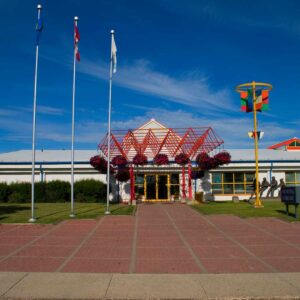
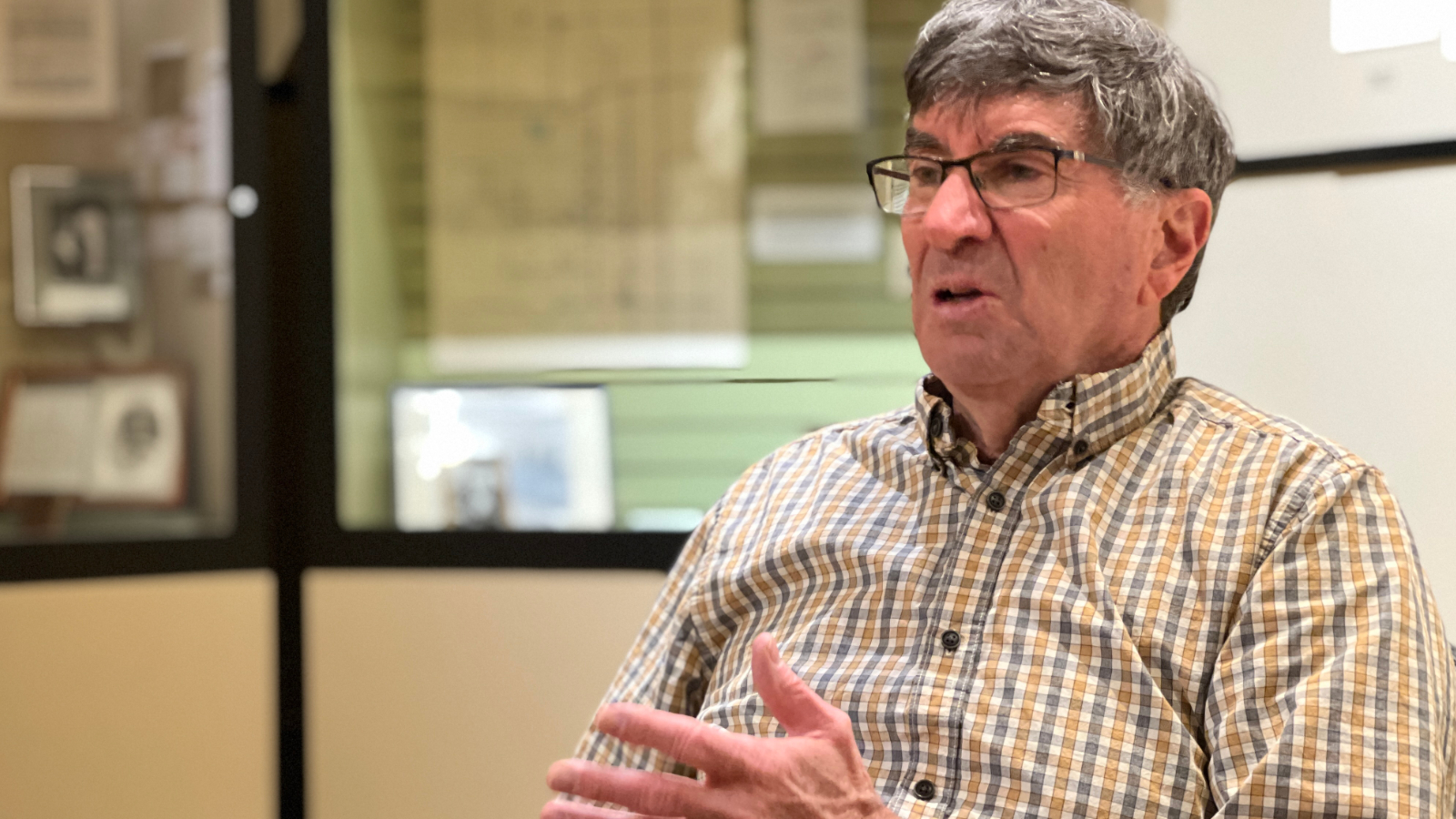
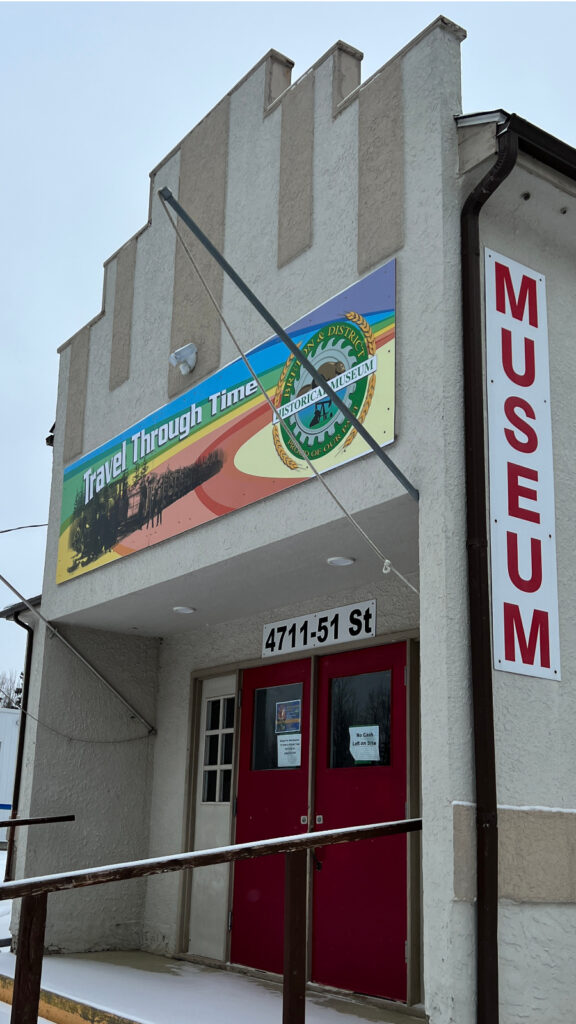
February is Black History Month. Local historian Allan Goddard has dedicated over three decades to keeping the memory of Keystone settlers and the history of Breton alive. We sat down with him for a question and answer session to get insight on his journey.
How long have you been involved in the Breton Historical Society?
I became involved with the Historical Society in the fall of 1987.That makes it about 35 years that I have been involved with the Historical Society. At that time Gwen Hooks was President of the Society. Over the years I held the positions of President and Treasurer on the Historical Society Board. For quite a number of years the Board served both the role of the governing body of the museum and also acted as administration to carry out the day-to-day activities of the museum. In about 2009 I resigned as a board member and took on the role of museum manager/curator. The museum was growing, which required more time to meet the administrative duties, also the level of expertise needed to meet the higher standards of the Recognized Museum Program required someone with at least a basic knowledge of museum standards. I have remained in this role since then.
What got you involved in the society in the first place?
I think it was an ad in maybe the Breton Booster, or just a poster around Breton that the Society was in the initial stages of starting a museum in Breton and looking for volunteers to help with establishing the museum. The Society had recently entered into a lease with the then Leduc School Division for the use of the two-room school located on the Breton Elementary school site. The school division had stopped using the building prior to this for school classes, I think the playschool had occupied the building at the last but must have moved from the building as the building was vacant when the historical Society leased it. It needed a lot of upgrades over the years. From reviewing some of the records and minutes of the Society it appears that the topic of establishing a museum had been talked about at various times previous to 1987.
I had always had an interest in history from the time I had been small. Both my father and my mother’s family had been longtime residents of the Carnwood and Moose Hill area. They both had homesteaded in the early 1920’s. As a young child, I can remember asking my mom to tell me about the “olden days”. So when this opportunity came with the Breton museum I thought here is a cute little project that I can volunteer a couple hours a month to help them out. I can paint a wall, do minor carpentry, well it has taken on a life of its own in the years since then. I didn’t know anything about what it took to operate a museum… none of the people involved did. It was a steep learning curve for everyone. It has become clear over the years/decades since then that there is much more to running a museum than putting some old items out in a cabinet or on a shelf for people to look at to be a museum. It’s about having the artifacts help tell a story.
How has black history impacted the Village of Breton and the place it has in Alberta’s history?
The Board of the Society, soon after establishing the museum,received some advice from the Historic Resource’s Branch of the Alberta government about starting a museum. One of the things they talked about was to determine what themes /stories you want to tell in your museum. I believe the Board of the time did a good job in considering this question. While most small rural museums focus on the settlement history of their community and Breton was no different to some extent, the Board settled on 4 themes. They asked themselves what area of the Breton district history can we focus on that will set us apart from the museum down the road.
The first theme determined was the history of the Keystone community, established by African American settlers from Oklahoma and a few other states that migrated to Alberta from about 1909-1912. While this initially followed the settlement story of homesteading it has become a much more complex story that goes beyond just the hardships of establishing a homestead and life at the time in Alberta, and the Breton community. When the museum started documenting this story 30 some years ago the story of black history in Alberta was scarcely mentioned. What I have come to realize and appreciate, there is much more to this story than a small group of early settlers. This is a story about the immigration policy of Canada at the time, and how many segments of society pushed back against this group. It started to become clear that the story of Canada as a kind nation that welcomed all groups of immigrants with open arms has started to unravel as we start to research the topic deeper. There have also been success stories that need to be told. The story of Keystone, and the other communities in Alberta and Saskatchewan settled by this group is more than just local in scope. It is part of Alberta history, as well as Canada’s story, with connections back to Oklahoma and the reason this group was leaving the State.
We try to ask visitors to the museum what brought you to the museum today. A vast majority will say they wanted to learn about the black history of the area. This theme has definitely brought the museum, and by extension the community a higher profile beyond just the local community.
The second theme decided on, was the lumbering industry which played a significant role in the development of the area until the late 1940’s. It was the primary economic driver of the area, once rail service was established in 1926.
The third theme was Agriculture, while this was a more generic theme the Board’s focus was to tell the story of the Breton SoilPlots and the challenges of farming on gray wooded soils. This theme has yet to be fully developed by the museum.
The final theme was Community, this encompasses a lot of different elements and like all the themes is ongoing and can vary from year to year.
The K-9 students at the Tomahawk School have been getting a hands-on learning experience with farming through an agricultural program.
“We’re actually heading into our third year of offering a rural and agricultural education program here at Tomahawk School,” says school principal Tracey Gilmour.
The program was started after the Parkland School Division held a west-end community stakeholder engagement meeting. Gilmour says they heard from parents in their area that they would like to see more practical, hands-on learning, career education, and programming that focused on rural lifestyles.
“It’s brand new for Parkland School Division,” says Gilmour. “There are a couple around the province. One is a charter school, so that’s a little bit different, and then we know of one, maybe two, others.”
Gilmour says they’ve integrated the program into the school curriculum and students get hands-on experience.
“All of our students from K-9 do participate in that class,” says Gilmour.
She says the school views it as a careers education class because many of the students live locally and their families have been in the area for generations.
“We very much see it, as a school, as our responsibility to help prepare our students so that if they also want to continue living in a rural setting, for careers so that they can be successful in a rural community,” she says.
She says the program touches on many areas so students are learning skills that could help in a variety of different careers. This includes fish and wildlife, cottage industries, and they may even branch into oil and gas.
“We’re looking to run programs that can fit that mandate locally,” she says.
Over the past two years, the school has been developing a school farm with the help of some grants and parent volunteers.
“We introduced chickens as our first project,” she says.
Currently, they have a beekeeping program, raised bed gardens, and are putting in a crop field so students can learn how that works.
“We’re also about to get a barn installed in October, hopefully,” says Gilmour. “And at that point we’ll be looking at some larger livestock with some sheep, maybe goats, and then who knows from there.”


Gilmour says they are also applying for some grants for a building that will allow them to offer a year-round hydroponic garden.
The type of classes the students take is based on their age. For the younger children, they spend a lot of time learning outdoors and in nature. She says they spend a lot of time in the forest, learn about local wildlife and animals, and were involved with the chicken hatching.
“One of the things that we know from research is that if we’re going to ask our future generations to be stewards of the land, well, first they have to be connected to that land and love that land,” says Gilmour.
Junior high students who have parent permission are doing hands-on beekeeping. The older students also get to learn about the business side of farming. Gilmour says they learn about business planning, developing land, choosing which produce and livestock to work with , and other aspects of farming that don’t require as much physical labour.
“It really is a tiered approach, like we feel is most age-appropriate and how hands-on they can be on the farm,” she says.
They also focus on technology in the industry. One of the career classes they are offering this year is drone piloting because many crops are now being sprayed using drones.
“We know as a rural career there are lots of opportunities there, whether it’s in utility corridor monitoring work, whether it’s photographing, surveying, or even if it is in agricultural spraying,” she says.
Not only do the students get to participate in the program, but those that show interest beyond the day-to-day class can apply for different roles such as poultry manager or apiary manager. The younger students can also take on extra roles by applying to be a helper.
The students who take on these roles are responsible for managing the chickens and the bees during the school year.
For the first year of the program, the school relied on volunteers to help keep the farm running over the summer. However, this last summer, they offered a high school credit program in July to bring in high school students to help look after things over the summer.
As Tomahawk School does not have high school students, they opened it up to any high school students who would like to earn some extra credits.
“For two weeks over the summer, any high school student, it doesn’t matter what school division they belong to, they could sign up for a credit program,” says Gilmour.

here were several courses the students took, including agricultural safety, introduction to agriculture, introduction to animal basics, introduction to animal husbandry, a livestock course, among others.
She says there were a number of students who signed up, and all of them received six credits for completing the courses. Some of those summer students had just finished junior high and are now heading into high school with credits.
“They were very hands-on with the farm,” says Gilmour. “We did have the sheep in at that time, as well… We brought in some meat rabbits as well.”
On top of that, the school has hatched their own chickens and raised trout for the local fishing ponds.
One of the reasons the school was chosen for this program is Gilmour’s experience in alternative programming. She stepped into the role of principal two years ago, and when she saw the results of the stakeholder meeting, she put together a proposal for the program.
“The division accepted that proposal, and we’ve had the green light ever since to push this as far as we can to see what we can do to set these children up for success in their rural communities,” says Gilmour.
She says they are hoping to find more people who want to be involved, not necessarily with a time commitment, but with expertise and advice. Last year, the school had an expert in maple-tapping teach the kids about the process.
“We are always on the lookout for more community support,” she says.
She says the parents have been very helpful. They were involved in repurposing a shed into a chicken coop, building temporary shelters, fencing, and one volunteer brought in a tractor to create the crop field.
“There is a lot of community involvement in that sense, as well,” says Gilmour.
She says they are always looking for feedback from parents. They currently have a survey linked on their social media page to ascertain if there is a need or want for a high school program.
“We’re looking at a blended high school program potentially,” says Gilmour.
Students would be able to do their core subjects through Parkland School Division’s online learning program, Connection for Education. In the afternoons, they would then focus on the rural and agricultural learning program.
She says they are still open to enrolment, even for students who are not within the catchment area of the Tomahawk School. Parents from other areas can enrol their students with the understanding that they would have to transport their child to the school.
“You don’t have to live in Tomahawk to go to this school,” says Gilmour.



Old standards still make sense
If you’re a teacher who has just headed back to school I have some bad news. Facebook says you’ve been doing it wrong. Or, to be more specific, you’ve been teaching the wrong stuff.
According to something I read on the social media platform, the education system is teaching kids the wrong subjects. And it has been for years.
Facebook obviously wouldn’t just allow someone to publish something without rigorous fact checking. That would be grossly irresponsible. So we have to assume there’s a degree of existential truth to the list of Subjects that Should Be Mandatory in Schools, but I’m not sure what.
I won’t bore you with the full rundown but it includes things like home maintenance, insurance, coding, balancing a cheque book and public speaking.
Wait, what?
Balancing a cheque book was an important skill back around 1990. These days it’s as much use as knowing how to change a roll of fax paper or memorizing your best friend’s phone number.
Keeping up with home repairs is a great thing and you’ll save a bunch of money if you can do them yourself, but as a subject it’s a little vague. Are we talking about changing a lightbulb or pouring a concrete slab for your deck? It would be good to know because one of these things is not like the other.
Insurance? I don’t even know what that means. Sure it can be an expensive mistake if you wind up overinsured. And it can be an even more expensive mistake if you wind up under insured. But I’m not clear on how they’re supposed to teach that in schools when there are so many variables and every case is going to be different.
Coding would be a very worthwhile skill in an increasingly computerized world, but I’m not sure it’s something we all need to be good at, the same as we don’t all need to be doctors, airline pilots or electricians.
And public speaking? Well, don’t schools already teach that? Isn’t that the point of every presentation you were asked to make in front of the class from Grade 1 show and tell onwards?
So if I was a teacher I’d ignore what Facebook says and stick to what I’m doing. You see a lot of criticisms of the high school curriculum, but the standard, traditional subjects have stood us in good stead. Sure, you don’t necessarily end up using everything they teach you in school once you enter the real world. After almost fifty years I’m still waiting for a Frenchman to approach me on the street, say “bonjour” and ask me how old I am or what the time is, but I’ll certainly be prepared if it ever happens.
And the other stuff, reading, writing and arithmetic, is still as important as it ever was. Yeah, we all carry a calculator with us these days, but if you’re trying to figure out whether 600 grams of cheese for $7.22 is a better deal than 450 grams for $5.07, you still have to know how to ask the question before your phone can give you the answer.
Teaching things like that is what school’s for. I hope that never changes.
Winfield woman is TOPS Queen
A local woman has made it to the top after losing the most weight and was named the TOPS Queen for 2026.
Seventy-eight-year-old Pat Thoreson has been a member of the not-for-profit weight-loss club, Take Off Pounds Sensibly, since 1984. After losing the most weight in Alberta this year, Thoreson was crowned the TOPS Queen last May.
“I started out with a weight problem when I was growing up, so I’ve spent a lot of years at it,” she says.
Since she joined TOPS, Thoreson has lost 72.25 lbs, though she says most of the loss was over the past couple of years.
Prior to joining TOPS, Thoreson had tried out a number of different groups in an attempt to achieve results, but with little success. She says she would lose a little bit of weight, but then would gain it back.
Living near Winfield, Thoreson would meet with the club in Bluffton. From spring to the fall, Thoreson would drive herself to the club every week. Over the winter, Thoreson’s husband would drive her so she wouldn’t have to drive in the dark.
As much as the group was about losing weight, the social aspect was also appealing. She says the club was extremely supportive, and she formed a bond with the members, which was one of the reasons that kept her motivated to return.


“We take turns doing programs, and we have contests. It’s just a good support club,” she says. “That has been another thing that has gotten me to this point.”
One of the women Thoreson met was Violet Schmidt, who was Queen in 1995, and the two became very close.
“Over the years, she was one of the best supporters that I’ve ever had,” she says.
Unlike other groups, Thoreson found the approach of TOPS refreshing. Each week there was a weigh-in for the members, similar to other organizations, but they focused on making healthy food choices rather than food or calorie restriction.
“It’s a food exchange,” says Thoreson. “It’s not that you can’t eat certain foods; you just think about the amount of calories and that type of thing.”
She says they allow themselves to eat the food, but just remain conscious of how much and how often they ate it.
It’s also cheaper than many other programs. To join TOPS, there is an annual fee of $49 USD. Thoreson says her club, which has since relocated to Hoadley, also charges a $5 fee for each meeting to cover the costs of the coffee and rental space. Other than that, there are no fees for information packages and no meals that have to be purchased.
Thoreson says the biggest weight loss came after she received an award for being part of the club for 40 years.
“I thought, ‘40 years and I haven’t really done a whole bunch,’” she says. “That’s one of the things that kind of shook my memory that this was why I was really here, not just to visit.”
She says she lost weight at a healthy pace and was able to keep it off thanks to the information she had from the group and the exercise regime that she stuck to.
“On Mondays, [my husband and I] would floor curl in the afternoon. Then on Tuesdays and Thursdays I do chair exercises for one hour in Buck Lake on Tuesdays and Winfield on Thursdays. Then on Thursdays I would walk for three-quarters to an hour at Winfield as well,” says Thoreson.
As a Queen, Thoreson says she would like to advocate the importance of healthy choices to people.
“A person can do it if they just stop and think about what they’re eating and what they should be eating,” she says. “Even though it took me 42 years, I still go there. It’s not like you have to do it all of a sudden.”
Thoreson says she hopes people will hear her message and make time to attend a meeting at a nearby club to see what the organization is all about.
More information about the program can be found at www.tops.org.
Please be a predictable pedestrian
I remember when I let my kids walk to school alone for the first time. I stood in our big front window waving, and blowing kisses fighting the urge to jump in my car and follow them. I told myself repeatedly that if I didn’t get a call from the school wondering where they were, they must have made it safely and they did.
The route to school from our home on 54th Ave was pretty calm for the most part except for three crossings. The first was crossing the road that the old pool was on from west to east. There was no cross walk and it had some blind spots. People often picked up speed while driving and I would really hammer it into the kids’ heads “Stop, look and listen! Then get eye contact.” The other two crossings closer to St. Anthony School did have traffic lights, however some drivers liked to make that right hand turn while they were looking left. Again “Eye contact!” I wanted my kids to know the responsibility of being a pedestrian, after all we lived in town and walking was something we did often. I never wanted them to implicitly trust that the driver saw them, or wasn’t distracted. They needed to be predictable and patient for drivers. That first walk happened three years ago and my, how times have changed.
Whereas, before I directed much of my annoyance and outrage at drivers, now it’s the “pedestrians,” who aren’t actually on foot. I’m talking about people on an e-anything who zip and zoom from sidewalk to the roads, and who don’t make eye contact, don’t act predictably and generally are not respecting the rules of the road or the sidewalk.
Do I sound like a Karen? I hope so.
A few weeks ago I was walking to the library from the office, and there was a truck at the fourway stop to my right. I made eye contact, looked both ways and proceeded to walk. Then out of the blue to my left, an electric scooter came off the sidewalk onto the road, cut off my path of walking and zipped through the intersection, without stopping thereby cutting the truck off too. In this one instance not only could the person have hit me, but the truck that was ready to proceed could have gunned it and hit him.
Seinfeld is my mindless pleasure. There’s one episode I just watched where Kramer got into blows with a baseball player over a ball cleaning violation on the golf course. Jerry thought he was being too strict with the rules. Kramer’s response. “Hey, a rule is a rule and let’s face it without rules…there’s chaos.” This is what the roadways and sidewalks seemed to have devolved into, utter chaos.
So despite the fact that the current laws on electric anything are murky, and scooters shouldn’t be used off of private property, here they are. And while I would love to deliver the typical PSA to drivers, that says “Hey it is back to school, please watch out for pedestrians.” I also want to shout out. “Hey it’s back to school, please make sure your kids know the rules of the road, how to be a respectful pedestrian that acts in a predictable manner around vehicles, and non-motorized pedestrians! Please!!! For the love of…”
I am not just being a Karen on this one and I would like to put the general reminder that not more than a few years ago we had an e-scooter death in this very town when a scooter driver hit a pedestrian, knocking him down resulting in injury causing death.
So on one hand I would like all drivers to be aware of the pedestrians out on the sidewalk this school season but also, pedestrians or hybrid pedestrians please also do your due diligence and watch for traffic, and be predictable. Lets make sure everyone gets to where they are going in a boring and uneventful way this school year.
Thunder look to balance size, speed and mentality
The Drayton Valley Thunder are getting ready to hit the ice for the pre-season, and head coach Jeff Truit says there will be some changes this year.
Truit, who is in his second season of coaching the team, says there were some lessons to be learned last year.
“I knew that this was a tough league coming in, and with a younger group,” he says. “We learned a lot of lessons in how we have to play and how we have to approach things.”
Truit says it wasn’t anything earth-shattering for him; he was aware there could be some improvements the team needed to work on when he started.
There were a lot of first-year players on the team last year, and so there was some inexperience to contend with.
“I thought last year that we got out-competed at times,” he says.
Heading into camp this year, Truit says they are focusing on bringing in more skill and speed, and they are also looking for bigger players.
“It’s going to be a very competitive camp. I think our scouts have done a tremendous job with the quality of players we’ve got coming in,” he says.

The coaches will be keeping an eye out for some of the taller players with more muscle mass this year. Truit says there is a place for every size of player, but he wants a team that’s a balance of players who are six feet or more and have power and the smaller guys who have the speed.
One of the areas that he saw needed to be improved was their game against the boards. He says the team needs to be able to win those battles. When the players head into that situation, there is a mental aspect to the win. Truit says sometimes size can affect how the player acts in the corners.
“We’re not sacrificing skill because these guys do have skill,” he says. “We look at that being a real positive for our team.”
Truit says there is a fire within every athlete regardless of their size, and each one has to work within the team to make it a success.
A lot of the recruits have worn letters on their jerseys from their past teams. Truit says even though these past leaders are coming into a new level of hockey, they know how to prepare for games and are less likely to get overwhelmed.
“They are very mature young men,” he says. “The nice thing about it is they’ve been leaders, they’ve had to take care of their teams and set the example on and off the ice.”
Truit says last year was a tough year, but as the players have come back, he sees a new level of focus. He says their attitudes have always been great, but they are willing to take on the responsibility of taking the team to another level.
“They know we have to improve,” he says. “They know that the pressure is on. They seem to have grasped that, and that speaks to the quality of their character.”
Truit says there is a mental aspect to the game that the players have to master as well.
“[As an athlete] you have to take it upon yourself to raise that level, and that’s a mindset that you’ve gotta come into,” he says. “And it just feels like now they are going to get it done.”
Truit says he sees the increase in the drive from the players, and he’s really excited about what the upcoming season will bring.
While the role of the captain on the team is an important one, Truit says they are all expected to help with the leadership.
“I care about the collective unit rather than just the captains,” he says.
Truit says one of the best things that fans can do to help the team is to fill the seats during games. He says it can be very intimidating for the opposing teams coming in to hear the cheers for the home team.
He says he believes the fans will be proud of the improvements that have been made to the area, including the taller glass, new clock, and screen. The atmosphere will be different.
“The fans here in Drayton Valley can be a very intimidating group when they’re loud and they’re cheering and supporting that way,” he says. “They did a great job for us last year.”
Make your AI posters newspaper friendly
When I first got into the advertising and sales side of the newspaper I didn’t know anything about anything. But I did know I wanted to make sure that we built our clients effective ads specific to newspaper marketing.
“Newspaper friendly” advertising is a stand alone subset of advertising, just like every social network has their own specs for effective digital advertising, and billboards have their requirements, and radio has their requirements. Newspaper ads that follow certain specs are more effective.
Why is this important for you to know? Because with the rise of AI, we have been getting many AI posters as graphic design submissions for advertising. As a jumping off point for our graphic designer this is fantastic intel, however as a carbon copy ad, these posters are not always newspaper friendly.
A few basic tips I share with people when they are considering submitting a draft design are these:
White space! Newspapers need white space. Too much of everything leads to a whole lot of nothing for the eye to focus on. White space allows your prospective clients to see your important messaging from a distance and draws them in closer to see more once interest is piqued.
Font size. The Free Press type font is 9pt. Advertising should be larger than this. In some cases much larger.
Font contrast. A dark font on a lighter background is the easiest to read. This is why newspapers are black font on white paper. Again this takes us back to white space.
These are the basics that I let people know about. This may mean that your newspaper ad is not a carbon copy of your promotional poster.
But our brand! You might protest.
Branding does not mean placing the same identical ad across multiple mediums. Branding requires you to ensure the big picture aspects of your company are included in all advertising such things like: colours, typeface, image themes etc.
You wouldn’t put a very detailed poster on a billboard would you? No. People driving at 70km per hour don’t have time to read all of the information. But you may put the same headline, with the same colour and similar imagery with a big bold company name. Social media advertising favours not just images but videos – branding may appear in the beginning and end of the video.
If you do choose to draft your ad graphics in AI here are some prompts I pulled from Gemini you could use in that will help make your ad specific to the newspaper medium:
Newspaper prompt guidelines from Gemini
1. Demand High Contrast and Grayscale Clarity
Phrase to include in your prompt:
“High contrast, strong key lighting, bold outlines, optimized for black and white print, crisp grayscale separation.”
Note: you can reference the same but in colour, the colour contrast will be more defined.
2. Enforce Simple Compositions and Ample Negative Space
Phrase to include in your prompt:
“Minimalist background, single clear focal point, uncluttered design, generous empty negative space for text overlays.”
3. Choose Graphic or Vector Styles Over Hyper-Realism
Phrase to include in your prompt:
“Flat vector art style, clean graphic illustration, sharp edges, print-ready layout, high-legibility design.”
One of the services the Free Press provides is graphic design. Our graphic designer on staff, has worked in marketing and has a degree in graphic design. She has a keen eye and great understanding of the importance of typeface, layout, and focal point. If you draft your poster initially in AI send it our way to be rendered into a newspaper friendly format. Provide us with a png or pdf file, unflattened so we can adjust to make sure you are getting the best ad that will catch the most eyeballs.
The fact is the wrong ad style for the wrong medium is ineffective no matter the marketing platform you use. Over at the Free Press, advertising is part of the full newspaper package and we want your ads to be as interesting and eye catching to our readers as our editorial headlines.
Over the years of managing the museum what is the most interesting artifact, or fact that you have stumbled across as it pertains to the black community or the area?
I had to think about this question for a while. There are two or three artifacts that piqued my interest and we can connect to the families that settled Keystone. One is a mule shoe found on the property originally settled by Rolla Ramsey. It was turned up in a field in later years, long after the Ramsey family had moved from the community. We can see from some records that some of the families owned mules which they brought from the US with them. Mules were often used in the south as they were tough, and for their size could pull more.
The second is part of a child’s toy, it is a metal horse that likely had a wagon or something more to the toy. It too was found in a field in later years, on property owned by another black family of the area. While it is only partly there, we can imagine there was a little boy who likely prized that toy.
The third is a small rubber stamp that was found in the Funnell School/Community Centre when they were cleaned up about 10 years ago. The stamp says Keystone. What purpose it was used for we don’t know, but it must have been made for a purpose.
From an archival perspective, I think the minute book from the Good Hope Baptist Mission is wonderful, especially the opening entry. “We the people of township 48 range 4– west of the 5th meridian, met together at Wm Allen’s house at 11 o’clock on September 10,1911 for the purpose of organizing a church.” The museum is very lucky to have these records, thanks to Mrs. Emma King who had a number of records pertaining to Keystone and passed them on to Mark and Gwen Hooks who donated them to the museum when it was established.
The last archival item isn’t something the museum has, but comes from the homestead records held at the Provincial Archives of Alberta. These records show who filed on a homestead, and contain a variety of information about the individual. The first form that every person who filed on a homestead filled out had the usual information you would expect: their name, the land location, if they were married and had a family, their address, their nationality and if they were a Canadian citizen. What I found interesting was that on many of the homestead records filed by the black settlers they listed their nationality as American, which they were, but down in the corner of the form a government official has written the word Black, Colored or Negro. They were being identified beyond what any white homesteader was. Now we don’t know if they were being directed to certain areas for settlement or for some other purpose.



Why do you continue to be involved?
There are days when you wonder if anyone notices or cares what the museum is doing, but then you get the days when you meet visitors and you can help them and the gratitude they have to the museum for taking the time to help. Or people commenting on how much they enjoy the articles I write for the Breton Booster, then you know what you are doing does make a difference. Isn’t there a line in an old Joni Mitchell song that says “you don’t know what you got till it’s gone”.
What keeps me coming back is what I will discover next week or next month that will add to the story. It’s like having a box of jigsaw puzzles and the box contains numerous puzzles, and each puzzle has some of the pieces but not all of them.
Anything else you feel is important to talk about?
This year will mark the 45th anniversary of the formation of the Breton and District Historical Society. While their original purpose was to publish a community history book. I think a lot of credit has to go to the people who were involved in the formation of the Historical Society to have the vision to start preserving the history of the community. If they hadn’t started the Historical Society then, would there be a Breton Museum. The majority of those individuals have now become part of the community’s history.
These are a few of my favourite things
What do I like? Thanks for asking. I like loads of things.
I like beer. I like wine, especially if there’s some fresh bread and a nice piece of cheese to go with it. I like playing golf. I like holidays somewhere sunny.

Donation leads to arena upgrades
Change is on the way to Drayton Valley’s arena.
The facility, which was rebranded as the Team Auctions Centre last year, will see upgrades valued at $1 million thanks to a contribution from an anonymous donor.
In the high and far-off times
Nothing in the last 50 years has quite matched the feeling I got waking up one July morning in 1976 and realizing I wouldn’t have to so much as think about simultaneous equations for the next six weeks.

E-dirtbikes raise safety concerns
Off-highway vehicles are not allowed on public municipal property in Drayton Valley, whether they are electric or not.