You are currently viewing The keeper of the Keystone legacy

The keeper of the Keystone legacy

Facebook
Email
LinkedIn
WhatsApp

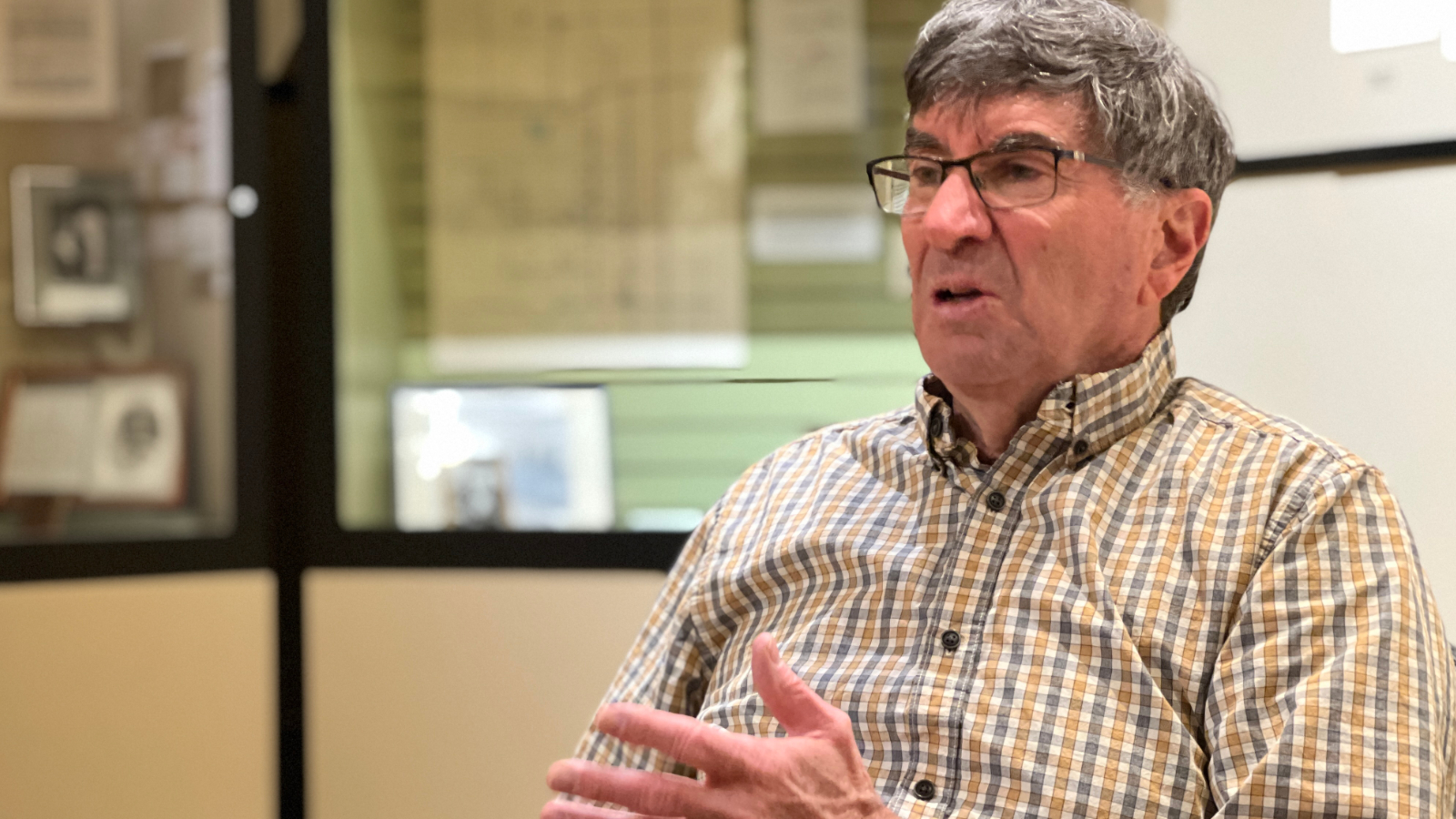
February is Black History Month. Local historian Allan Goddard has dedicated over three decades to keeping the memory of Keystone settlers and the history of Breton alive. We sat down with him for a question and answer session to get insight on his journey.

How long have you been involved in the Breton Historical Society?

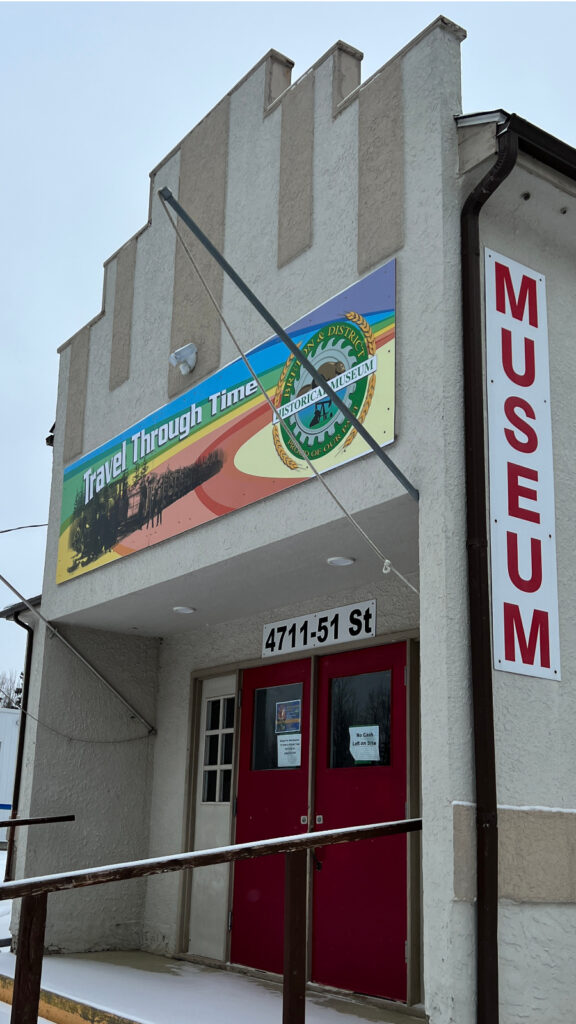
I became involved with the Historical Society in the fall of 1987.That makes it about 35 years that I have been involved with the Historical Society. At that time Gwen Hooks was President of the Society.  Over the years I held the positions of President and Treasurer on the Historical Society Board. For quite a number of years the Board served both the role of the governing body of the museum and also acted as administration to carry out the day-to-day activities of the museum.  In about 2009 I resigned as a board member and took on the role of museum manager/curator.  The museum was growing, which required more time to meet the administrative duties, also the level of expertise needed to meet the higher standards of the Recognized Museum Program required someone with at least a basic knowledge of museum standards.  I have remained in this role since then.

What got you involved in the society in the first place?

I think it was an ad in maybe the Breton Booster, or just a poster around Breton that the Society was in the initial stages of starting a museum in Breton and looking for volunteers to help with establishing the museum.  The Society had recently entered into a lease with the then Leduc School Division for the use of the two-room school located on the Breton Elementary school site.  The school division had stopped using the building prior to this for school classes, I think the playschool had occupied the building at the last but must have moved from the building as the building was vacant when the historical Society leased it.  It needed a lot of upgrades over the years. From reviewing some of the records and minutes of the Society it appears that the topic of establishing a museum had been talked about at various times previous to 1987.

I had always had an interest in history from the time I had been small. Both my father and my mother’s family had been longtime residents of the Carnwood and Moose Hill area.  They both had homesteaded in the early 1920’s. As a young child, I can remember asking my mom to tell me about the “olden days”. So when this opportunity came with the Breton museum I thought here is a cute little project that I can volunteer a couple hours a month to help them out. I can paint a wall, do minor carpentry, well it has taken on a life of its own in the years since then.  I didn’t know anything about what it took to operate a museum… none of the people involved did. It was a steep learning curve for everyone.   It has become clear over the years/decades since then that there is much more to running a museum than putting some old items out in a cabinet or on a shelf for people to look at to be a museum. It’s about having the artifacts help tell a story.  

How has black history impacted the Village of Breton and the place it has in Alberta’s history?

The Board of the Society, soon after establishing the museum,received some advice from the Historic Resource’s Branch of the Alberta government about starting a museum. One of the things they talked about was to determine what themes /stories you want to tell in your museum.  I believe the Board of the time did a good job in considering this question.  While most small rural museums focus on the settlement history of their community and Breton was no different to some extent, the Board settled on 4 themes.  They asked themselves what area of the Breton district history can we focus on that will set us apart from the museum down the road.  

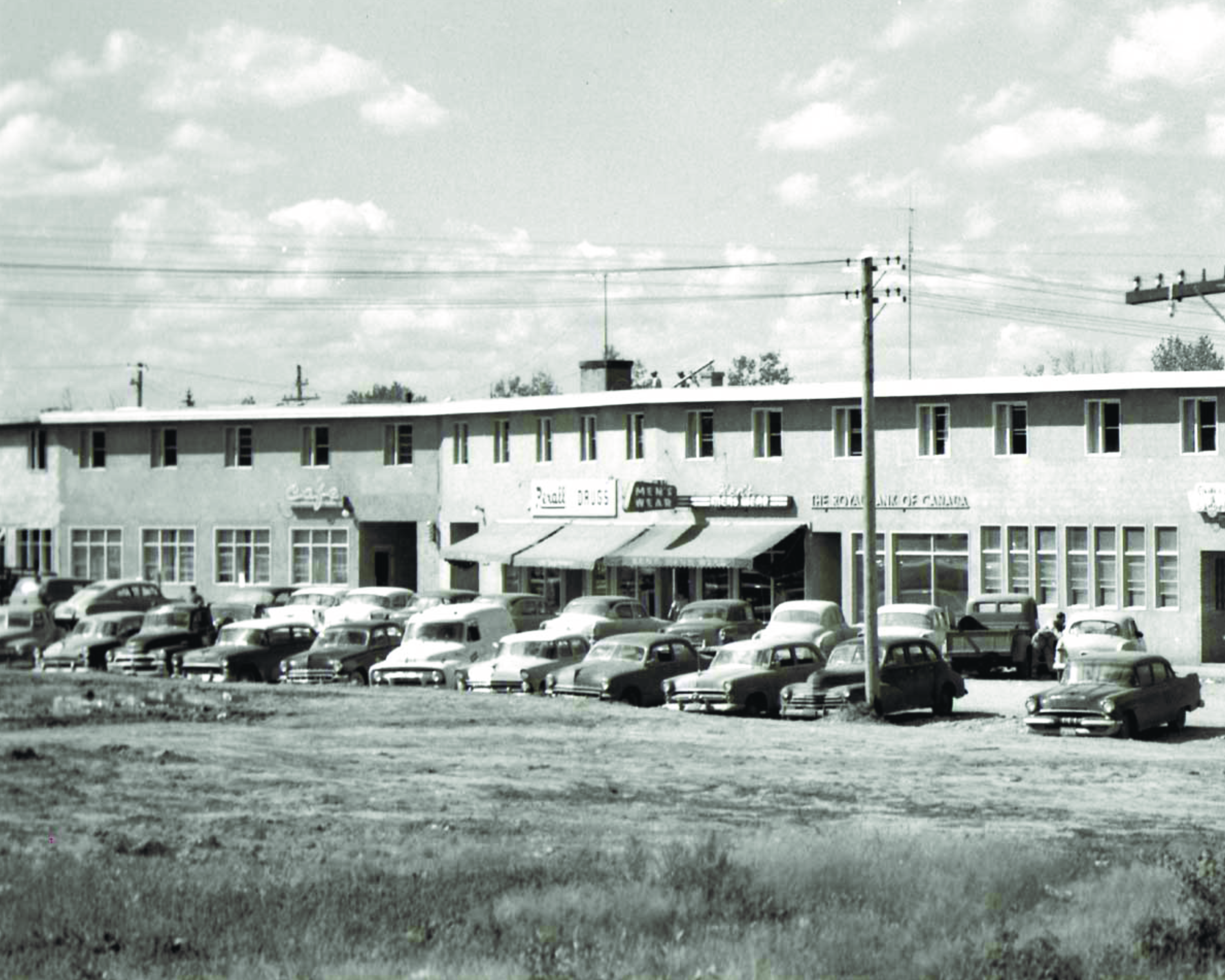
The first theme determined was the history of the Keystone community, established by African American settlers from Oklahoma and a few other states that migrated to Alberta from about 1909-1912. While this initially followed the settlement story of homesteading it has become a much more complex story that goes beyond just the hardships of establishing a homestead and life at the time in Alberta, and the Breton community.  When the museum started documenting this story 30 some years ago the story of black history in Alberta was scarcely mentioned.   What I have come to realize and appreciate, there is much more to this story than a small group of early settlers.  This is a story about the immigration policy of Canada at the time, and how many segments of society pushed back against this group.  It started to become clear that the story of Canada as a kind nation that welcomed all groups of immigrants with open arms has started to unravel as we start to research the topic deeper. There have also been success stories that need to be told.  The story of Keystone, and the other communities in Alberta and Saskatchewan settled by this group is more than just local in scope.  It is part of Alberta history, as well as Canada’s story, with connections back to Oklahoma and the reason this group was leaving the State. 

We try to ask visitors to the museum what brought you to the museum today.  A vast majority will say they wanted to learn about the black history of the area.  This theme has definitely brought the museum, and by extension the community a higher profile beyond just the local community. 

The second theme decided on, was the lumbering industry which played a significant role in the development of the area until the late 1940’s. It was the primary economic driver of the area, once rail service was established in 1926.

The third theme was Agriculture, while this was a more generic theme the Board’s focus was to tell the story of the Breton SoilPlots and the challenges of farming on gray wooded soils. This theme has yet to be fully developed by the museum.

The final theme was Community, this encompasses a lot of different elements and like all the themes is ongoing and can vary from year to year.

Looking forward to a nice relaxing summer? Not so fast. As we (finally!) approach the nice bit of 2026, I thought  it would be useful to put together a list of the things I am currently worried about. And if I’m going to worry about them, so should you.

I’m worried about the way our provincial government is extending its own powers. The UCP is attempting to broaden its authority in areas that have traditionally been under federal jurisdiction. At the same time they are limiting the powers of municipalities and school boards to act without provincial approval. If all this comes to pass we are going to have one honking big (and powerful) government in Edmonton. That should give every one the collywobbles. If the NDP had tried something like this while they were in power we’d have been screaming to the high heavens. 

I’m worried about our friends to the south. Every time you think America can’t get any more dystopian they find a way to prove you wrong. And the noise! It’s like living next door to a frat house. 

I’m worried about retirement. The Canada Pension Plan works just fine. I’m looking forward to collecting my CPP in a year or two. Brand name beer here I come! The thought of ditching the CPP for a new and untried Alberta Pension Plan makes me more nervous than a long tailed cat in a room full of rocking chairs.  And yet that’s what the provincial government seems intent on doing. I’m sorry, I’m sure Danielle and the gang have nothing but good intentions, but I don’t trust them not to make a complete and utter mess of things. If they feel like gambling I wish they’d do it with their own money.

I’m worried about the amount of ill-informed bile I see on social media and elsewhere directed at immigrants and refugees. This stuff invariably comes from people who claim to be acting to protect Canadian values. Clearly we have a different view on exactly what Canadian values are. 

I’m worried that our thoughts and prayers don’t seem to be doing enough to prevent school shootings, public transit attacks or any of a raft of other atrocities. And I’m worried that I seem to have lost count of the number of those atrocities that have happened already this year. Perhaps we should all try thinking and praying harder?

I’m worried that we seem to spend more time focussing on the things that divide us than on the things that unite us.

I’m worried that these days, when you come across something that doesn’t match your own narrow world view, you’re free to select your own set of alternative facts to back up whatever bonkers theory you’re supporting. And if someone points out that your set of facts aren’t actually very, umm, factual, you’re able to label him as a stooge of big government who’s too blind to see that the Earth really is flat, 9/11 was the work of the Illuminati, the Kremlin is controlled by Disney etc. etc. etc.

I’m worried about inflation. I’m worried about Iran. I’m worried about the Blue Jays’ pitching. I’m worried about gas prices and I’m worried about property tax.

There. I’m glad that’s off my chest. Now It’s time to get out and enjoy that sunshine!

Three degrees with a chance of flurries? I did not see that coming. Dammit!

Facebook
Email

The Hearts and Hands Quilters’ Guild did more than just draw winners for their annual quilt raffle last week. They also presented 14 quilts to All Are Daughters for use at their women’s rehabilitation facility.

The guild boasts 28 members from the community, and all of them work to build quilts that can be donated to people in need. Each year, they hold a raffle fundraiser for three quilts, and the proceeds are then split between three different organizations.

This year they raised about $700 for their guild, the Kickstand Youth Hub, and STARS, along with their donation of quilts to All Are Daughters.

Trina Beckett, the vice president of All Are Daughters, was on hand at their meeting to accept the donation. 

“About a year-and-a-half ago, a group of us women got together to start working on this dream of so many of us to open this recovery centre for women,” says Beckett.

She says there are members of the board who have gone through addiction and have been in recovery for years. Beckett is the mother of an addict, and her experience helping her daughter get through the first few months of recovery made her want to help others going through something similar.

“As a parent, you do anything to help your child because you know they’re in there somewhere,” she says.

Beckett says her daughter was involved with the centre before she passed away last summer. Despite the loss of her daughter, Beckett still wants to see the centre completed.

Right now, the facility is ready to go, but they don’t have an open date just yet. The organization is currently waiting for funding from the Province to cover operating costs, as well as getting licensing in order.

“We do have all our rooms spoken for as sponsor rooms right now,” she says. “We are just waiting for the go-ahead to get open.”

She says there aren’t any recovery centres for women in rural communities. Having both a men’s and a women’s centre is a positive thing, she says.

“We thank you guys for your support as well,” she told the guild. “Without the support of the community, we wouldn’t be able to do so far what we’ve done.”

The winners of this year’s raffles were Mel Sibley from Warburg, who took home Wolves on the Prowl; Pam Baker, who won Winter’s Day; and Wendy Nordell received One Up One Down.

The guild is always looking for new members, and they meet on the third Thursday of each month at the Beehive Support Services Building, but don’t meet in July or August. They also have regular sewing days on Wednesdays. 

Spring Shaker sells out

Facebook
Email

Opportunity Home’s first Spring Shaker was a success, says executive director Danna Cropley.

“The event sold out within the first few weeks,” says Cropley. “Beyond that, the event went absolutely amazingly.”

The evening had a dance, a catered dinner, and silent auction items to help raise funds for the rehabilitation centre. Cropley says it wouldn’t have been possible without the volunteers who helped put the event together. About 230 people attended.

“Jen Winter, Janice Kupsch, and their crew organized the event. The room was full of energy and community; it was so great,” says Cropley.

One of the reasons for the event, along with raising funds to help run the facility, was to educate the public about what the facility does and how it helps those in need. Opportunity Home opened its doors in February 2023, and has seen numerous people complete the 90-day program during its three years of operation.

Earlier in the week, Cropley also spoke to town council with the same goal in mind.

“Because the council is fairly new… we just wanted to update them on Opportunity Home’s mission, vision, and values, [as well] as the value our project brings, not only to the municipality but also our provincial community and out to our country.”

Cropley says the facility has offered beds to people from across the province, British Columbia, and some from the United States. She says she wanted council to see the reach that they have now and how they are supporting Recovery Alberta’s response to the current opioid crisis.

In her presentation to council, Cropley touched on the community, social, and economic value the centre brought to the community. This included the volunteer work the clients provided, homelessness and poverty prevention, as well as reducing taxpayer costs for emergency, health, and justice services.

She says community investment is a crucial part of the success of the centre, not in terms of dollars, but in terms of interest from the community, volunteers, and feedback. 

“I just really wanted to make sure that town council was aware of who we are and what we do,” says Cropley.

Opportunity Home is hosting another event on June 19 from 11 a.m. to 2 p.m. that is open to the public: a memorial tree planting ceremony, along with a barbecue and tour of the facility. Cropley says they will also have different resources and services at the event for people to connect with if needed. 

She says the tree-planting ceremony will be in honour of some community members who have recently passed away. Members of the public are welcome to donate to plant a tree in memory of someone they have lost. 

Kiss me I’m Albertan

It seems that those pushing for Alberta independence have enough signatures to force a referendum on the issue. That put me in mind of something I wrote a few years ago that I think still holds water. 

If Alberta’s going to ditch the rest of Canada we need to set a few rules. This is going to take a while, so it’s best to start talking about it now so we know where we stand if and when it comes to a vote.

First we have to figure out what an Albertan actually is.

There used to be a guy who lived down the street from me who had a bumper sticker that said, “Canadian by birth, Albertan by the grace of God.” It always struck me as a little odd.  That was partly because it was on the rear bumper of the first Toyota Prius I’d ever seen with a gun rack. But it’s also because I’ve lived in this province for well over three decades, and I’ve never been able to figure out what makes an Albertan an Albertan.

OK, so an Albertan is someone who comes from Alberta. That’s according to no less a source than the Oxford Canadian Dictionary so I’m not about to start arguing.  But the results of the most recent federal census suggest that’s a pretty broad group. If the number and variety of languages spoken in this province is any kind of a guide, Albertans come from all over the place, both within Canada and from every corner of the globe.

That’s true of other places too of course. Places like London and New York are breathtaking in their diversity.  What makes Alberta different is that everything here is so new. We’ve been a province for not much more than a century and have evolved so rapidly in such a short time, with so many waves of immigration from so many parts of the world that it sometimes feels as if we’ve never developed a separate sense of ourselves. At least not in the way you’d find among the societies of Africa, Asia or Europe, or even in Newfoundland, Nova Scotia or Quebec. 

So what do we have that binds such a broad group together and sets us apart from the rest of the country? There’s the Flames and the Oilers I suppose. And beef. We like beef and are justifiably proud of both the quality and quantity this province produces. I think it’s also fair to say that we work hard. Not me, obviously, but most of the rest of you. And perhaps most importantly right now, there’s a sense of frustration that we always end up with a federal government that most of us didn’t vote for.  But even at the last election, when dislike of Ottawa was probably at its peak, more than a third of us voted either Liberal or NDP and a significant number of us didn’t vote at all. So things are not as black and white as they may appear.

Anyway, as far as things that set us apart from the folks in Toronto or Tuktoyaktuk, that’s about it. Don’t get me wrong. I love this province and I love the people who live here (most of you anyway)  but it doesn’t feel like we’ve got much to build a country on. Albertans are good people and we have a lot to offer the world. But at the same time we’re an odd and interesting mixture that doesn’t seem quite sure of its own identity. Sort of like a Prius with a gun rack.

Drayton to host regional one act plays

Facebook
Email

The Eleanor Pickup Arts Centre will be hosting the Yellowhead Regional One-Act Plays Festival on April 10 and 11 this year.

Ashley Luckwell, the chair of the board for River Valley Players, says the regional festival will have five performances this year. Cast and crew from Leduc, St. Albert, Devon, Beaumont, and Drayton Valley will be participating in the event.

“There are five different groups from the Yellowhead Region that are coming,” she says.

Luckwell says the event is being put on by the Alberta Drama Festival Association (AFDA). This festival is one of several that are occurring across the province, with the winners from each heading on to the provincial festival in Leduc in May this year.

“We’re really excited to have it here,” says Luckwell. “It’s great to show off the EPAC; it’s great to have them come into our community.”

The festival will take place over two days, with each of the plays lasting anywhere from 30 minutes to about 45 minutes. RVP members Leah Sanderson, Sarah Chapman, Katherine De Varennes, and Jan Wright will be performing their play Overtones on Friday night.

Luckwell says the play is one she directed and was written by Alice Gerstenberg in the early 1900s. It was first performed in 1915 at the Bandox Theatre in New York. 

The play highlights the difference between what people say and what they are actually thinking. Two of the actors will be playing characters having a conversation, and two younger actors will be playing a younger version of themselves giving voice to the first two character’s inner thoughts.

The other plays will be Steven Goes to Japan to Run a Marathon, Crystal Blue Persuasion, The Crimson Cab Ladies Hit the Beach, and Don’t Mention Hollywood.

Luckwell says there has been lots of support from local businesses for this event, with some giving discounts on food and others sponsoring the festival as well. 

“It’s been really great,” she says.

Tickets for the event will be for sale at the doors for $15. Luckwell says cash is preferred as it is not the EPAC that will be taking the funds, but rather volunteers for the AFDA. 

Valley Dental

Facebook
Email
LinkedIn
WhatsApp
Get your perfect smile with specialists in service

Add Your Heading Text Here

At Valley Dental, our goal is to provide great patient care and high quality dentistry with a smile. We offer an extensive range of dentistry from preventative care appointments to smile design and replacement of broken or missing teeth. We offer various products across individual and group space comprising of life, health, child plans, retirement solutions, travel and employee benefit segments. Our primary focus while offering products is to ensure that customer needs are met, through their life cycle – child education, family protection, long term savings, and retirement while ensuring value for money.

Over the years of managing the museum what is the most interesting artifact, or fact that you have stumbled across as it pertains to the black community or the area?

I had to think about this question for a while. There are two or three artifacts that piqued my interest and we can connect to the families that settled Keystone. One is a mule shoe found on the property originally settled by Rolla Ramsey. It was turned up in a field in later years, long after the Ramsey family had moved from the community. We can see from some records that some of the families owned mules which they brought from the US with them.  Mules were often used in the south as they were tough, and for their size could pull more.  

The second is part of a child’s toy, it is a metal horse that likely had a wagon or something more to the toy. It too was found in a field in later years, on property owned by another black family of the area.  While it is only partly there, we can imagine there was a little boy who likely prized that toy.

The third is a small rubber stamp that was found in the Funnell School/Community Centre when they were cleaned up about 10 years ago.   The stamp says Keystone. What purpose it was used for we don’t know, but it must have been made for a purpose. 

From an archival perspective, I think the minute book from the Good Hope Baptist Mission is wonderful, especially the opening entry.  “We the people of township 48 range 4– west of the 5th meridian, met together at Wm Allen’s house at 11 o’clock on September 10,1911 for the purpose of organizing a church.” The museum is very lucky to have these records, thanks to Mrs. Emma King who had a number of records pertaining to Keystone and passed them on to Mark and Gwen Hooks who donated them to the museum when it was established.  

The last archival item isn’t something the museum has, but comes from the homestead records held at the Provincial Archives of Alberta. These records show who filed on a homestead, and contain a variety of information about the individual. The first form that every person who filed on a homestead  filled out had the usual information you would expect: their name, the land location, if they were married and had a family, their address, their nationality and if they were a Canadian citizen. What I found interesting was that on many of the homestead records filed by the black settlers they listed their nationality as American, which they were, but down in the corner of the form a government official has written the word Black, Colored or Negro.  They were being identified beyond what any white homesteader was.  Now we don’t know if they were being directed to certain areas for settlement or for some other purpose.

Why do you continue to be involved? 

There are days when you wonder if anyone notices or cares what the museum is doing, but then you get the days when you meet visitors and you can help them and the gratitude they have to the museum for taking the time to help. Or people commenting on how much they enjoy the articles I write for the Breton Booster, then you know what you are doing does make a difference. Isn’t there a line in an old Joni Mitchell song that says “you don’t know what you got till it’s gone”. 

What keeps me coming back is what I will discover next week or next month that will add to the story.   It’s like having a box of jigsaw puzzles and the box contains numerous puzzles, and each puzzle has some of the pieces but not all of them. 

Anything else you feel is important to talk about? 

This year will mark the 45th anniversary of the formation of the Breton and District Historical Society. While their original purpose was to publish a community history book. I think a lot of credit has to go to the people who were involved in the formation of the Historical Society to have the vision to start preserving the history of the community.  If they hadn’t started the Historical Society then, would there be a Breton Museum.  The majority of those individuals have now become part of the community’s history.

Here come the cobra chickens

Doomscrolling is a terrible habit for sure, and it’s one that I’m guilty of from time to time. It mostly depends on my mood, energy levels, and whether I have to sit and wait for an extended period of time.

Read More »

Loving where you live

Do we have what it takes to be a tourist destination?
I spent the last week in Canmore with the intent to ski. However a bout of flu and cough plagued our travel party and we didn’t venture too far from the condo.

Read More »