
You are currently viewing Handi bus is here

Handi bus is here

Amanda Jeffery, Free Press

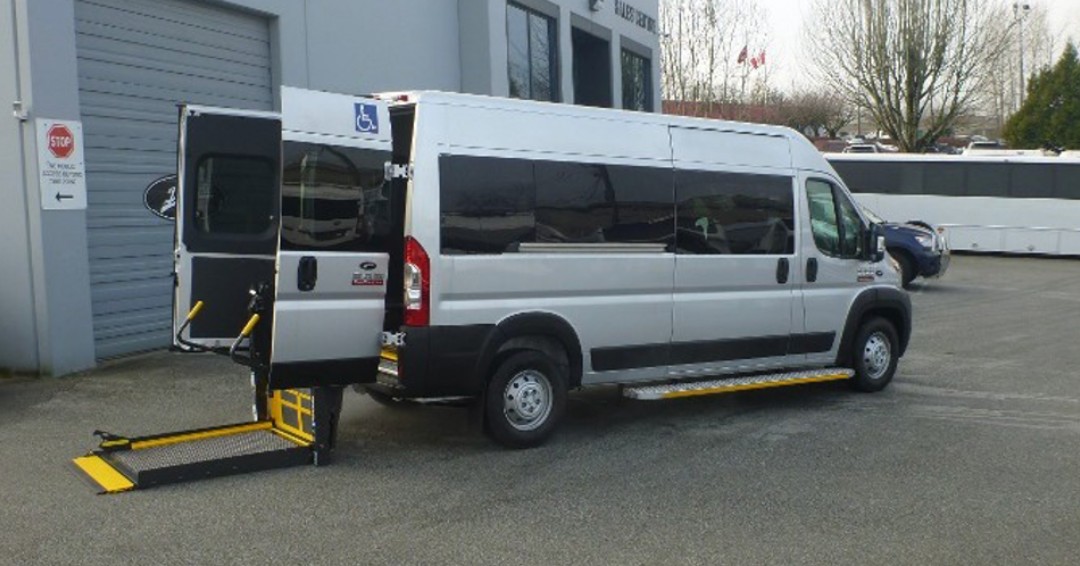
Anyone who is 55 years or older will soon be able to access a vehicle to get them to all of their appointments in town, and to some appointments outside of the community.

Drake’s Handi-Bus Services is now being contracted by the Town of Drayton Valley to help those who are older than 55 and those with mobility issues (at any age). Annette Driessen, the General Manager of Community Services for the Town, says they put an RSP out into the community, checking to see if there was anyone who wanted to operate the service, and Drake’s was the one who won.

“Providing accessible transportation in Drayton Valley has been a priority of Council and I am excited to see this important project come to fruition. Town Council remains committed to offering yearly grants to keep this service operating for the betterment of the community,” says Mayor Michael Doerkson in an email statement.

Amy Newberry, of Drake’s Handi-Bus Services, says the name has historical meaning for the community. “The Drakes were the people of our town that named Drayton Valley because of the Postal Code system, and they were also my great grandparents. It’s a form of leaving a legacy for me,” she said via email.

Facebook
Email
LinkedIn
WhatsApp

The woods behind the former Eldorado Elementary School are getting a trim over the next couple of weeks.

“We’re not clearing the trees. We’re clearing the underbrush,” says Jenn Stone, who is responsible for intergovernmental relations and communications for the Town of Drayton Valley.

Church of God

Drayton Valley Church of God. Our Worship Services usually include: traditional hymns, praise choruses, and contemporary songs, prayer, scripture, and a sermon.

Read More »

In the past, there has been discussion about clearing all of the trees, but on October 26, town council decided to clear the underbrush instead. 

“We want to make sure we’re taking care of our green spaces, and that is a nice space,” says Stone.

Currently, the undergrowth presents a fire hazard. Should something happen when the area is dry, the fire would be able to spread rapidly with the dried grass and bushes.

Another reason for the trim is that it provides better sight lines. Currently, anyone using the paths will have a difficult time seeing much in the woods. Once the underbrush is cleared, it will be safer for people to walk through.

If you’re a teacher who has just headed back to school I have some bad news. Facebook says you’ve been doing it wrong. Or, to be more specific, you’ve been teaching the wrong stuff. 

According to something I read on the social media platform, the education system is teaching kids the wrong subjects. And it has been for years.

Facebook obviously wouldn’t just allow someone to publish something without rigorous fact checking. That would be grossly irresponsible. So we have to assume there’s a degree of existential truth to the list of Subjects that Should Be Mandatory in Schools, but I’m not sure what.  

I won’t bore you with the full rundown but it includes things like home maintenance, insurance, coding, balancing a cheque book and public speaking.

Wait, what?

Balancing a cheque book was an important skill back around 1990. These days it’s as much use as knowing how to change a roll of fax paper or memorizing your best friend’s phone number.

Keeping up with home repairs is a great thing and you’ll save a bunch of money if you can do them yourself, but as a subject it’s a little vague. Are we talking about changing a lightbulb or pouring a concrete slab for your deck? It would be good to know because one of these things is not like the other.

Insurance? I don’t even know what that means. Sure it can be an expensive mistake if you wind up overinsured. And it can be an even more expensive mistake if you wind up under insured. But I’m not clear on how they’re supposed to teach that in schools when  there are so many variables and every case is going to be different. 

Coding would be a very worthwhile skill in an increasingly computerized world, but I’m not sure it’s something we all need to be good at, the same as we don’t all need to be doctors, airline pilots or electricians.

And public speaking? Well, don’t schools already teach that? Isn’t that the point of every presentation you were asked to make in front of the class from Grade 1 show and tell onwards? 

So if I was a teacher I’d ignore what Facebook says and stick to what I’m doing. You see a lot of criticisms of the high school curriculum, but the standard, traditional subjects have stood us in good stead. Sure, you don’t necessarily end up using everything they teach you in school once you enter the real world. After almost fifty years I’m still waiting for a Frenchman to approach me on the street, say “bonjour” and ask me how old I am or what the time is, but I’ll certainly be prepared if it ever happens.  

And the other stuff, reading, writing and arithmetic, is still as important as it ever was. Yeah, we all carry a calculator with us these days, but if you’re trying to figure out whether 600 grams of cheese for $7.22 is a better deal than 450 grams for $5.07, you still have to know how to ask the question before your phone can give you the answer.

Teaching things like that is what school’s for. I hope that never changes. 

Facebook
Email

A local woman has made it to the top after losing the most weight and was named the TOPS Queen for 2026.

Seventy-eight-year-old Pat Thoreson has been a member of the not-for-profit weight-loss club, Take Off Pounds Sensibly, since 1984. After losing the most weight in Alberta this year, Thoreson was crowned the TOPS Queen last May.

“I started out with a weight problem when I was growing up, so I’ve spent a lot of years at it,” she says.

Since she joined TOPS, Thoreson has lost 72.25 lbs, though she says most of the loss was over the past couple of years.

Prior to joining TOPS, Thoreson had tried out a number of different groups in an attempt to achieve results, but with little success. She says she would lose a little bit of weight, but then would gain it back.

Living near Winfield, Thoreson would meet with the club in Bluffton. From spring to the fall, Thoreson would drive herself to the club every week. Over the winter, Thoreson’s husband would drive her so she wouldn’t have to drive in the dark.

As much as the group was about losing weight, the social aspect was also appealing. She says the club was extremely supportive, and she formed a bond with the members, which was one of the reasons that kept her motivated to return.

“We take turns doing programs, and we have contests. It’s just a good support club,” she says. “That has been another thing that has gotten me to this point.”

One of the women Thoreson met was Violet Schmidt, who was Queen in 1995, and the two became very close.

“Over the years, she was one of the best supporters that I’ve ever had,” she says.

Unlike other groups, Thoreson found the approach of TOPS refreshing. Each week there was a weigh-in for the members, similar to other organizations, but they focused on making healthy food choices rather than food or calorie restriction.

“It’s a food exchange,” says Thoreson. “It’s not that you can’t eat certain foods; you just think about the amount of calories and that type of thing.”

She says they allow themselves to eat the food, but just remain conscious of how much and how often they ate it.

It’s also cheaper than many other programs. To join TOPS, there is an annual fee of $49 USD. Thoreson says her club, which has since relocated to Hoadley, also charges a $5 fee for each meeting to cover the costs of the coffee and rental space. Other than that, there are no fees for information packages and no meals that have to be purchased.

Thoreson says the biggest weight loss came after she received an award for being part of the club for 40 years.

“I thought, ‘40 years and I haven’t really done a whole bunch,’” she says. “That’s one of the things that kind of shook my memory that this was why I was really here, not just to visit.”

She says she lost weight at a healthy pace and was able to keep it off thanks to the information she had from the group and the exercise regime that she stuck to.

“On Mondays, [my husband and I] would floor curl in the afternoon. Then on Tuesdays and Thursdays I do chair exercises for one hour in Buck Lake on Tuesdays and Winfield on Thursdays. Then on Thursdays I would walk for three-quarters to an hour at Winfield as well,” says Thoreson.

As a Queen, Thoreson says she would like to advocate the importance of healthy choices to people.

“A person can do it if they just stop and think about what they’re eating and what they should be eating,” she says. “Even though it took me 42 years, I still go there. It’s not like you have to do it all of a sudden.”

Thoreson says she hopes people will hear her message and make time to attend a meeting at a nearby club to see what the organization is all about. 

More information about the program can be found at www.tops.org. 

I remember when I let my kids walk to school alone for the first time. I stood in our big front window waving, and blowing kisses fighting the urge to jump in my car and follow them. I told myself repeatedly that if I didn’t get a call from the school wondering where they were,  they must have made it safely and they did. 

The route to school from our home on 54th Ave was pretty calm for the most part except for three crossings. The first was crossing the road that the old pool was on from west to east. There was no cross walk and it had some blind spots. People often picked up speed while driving and I would really hammer it into the kids’ heads “Stop, look and listen! Then get eye contact.” The other two crossings closer to St. Anthony School did have traffic lights, however some drivers liked to make that right hand turn while they were looking left. Again “Eye contact!” I wanted my kids to know the responsibility of being a pedestrian, after all we lived in town and walking was something we did often. I never wanted them to implicitly trust that the driver saw them, or wasn’t distracted. They needed to be predictable and patient for drivers. That first walk happened three years ago and my, how times have changed. 

Whereas, before I directed much of my annoyance and outrage at drivers, now it’s the “pedestrians,” who aren’t actually on foot. I’m talking about people on an e-anything who zip and zoom from sidewalk to the roads, and who don’t make eye contact, don’t act predictably and generally are not respecting the rules of the road or the sidewalk. 

Do I sound like a Karen? I hope so.

A few weeks ago I was walking to the library from the office, and there was a truck at the fourway stop to my right. I made eye contact, looked both ways and proceeded to walk. Then out of the blue to my left, an electric scooter came off the sidewalk onto the road, cut off my path of walking and zipped through the intersection, without stopping thereby cutting the truck off too. In this one instance not only could the person have hit me, but the truck that was ready to proceed could have gunned it and hit him. 

Seinfeld is my mindless pleasure. There’s one episode I just watched where Kramer got into blows with a baseball player over a ball cleaning violation on the golf course. Jerry thought he was being too strict with the rules. Kramer’s response. “Hey, a rule is a rule and let’s face it without rules…there’s chaos.” This is what the roadways and sidewalks seemed to have devolved into, utter chaos. 

So despite the fact that the current laws on electric anything are murky, and scooters shouldn’t be used off of private property, here they are. And while I would love to deliver the typical PSA to drivers, that says “Hey it is back to school, please watch out for pedestrians.” I also want to shout out. “Hey it’s back to school, please make sure your kids know the rules of the road, how to be a respectful pedestrian that acts in a predictable manner around vehicles, and non-motorized pedestrians! Please!!! For the love of…”

I am not just being a Karen on this one and I would like to put the general reminder that not more than a few years ago we had an e-scooter death in this very town when a scooter driver hit a  pedestrian, knocking him down resulting in injury causing death. 

So on one hand I would like all drivers to be aware of the pedestrians out on the sidewalk this school season but also, pedestrians or hybrid pedestrians please also do your due diligence and watch for traffic, and be predictable. Lets make sure everyone gets to where they are going in a boring and uneventful way this school year.

Facebook
Email

The Drayton Valley Thunder are getting ready to hit the ice for the pre-season, and head coach Jeff Truit says there will be some changes this year.

Truit, who is in his second season of coaching the team, says there were some lessons to be learned last year.

“I knew that this was a tough league coming in, and with a younger group,” he says. “We learned a lot of lessons in how we have to play and how we have to approach things.”

Truit says it wasn’t anything earth-shattering for him; he was aware there could be some improvements the team needed to work on when he started. 

There were a lot of first-year players on the team last year, and so there was some inexperience to contend with. 

“I thought last year that we got out-competed at times,” he says. 

Heading into camp this year, Truit says they are focusing on bringing in more skill and speed, and they are also looking for bigger players. 

“It’s going to be a very competitive camp. I think our scouts have done a tremendous job with the quality of players we’ve got coming in,” he says.

The coaches will be keeping an eye out for some of the taller players with more muscle mass this year. Truit says there is a place for every size of player, but he wants a team that’s a balance of players who are six feet or more and have power and the smaller guys who have the speed. 

One of the areas that he saw needed to be improved was their game against the boards. He says the team needs to be able to win those battles. When the players head into that situation, there is a mental aspect to the win. Truit says sometimes size can affect how the player acts in the corners.

“We’re not sacrificing skill because these guys do have skill,” he says. “We look at that being a real positive for our team.”

Truit says there is a fire within every athlete regardless of their size, and each one has to work within the team to make it a success. 

A lot of the recruits have worn letters on their jerseys from their past teams. Truit says even though these past leaders are coming into a new level of hockey, they know how to prepare for games and are less likely to get overwhelmed.

“They are very mature young men,” he says. “The nice thing about it is they’ve been leaders, they’ve had to take care of their teams and set the example on and off the ice.”

Truit says last year was a tough year, but as the players have come back, he sees a new level of focus. He says their attitudes have always been great, but they are willing to take on the responsibility of taking the team to another level.

“They know we have to improve,” he says. “They know that the pressure is on. They seem to have grasped that, and that speaks to the quality of their character.”

Truit says there is a mental aspect to the game that the players have to master as well. 

“[As an athlete] you have to take it upon yourself to raise that level, and that’s a mindset that you’ve gotta come into,” he says. “And it just feels like now they are going to get it done.”

Truit says he sees the increase in the drive from the players, and he’s really excited about what the upcoming season will bring.

While the role of the captain on the team is an important one, Truit says they are all expected to help with the leadership.

“I care about the collective unit rather than just the captains,” he says.

Truit says one of the best things that fans can do to help the team is to fill the seats during games. He says it can be very intimidating for the opposing teams coming in to hear the cheers for the home team.

He says he believes the fans will be proud of the improvements that have been made to the area, including the taller glass, new clock, and screen. The atmosphere will be different.

“The fans here in Drayton Valley can be a very intimidating group when they’re loud and they’re cheering and supporting that way,” he says. “They did a great job for us last year.”

When I first got into the advertising and sales side of the newspaper I didn’t know anything about anything. But I did know I wanted to make sure that we built our clients effective ads specific to newspaper marketing.  

“Newspaper friendly” advertising is a stand alone subset of advertising, just like every social network has their own specs for effective digital advertising, and billboards have their requirements, and radio has their requirements. Newspaper ads that follow certain specs are more effective.

Why is this important for you to know? Because with the rise of AI, we have been getting many AI posters as graphic design submissions for advertising. As a jumping off point for our graphic designer this is fantastic intel, however as a carbon copy ad, these posters are not always newspaper friendly. 

A few basic tips I share with people when they are considering submitting a draft design are these:

White space! Newspapers need white space. Too much of everything leads to a whole lot of nothing for the eye to focus on. White space allows your prospective clients to see your important messaging from a distance and draws them in closer to see more once interest is piqued. 

Font size. The Free Press type font is 9pt. Advertising should be larger than this. In some cases much larger. 

Font contrast. A dark font on a lighter background is the easiest to read. This is why newspapers are black font on white paper. Again this takes us back to white space. 

These are the basics that I let people know about. This may mean that your newspaper ad is not a carbon copy of your promotional poster. 

But our brand! You might protest. 

Branding does not mean placing the same identical ad across multiple mediums. Branding requires you to ensure the big picture aspects of your company are included in all advertising such things like: colours, typeface, image themes etc. 

You wouldn’t put a very detailed poster on a billboard would you? No. People driving at 70km per hour don’t have time to read all of the information. But you may put the same headline, with the same colour and similar imagery with a big bold company name. Social media advertising favours not just images but videos – branding may appear in the beginning and end of the video. 

If you do choose to draft your ad graphics in AI here are some prompts I pulled from Gemini you could use in  that will help make your ad specific to the newspaper medium:

Newspaper prompt guidelines from Gemini

1. Demand High Contrast and Grayscale Clarity

Phrase to include in your prompt:

“High contrast, strong key lighting, bold outlines, optimized for black and white print, crisp grayscale separation.” 

Note: you can reference the same but in colour, the colour contrast will be more defined. 

2. Enforce Simple Compositions and Ample Negative Space

Phrase to include in your prompt:

“Minimalist background, single clear focal point, uncluttered design, generous empty negative space for text overlays.”

3. Choose Graphic or Vector Styles Over Hyper-Realism

Phrase to include in your prompt:

“Flat vector art style, clean graphic illustration, sharp edges, print-ready layout, high-legibility design.”

One of the services the Free Press provides is graphic design. Our graphic designer on staff, has worked in marketing and has a degree in graphic design. She has a keen eye and great understanding of the importance of typeface, layout, and focal point. If you draft your poster initially in AI send it our way to be rendered into a newspaper friendly format. Provide us with a png or pdf file, unflattened so we can adjust to make sure you are getting the best ad that will catch the most eyeballs. 

The fact is the wrong ad style for the wrong medium is ineffective no matter the marketing platform you use. Over at the Free Press, advertising is part of the full newspaper package and we want your ads to be as interesting and eye catching to our readers as our editorial headlines.  

Facebook
Email

Last Friday the Evansburg Inn was entered into the annals of history by the Beer Parlour Project, which has been making a photographic documentary of historic hotels across Western Canada.

Chris Doering, Rob Pohl, and Doering’s wife Connie Biggart are the founders of the Beer Parlour Project, which aims to record the history of hotels that were the focal point of their community when they were first built. The group wants to capture the essence of the building using a combination of digital and vintage flash photography of the building and the community of people who use it. 

“My friends and I are history photographers,” says Doering. “So we go around and document historic buildings, machinery, or whatever the case may be.”

While they were out in the field working, they were often in rural areas. Often there were hotels in the community, some of which were still original structures from the first half of the 20th century, and they would stop in for lunch.

“Right under our noses is all these really interesting hotels with really interesting stories,” says Doering.

The trio started the project in 2022 and have been to about 50 rural establishments since then. Their goal is to visit 100 older hotels across Western Canada so they can publish a coffee table book. They’ve already secured an exhibit at the Alberta Art Gallery in 2028, which they are excited about.

The Beer Parlour group started their weekend on a Thursday at the Colinton Hotel in Colinton, Alberta. From there they drove to Evansburg on Friday, and on Saturday they stopped in at the Warburg Hotel and Saloon.

Though Doering, Biggart, and Pohl all have full-time jobs, this project is their main hobby. The group is funding their project on their own, though they are looking for some arts grants to help cover some expenses. As such, they try to get as many stops in as possible if they have to travel any distance. 

Doering says they pick areas to focus on each time they are planning to work on their project. Once they have the area and have selected the hotels, they look into the history of the building and its relationship to the community. They also consider the cultural side of things and how people are involved in the history of the building. 

“They’re really little hidden gems,” says Doering. “Outside appearances can be deceiving.”

Doering’s role in the project is digital photography, research, and handling most of the interviews. 

“You hear some really amazing stories,” says Doering. “Some hilarious, heart-breaking — you name it.”

Pohl focuses on taking photos, often on his vintage tri-pod camera, and he also helps with some of the writing for the website. 

While Pohl’s camera isn’t the best camera for the project, he uses it because he prefers to develop the pictures in his darkroom. It also provides a great ice breaker as patrons come up and ask him questions about it.

“It’s funny, the expectations of people now, especially the younger generation. [They say] ‘Can I see the back of the camera? What does the picture look like?’” says Pohl.

He says people are often shocked that it will take a month for the picture to be developed, but they always offer to send them a complimentary picture when it’s ready.

Pohl says now that they’ve been to a few different bars, had their stories told in the paper, and have been interviewed for television and radio, they can show that they are credible and have a legitimate project that they are working on. This could make it easier to secure grants to help cover some expenses, and it could also make it easier for them to get their work published in a book.

It hasn’t always been easy for them to get people to trust them. For the most part, owners have allowed them to come in, take some photos, and talk to people; however, some have turned them away.

“There is always a little suspicion because they think we’re either gonna portray their place as a dump and try to make fun of it, which we’re not. We’re trying to celebrate it, get people aware of these [places] and out there to enjoy them,” says Pohl. “We don’t use any images or take any pictures in a way to portray it in that light, so we’ve got to get that understanding in place.”

The other suspicion owners sometimes have is that the Beer Parlour Project is going to charge them for the work they are doing, which has never been the case.

The owners of the Evansburg Inn, Christine and Diane Maskell, say they were happy to participate in the project because they believe it’s important for small towns to be recognized and supported.

“Some people don’t even go off of Highway 16, and when they go to these small communities, they’re amazed at what they can find in them,” says Christine. 

Christine and her mother-in-law, Diane, have owned the Evansburg Inn for nearly 26 years, and it was only recently that Christine decided to close the bar down on Sundays. Prior to that, she had been working every single day to keep the place going while raising five kids.

The best memories Christine and Diane have are of the people they’ve met along the way. The history of their time running the bar is tied to their memories of their patrons and friends.

Currently, Christine, Diane, Christine’s daughter Lindsey, and her daughter-in-law, Jacey, run the place. 

“We do get along really good, honest to God,” says Diane. “They say that mothers-in-law and daughters-in-law don’t get along, but we do.”

The family run business has seen its ups and downs. Their family lost a grandson, son, brother, and husband when Robbie Maskell passed away in 2022.

But still, the women have continued to serve their loyal customer base. Christine is a Jill-of-all- trades, but she doesn’t touch the electrical. She does, however, handle the maintenance for the rest of the building.

“If it’s broken, she’ll fix it,” says Diane.

Over the years, their bar has been known as a place of respect.

“I say, if you respect the place, then I’ll respect you,” says Christine.

In the time they’ve owned the place, there have only been a handful of fights.

Diane recalls a time when Christine had to step in to keep the peace one night.

“There was going to be a fight — this was a few years ago. There was a regular sitting at the bar, and [Christine] knew he was going to go after [another patron]. She jumped over the bar and grabbed him, and hung onto him like you wouldn’t believe,” says Diane.

The bar has become a memorial for some. A bench outside the Inn was placed there in Robbie’s honour, and inside, there is a column filled with messages for a loyal patron who passed away.

“He used to sit in that spot,” says Christine. “He did a lot of plumbing work and help for us over the years we were here, and he suddenly passed away.”

They held a memorial service for Jerry Lee, and his family asked if they could write messages on the wall. Christine pointed them to the area where Jerry always sat, and Jerry’s family and friends left messages for him there.

Several years later, those messages are still preserved, and Jerry is still remembered.

“He had some nieces and nephews that were five or six years old. They’re 18 now and they come in, and they so appreciate that we still have [the messages],” says Christine. “A couple of weeks ago his daughter came in, and she brought her daughter in and they were talking about it. It’s kind of nice.”

Pohl and Doering’s only regret with this project is that they didn’t start sooner. Many old hotels have been closing down in recent years.

“We’ve kind of missed the boat in a way. We should have started a decade sooner and we could’ve gotten a lot more, but we’re going to have no problem hitting 100,” he says. 

The group is also really enjoying working on the project, and Pohl thinks they might push past 100 simply because they enjoy it.

More information about the Beer Parlour Project can be found at www.beerparlourproject.com. 

Stone says the removal of the underbrush will also hopefully deter activity in the area. The space backs onto a residential area, the school, and the Shangri-La Lodge and some people may not be comfortable using the area if it seems like there is illicit activity.

After consulting with Fish and Wildlife, the Town has determined that the best time for clearing the area is now. There are no animals starting families at this time of year, and there will be less of a chance of disturbing any nests or other habitats.

There are no plans to put in additional lighting at this time, says Stone. However, public works will be ensuring the area is cleared of garbage and debris, whether they do it themselves or hire a contractor.

Download your Brazeau and Beyond Experience Guide

Find out what you can do in Drayton Valley, Brazeau County and surrounding region.

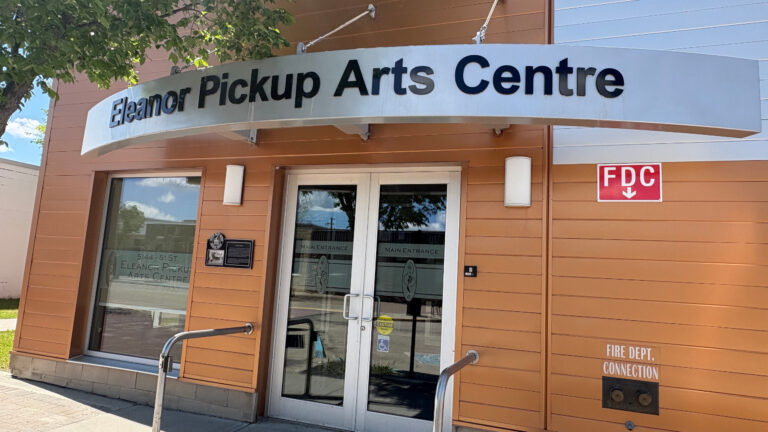
If you’re tired of trying to watch live performances from the balconies with binoculars, which is often the case at the large venues found in the city, then the intimate settings of the Eleanor Pickup Arts Centre and the Max Centre are just the ticket.

The two facilities have a full calendar of performances throughout the fall and winter months and they offer two completely different experiences. 

The Max Centre is located in Frank Maddock High School and offers a wide array of “dinner and a show” packages featuring performances by tribute acts showcasing the work of some of the world’s best known musicians. When you book a ticket at the Max you get your money’s worth. An evening can last anywhere from three to four  hours and includes a catered meal, a live performance and well priced drinks. By the end of the night there are almost always people on the dance floor or singing along with the performers. This is an excellent venue to get out with a group and  have some fun. 

The Eleanor Pickup Arts Centre is another performing arts venue that packs a punch.

The arts centre, formerly known as the Cardium Theatre, was the entertainment anchor in downtown Drayton Valley at the height of the mid-century oil boom. In recent years it was purchased by the local municipalities and refurbished into its current form, where it now acts as a venue for live music, comedians  and other entertainers. 

The Eleanor Pickup Arts Centre is the largest stage in this part of Alberta,  is managed by a group of dedicated volunteers and works to bring in up and coming and independent artists to the area. 

A night at the theatre includes moderately priced beverages and snacks, comfortable theatre chairs, and there is no bad seat in the house. If you are working dinner into your evening I would recommend going out for supper at one of the 40 different restaurants in town, and heading out for after-show drinks at nearby lounges and bars. 

Upcoming performances at both venues are regularly advertised on social media or in the Drayton Valley and District Free Press. 

Facebook
Email

The Drayton Valley and District Agriculture Society is raising funds for a local family whose child is fighting a rare form of cancer.

Shortly after his third birthday, Leo Grosjean was diagnosed with a rare cancer called rhabdomyosarcoma. 

“His mom had just come off of maternity leave, and it turned out he needed 42 weeks of treatment including chemo, radiation, and possibly surgery,” says Tayler Vakoulich, one of the organizers of the fundraiser. “Even after that, there is a follow-up of 24 weeks of maintenance therapy.”

The ag society is working with a group called the Golden Circle of Champions, a program that originates in the United States and is just starting up in Canada, to help the Grosjean family cover costs while they care for their son. The group is similar to the Make-A-Wish Foundation with a cowgirl/cowboy focus.

The society was the one to approach the Golden Circle and put Leo forward as a candidate for their program. Typically, the candidates come through rodeos.

“[We] sponsor them and then this program sends them to the [Canadian Finals Rodeo] for the week, it gets them a hotel room, and it gets them all these really cool experiences where they get to go meet the animals and cowboys, and they get their own banquet,” says Vakoulich.

The Golden Circle also sends one of its Canadian candidates to the National Finals Rodeo in Las Vegas.

The ag society was the one who put forward the funds to cover the expenses of the CFR, says Vakoulich, because they wanted to go with a second option that the program offers. It helps people with different fundraisers to help out families.

Some of the fundraisers they have include the Golden Boot, which is a golden cowboy boot that gets passed around during the Thursday Night Rodeos. 

“It goes from $400 to $700 every night,” says Vakoulich.

Other fundraisers include 50/50s at their markets. For the past three months, all of those funds have gone to Leo’s family.

The group is also partnering with Stella Stevens from CFCW Edmonton, who works with the Golden Circle, to put on a concert in the fall, says Vakoulich. 

“She’s helping us get an artist to do a nice big concert in town,” says Vakoulich.

They are also looking for items that can be raffled off at the Thursday Night Rodeos, she says.

Over the next few weeks, the Grosjean family will be incurring far more expense than usual, says Vakoulich. Leo will be headed to Florida for treatments with the hope that a change in treatment will keep the toxicity levels in his lungs down.

Those who would like to donate to the cause can participate in any of the fundraisers, such as the Golden Boot or the 50/50 raffles. They can also reach out to the Ag Society at 780-621-0030 or they can send an email to dvagsocietyinfo@gmail.com.

Folks, this month I find myself at war with nature. And so far it looks like nature is winning

Last night I was awoken by the sound of crashing from right outside the bedroom window. I looked out to see half of one of my tomato plants lying on the ground, while the other half was steadily being chomped by a full sized whitetail.  Unruffled, the deer gave me a not particularly apologetic look before wandering over to poop on the lawn.

I suppose at least the deer are nice to watch, unlike the caterpillars we saw earlier in the season.  The lesson we learned then is that while a single caterpillar is interesting to look at and potentially even cute in a creepy crawly kind of way, when that same caterpillar is accompanied by several thousand of his friends and relations it’s really kind of gross.

Meanwhile, as summer has hit its stride over the last couple of weeks it’s become increasingly important to sleep with the window open. At least it is if you’re me. It’s something that was driven into me by my grandmother; a woman who had tremendous belief in the health benefits of fresh air. Mind you, she also believed that if you ate apple seeds a tree would grow inside you, and that you could never have too much slightly used Christmas wrapping paper. But when it comes to fresh air, you know, I think she had a point.  

A few lungs full of the evening air, redolent with the scents of roses and honeysuckle and carried through the bedroom window on the gentlest of zephyrs, lulls you to sleep like a half bottle of cheap Scotch on an empty stomach. But staying asleep, well, that’s a different matter, because sometime around 4 a.m., just as the sun is starting to sneak over the horizon,  Mother Nature lets go with a positive cacophony of squawks and screeches as the magpies in our backyard prepare to greet the day.

Now don’t get me wrong, I am a big fan of birds. I especially like them roasted, with gravy and new potatoes. But I speak as someone who finds it increasingly hard to stay asleep over the sound of his own snoring, so I could really do without any outside interference. 

My final brush with nature (so far) has come in the form of a merry band of wasps who have set up home underneath our deck in an area that is both annoyingly close to the back door and inaccessible for wasp spray unless I’m prepared to go to the lengths of removing a couple of planks to allow me to get at them. I’ve set up a system where I sit in a lawnchair every afternoon and try to hit the wasps with a fly swatter as they come and go.  It’s a simple task, but it involves quite a lot of swearing, because most of the time the wasps refuse to sit still and accept their fate.  I suppose, on the plus side, it gives the neighbours something to talk about, but I can’t help but feel that somehow this is going to end badly.

Facebook
Email
LinkedIn
WhatsApp

BOOK AN APPOINTMENT

780-542-2144 info@rockyrapidsvet.com

Services

Rocky Rapids Veterinary Services Privately-owned, proudly Canadian, and driven to provide outstanding care and exceptional service.

Tammy Moody

Senior Consultant

780-236-0654

BACKHOE FOR HIRE

Reasonable rates. Fully insured.

Services Offered

We are a local company in Warburg specializing in excavation and installation of water lines, septic systems, electrical lines, plumbing, weeping tile, basements, footings, backfilling, grade for foundation, landscaping
(780) 686-1586
jawsbackhoe@gmail.com
Lorem ipsum dolor sit amet, consectetur adipiscing elit. Ut elit tellus, luctus nec ullamcorper mattis, pulvinar dapibus leo.
John Doe
Designer

Stone says if they find anyone who has been living in the area, the Town plans to encourage them to use the shelter pods. “We don’t want anyone living rough,” says Stone.

At this time, Stone says the Town isn’t planning to clear the undergrowth in any of the other green spaces in the community.

Facebook
Email

  The new CAO for Drayton Valley brings with him experience in a municipal leadership role. He also brings many years of military experience to the position.

Troy Grant was appointed CAO at a special council meeting held on July 8. On a municipal level, Grant worked at Sturgeon County as the General Manager of Public Services. 

During his time with the military, Grant earned the Canadian Forces’ Decoration for his years of service.

He originally started at the Town in March 2026, acting as the Town Services Manager. Getting a promotion this early on was not something he had anticipated.

“I didn’t come to the town anticipating becoming anything more than the general manager of town services,” says Grant.

Now that he has stepped into the new role, Grant says he’s excited to work with the staff he’s come to know. 

“This is an opportunity that lends itself nicely to my classic training through the military… I’m super excited about it.”

One of the skills needed for the position of CAO is leadership, which is something he developed as a logistics officer in the military. Grant was responsible for organizing supply chains, personnel, finances, and transportation to ensure Canadian troops around the world had what they needed to operate smoothly.

“The CAO ultimately needs to understand the strengths and weaknesses of their team and then employ those things with reinforcing those strengths and weaknesses to achieve the objectives that council and the people of Drayton Valley need,” says Grant. “That’s exactly what army leaders do.”

One of the first things Grant wants to handle is the Town’s organizational chart, with the goal of making it more clear to staff, council, and the public. Council will also have the opportunity to give feedback, says Grant, because he plans to run it by them before making it official.

He says he’s really enjoyed working with council over the past few months.

“Our current council is so open to innovation and creativity,” says Grant. “I think something we all need to wrap our heads around is that we have a new council. They’ve been in place for less than a year, but they’ve already demonstrated flexibility of thought, creativity, and aggressive policy changes.”

Another project that they have been working on is reviewing the way they handle contracting. Grant says he wants to be sure that it’s being done properly and is beneficial to the community, rather than costly or a hindrance. 

At the end of the day, this position is about service for Grant, which is something he’s proud of.

“I’m fundamentally a service guy. I’m about serving people; serving Canadians. My whole career has been that. I guess for me, it’s the next chapter in service to Canadians, so I’m excited about that,” says Grant.

Another area that excites him is “moving the yardsticks progressively” for Drayton Valley.

“Being part of figuring out the path forward in a meaningful way, in a leadership way, with this council and the team that we have,” he says.

He says he would like the municipality to be seen as a place where people want to work. Where they are respected and know that the work they do matters.

One of the questions council had for Grant was how long he imagined he could stay in his role as CAO. Given the turnover of the past ten years, one of their concerns was the stability of the role.

Grant says he plans to stick around as long as they will have him. He will eventually retire, though, and he says he will be putting together a succession plan with the hope that the next CAO can come fully qualified from in-house.

“It’s a real privilege to be able to support the town and become the leader of a team that I already believe in,” he says.

Carol Vowk, the chair of the board for the Drayton Valley Community Health Foundation, said when they first heard about the opportunity for the eSIM lab, they were in the middle of a project for a room in palliative care. She said the foundation decided to table the idea, keeping it in mind for the future once they had completed the renovations.

However, when the Town initiated the Grow Your Own program, they decided to go for it.

“The future came upon us really, really quickly,” said Vowk. 

While they were planning for the eSIM lab, they completed their renovations for the palliative care room. The space now includes a wheelchair accessible shower, which they didn’t have previously.

“We can accomplish great things when our community comes together,” said Vowk.

Following the speeches and ribbon cutting, attendees were able to watch a demonstration of the lab put on by RN students and hospital staff.

Facebook
Email

An all Canadian team that included a local resident was able to win the rodeo for the first time in the history of the World Famous Miles City Bucking Horse Cowboy Mardi Gras.

Wilfred Titanich was one of a team of three that attended the three-day event in Miles City, Montana from May 15-18. Titanich along with two brothers, Cory and Cody Loken, were the first all Canadian team to win at Bucking Horse since the first Miles City Bucking Horse Sale started in 1951.

Each member of the team came home with around $7,500 US, says Titanich.

“We got Championship Buckles and we got Championship Holders, too,” he says.

The team participated in the Wild Horse Racing event, which involves at least three people and an untouched horse. The horse starts out in the bucking chute and two members of the team follow the horse out, holding onto a long lead. One person is the mugger, and their job is to control the horse’s head by covering its eyes with his arm, which calms it and prevents it from rearing and hurting someone. The shanker holds onto the rope so it doesn’t run away. The rider saddles it, mounts, and holds on tight as they race to the finish line on a wild horse.

“Wild Horse Racing is one of the oldest events in rodeo,” says Titanich.

Though the event is called Wild Horse Racing, the horses used in the event are owned, but untouched.

Throughout the year, Titanich works the Canadian Wild Horse Racing Association Circuit, spending most of his time in Alberta, but also attending some events in B.C. and Saskatchewan, where he competes in both amateur and pro rodeos.

“Honestly, it’s really addicting,” says Titanich. “It looks really crazy, and it is pretty wild, but it’s super addicting. It’s an adrenaline rush in sport.”

He says he would encourage people who like competitive events to try Wild Horse Racing.

The Loken brothers have both been in the sport for about 15 years, says Titanich. Both of them were about 14-years-old when they first started out. Titanich has been in the sport for three or four years.

Normally, the Lokens race with their dad, Jason, and Titanich has his own team. But the three of them thought it would be fun to head down to Miles City for some fun. 

The Bucking Horse Sale was a stand-alone event, says Titanich. His team is getting ready for the circuit this summer.

“We can rodeo every weekend from now to the end of October,” he says.

Anyone looking for information about which wild horse racing rodeos are coming up can visit  www.wildhorseracing.ca. Titanich says he will be in Brooks at the Lea Park Rodeo this weekend and in Killam for the Killam Rodeo that will be held outdoors in Sedgewick this year.

Facebook
Email
LinkedIn
WhatsApp

Drayton Valley businesses donated their time as well as their money to help children in need this past Friday.

Sam and Kent Dingwall attended a Go Baby Go event in Red Deer where they got to experience building a vehicle for a child in need. They loved the idea so much, they decided to bring the event to Drayton Valley.

The event is put on by Variety Alberta, a children’s charity that has been around since 1982. Their sole purpose is to give all children and families the support they need to ensure a high quality of life.

Go Baby Go is one of the programs they offer. Toddlers and sometimes older children are provided with little vehicles that look similar to power-wheel cars. However, each of these cars is outfitted for the specific needs of one child.

Jana Hands, the CEO of Variety Children’s Charity of Alberta, says there were 18 cars given out with 25 local companies working to build them. Since 2019, when the program began, they have given 141 children the gift of mobility.

“Our goal is to connect with foundations, corporations, business owners, associations and we fundraise through different means,” she says. 

She says the charity will purchase the cars and then whatever items they need to ensure the vehicles meet the safety requirements for the child who will be driving them. In some cases, specialty seats can cost over $800.

“Having a child with special needs is expensive, and the government only gives subsidies in some areas,” she says.

If you’re a teacher who has just headed back to school I have some bad news. Facebook says you’ve been doing it wrong. Or, to be more specific, you’ve been teaching the wrong stuff. 

According to something I read on the social media platform, the education system is teaching kids the wrong subjects. And it has been for years.

Facebook obviously wouldn’t just allow someone to publish something without rigorous fact checking. That would be grossly irresponsible. So we have to assume there’s a degree of existential truth to the list of Subjects that Should Be Mandatory in Schools, but I’m not sure what.  

I won’t bore you with the full rundown but it includes things like home maintenance, insurance, coding, balancing a cheque book and public speaking.

Wait, what?

Balancing a cheque book was an important skill back around 1990. These days it’s as much use as knowing how to change a roll of fax paper or memorizing your best friend’s phone number.

Keeping up with home repairs is a great thing and you’ll save a bunch of money if you can do them yourself, but as a subject it’s a little vague. Are we talking about changing a lightbulb or pouring a concrete slab for your deck? It would be good to know because one of these things is not like the other.

Insurance? I don’t even know what that means. Sure it can be an expensive mistake if you wind up overinsured. And it can be an even more expensive mistake if you wind up under insured. But I’m not clear on how they’re supposed to teach that in schools when  there are so many variables and every case is going to be different. 

Coding would be a very worthwhile skill in an increasingly computerized world, but I’m not sure it’s something we all need to be good at, the same as we don’t all need to be doctors, airline pilots or electricians.

And public speaking? Well, don’t schools already teach that? Isn’t that the point of every presentation you were asked to make in front of the class from Grade 1 show and tell onwards? 

So if I was a teacher I’d ignore what Facebook says and stick to what I’m doing. You see a lot of criticisms of the high school curriculum, but the standard, traditional subjects have stood us in good stead. Sure, you don’t necessarily end up using everything they teach you in school once you enter the real world. After almost fifty years I’m still waiting for a Frenchman to approach me on the street, say “bonjour” and ask me how old I am or what the time is, but I’ll certainly be prepared if it ever happens.  

And the other stuff, reading, writing and arithmetic, is still as important as it ever was. Yeah, we all carry a calculator with us these days, but if you’re trying to figure out whether 600 grams of cheese for $7.22 is a better deal than 450 grams for $5.07, you still have to know how to ask the question before your phone can give you the answer.

Teaching things like that is what school’s for. I hope that never changes. 

Facebook
Email

A local woman has made it to the top after losing the most weight and was named the TOPS Queen for 2026.

Seventy-eight-year-old Pat Thoreson has been a member of the not-for-profit weight-loss club, Take Off Pounds Sensibly, since 1984. After losing the most weight in Alberta this year, Thoreson was crowned the TOPS Queen last May.

“I started out with a weight problem when I was growing up, so I’ve spent a lot of years at it,” she says.

Since she joined TOPS, Thoreson has lost 72.25 lbs, though she says most of the loss was over the past couple of years.

Prior to joining TOPS, Thoreson had tried out a number of different groups in an attempt to achieve results, but with little success. She says she would lose a little bit of weight, but then would gain it back.

Living near Winfield, Thoreson would meet with the club in Bluffton. From spring to the fall, Thoreson would drive herself to the club every week. Over the winter, Thoreson’s husband would drive her so she wouldn’t have to drive in the dark.

As much as the group was about losing weight, the social aspect was also appealing. She says the club was extremely supportive, and she formed a bond with the members, which was one of the reasons that kept her motivated to return.

“We take turns doing programs, and we have contests. It’s just a good support club,” she says. “That has been another thing that has gotten me to this point.”

One of the women Thoreson met was Violet Schmidt, who was Queen in 1995, and the two became very close.

“Over the years, she was one of the best supporters that I’ve ever had,” she says.

Unlike other groups, Thoreson found the approach of TOPS refreshing. Each week there was a weigh-in for the members, similar to other organizations, but they focused on making healthy food choices rather than food or calorie restriction.

“It’s a food exchange,” says Thoreson. “It’s not that you can’t eat certain foods; you just think about the amount of calories and that type of thing.”

She says they allow themselves to eat the food, but just remain conscious of how much and how often they ate it.

It’s also cheaper than many other programs. To join TOPS, there is an annual fee of $49 USD. Thoreson says her club, which has since relocated to Hoadley, also charges a $5 fee for each meeting to cover the costs of the coffee and rental space. Other than that, there are no fees for information packages and no meals that have to be purchased.

Thoreson says the biggest weight loss came after she received an award for being part of the club for 40 years.

“I thought, ‘40 years and I haven’t really done a whole bunch,’” she says. “That’s one of the things that kind of shook my memory that this was why I was really here, not just to visit.”

She says she lost weight at a healthy pace and was able to keep it off thanks to the information she had from the group and the exercise regime that she stuck to.

“On Mondays, [my husband and I] would floor curl in the afternoon. Then on Tuesdays and Thursdays I do chair exercises for one hour in Buck Lake on Tuesdays and Winfield on Thursdays. Then on Thursdays I would walk for three-quarters to an hour at Winfield as well,” says Thoreson.

As a Queen, Thoreson says she would like to advocate the importance of healthy choices to people.

“A person can do it if they just stop and think about what they’re eating and what they should be eating,” she says. “Even though it took me 42 years, I still go there. It’s not like you have to do it all of a sudden.”

Thoreson says she hopes people will hear her message and make time to attend a meeting at a nearby club to see what the organization is all about. 

More information about the program can be found at www.tops.org. 

I remember when I let my kids walk to school alone for the first time. I stood in our big front window waving, and blowing kisses fighting the urge to jump in my car and follow them. I told myself repeatedly that if I didn’t get a call from the school wondering where they were,  they must have made it safely and they did. 

The route to school from our home on 54th Ave was pretty calm for the most part except for three crossings. The first was crossing the road that the old pool was on from west to east. There was no cross walk and it had some blind spots. People often picked up speed while driving and I would really hammer it into the kids’ heads “Stop, look and listen! Then get eye contact.” The other two crossings closer to St. Anthony School did have traffic lights, however some drivers liked to make that right hand turn while they were looking left. Again “Eye contact!” I wanted my kids to know the responsibility of being a pedestrian, after all we lived in town and walking was something we did often. I never wanted them to implicitly trust that the driver saw them, or wasn’t distracted. They needed to be predictable and patient for drivers. That first walk happened three years ago and my, how times have changed. 

Whereas, before I directed much of my annoyance and outrage at drivers, now it’s the “pedestrians,” who aren’t actually on foot. I’m talking about people on an e-anything who zip and zoom from sidewalk to the roads, and who don’t make eye contact, don’t act predictably and generally are not respecting the rules of the road or the sidewalk. 

Do I sound like a Karen? I hope so.

A few weeks ago I was walking to the library from the office, and there was a truck at the fourway stop to my right. I made eye contact, looked both ways and proceeded to walk. Then out of the blue to my left, an electric scooter came off the sidewalk onto the road, cut off my path of walking and zipped through the intersection, without stopping thereby cutting the truck off too. In this one instance not only could the person have hit me, but the truck that was ready to proceed could have gunned it and hit him. 

Seinfeld is my mindless pleasure. There’s one episode I just watched where Kramer got into blows with a baseball player over a ball cleaning violation on the golf course. Jerry thought he was being too strict with the rules. Kramer’s response. “Hey, a rule is a rule and let’s face it without rules…there’s chaos.” This is what the roadways and sidewalks seemed to have devolved into, utter chaos. 

So despite the fact that the current laws on electric anything are murky, and scooters shouldn’t be used off of private property, here they are. And while I would love to deliver the typical PSA to drivers, that says “Hey it is back to school, please watch out for pedestrians.” I also want to shout out. “Hey it’s back to school, please make sure your kids know the rules of the road, how to be a respectful pedestrian that acts in a predictable manner around vehicles, and non-motorized pedestrians! Please!!! For the love of…”

I am not just being a Karen on this one and I would like to put the general reminder that not more than a few years ago we had an e-scooter death in this very town when a scooter driver hit a  pedestrian, knocking him down resulting in injury causing death. 

So on one hand I would like all drivers to be aware of the pedestrians out on the sidewalk this school season but also, pedestrians or hybrid pedestrians please also do your due diligence and watch for traffic, and be predictable. Lets make sure everyone gets to where they are going in a boring and uneventful way this school year.

Facebook
Email

The Drayton Valley Thunder are getting ready to hit the ice for the pre-season, and head coach Jeff Truit says there will be some changes this year.

Truit, who is in his second season of coaching the team, says there were some lessons to be learned last year.

“I knew that this was a tough league coming in, and with a younger group,” he says. “We learned a lot of lessons in how we have to play and how we have to approach things.”

Truit says it wasn’t anything earth-shattering for him; he was aware there could be some improvements the team needed to work on when he started. 

There were a lot of first-year players on the team last year, and so there was some inexperience to contend with. 

“I thought last year that we got out-competed at times,” he says. 

Heading into camp this year, Truit says they are focusing on bringing in more skill and speed, and they are also looking for bigger players. 

“It’s going to be a very competitive camp. I think our scouts have done a tremendous job with the quality of players we’ve got coming in,” he says.

The coaches will be keeping an eye out for some of the taller players with more muscle mass this year. Truit says there is a place for every size of player, but he wants a team that’s a balance of players who are six feet or more and have power and the smaller guys who have the speed. 

One of the areas that he saw needed to be improved was their game against the boards. He says the team needs to be able to win those battles. When the players head into that situation, there is a mental aspect to the win. Truit says sometimes size can affect how the player acts in the corners.

“We’re not sacrificing skill because these guys do have skill,” he says. “We look at that being a real positive for our team.”

Truit says there is a fire within every athlete regardless of their size, and each one has to work within the team to make it a success. 

A lot of the recruits have worn letters on their jerseys from their past teams. Truit says even though these past leaders are coming into a new level of hockey, they know how to prepare for games and are less likely to get overwhelmed.

“They are very mature young men,” he says. “The nice thing about it is they’ve been leaders, they’ve had to take care of their teams and set the example on and off the ice.”

Truit says last year was a tough year, but as the players have come back, he sees a new level of focus. He says their attitudes have always been great, but they are willing to take on the responsibility of taking the team to another level.

“They know we have to improve,” he says. “They know that the pressure is on. They seem to have grasped that, and that speaks to the quality of their character.”

Truit says there is a mental aspect to the game that the players have to master as well. 

“[As an athlete] you have to take it upon yourself to raise that level, and that’s a mindset that you’ve gotta come into,” he says. “And it just feels like now they are going to get it done.”

Truit says he sees the increase in the drive from the players, and he’s really excited about what the upcoming season will bring.

While the role of the captain on the team is an important one, Truit says they are all expected to help with the leadership.

“I care about the collective unit rather than just the captains,” he says.

Truit says one of the best things that fans can do to help the team is to fill the seats during games. He says it can be very intimidating for the opposing teams coming in to hear the cheers for the home team.

He says he believes the fans will be proud of the improvements that have been made to the area, including the taller glass, new clock, and screen. The atmosphere will be different.

“The fans here in Drayton Valley can be a very intimidating group when they’re loud and they’re cheering and supporting that way,” he says. “They did a great job for us last year.”

When I first got into the advertising and sales side of the newspaper I didn’t know anything about anything. But I did know I wanted to make sure that we built our clients effective ads specific to newspaper marketing.  

“Newspaper friendly” advertising is a stand alone subset of advertising, just like every social network has their own specs for effective digital advertising, and billboards have their requirements, and radio has their requirements. Newspaper ads that follow certain specs are more effective.

Why is this important for you to know? Because with the rise of AI, we have been getting many AI posters as graphic design submissions for advertising. As a jumping off point for our graphic designer this is fantastic intel, however as a carbon copy ad, these posters are not always newspaper friendly. 

A few basic tips I share with people when they are considering submitting a draft design are these:

White space! Newspapers need white space. Too much of everything leads to a whole lot of nothing for the eye to focus on. White space allows your prospective clients to see your important messaging from a distance and draws them in closer to see more once interest is piqued. 

Font size. The Free Press type font is 9pt. Advertising should be larger than this. In some cases much larger. 

Font contrast. A dark font on a lighter background is the easiest to read. This is why newspapers are black font on white paper. Again this takes us back to white space. 

These are the basics that I let people know about. This may mean that your newspaper ad is not a carbon copy of your promotional poster. 

But our brand! You might protest. 

Branding does not mean placing the same identical ad across multiple mediums. Branding requires you to ensure the big picture aspects of your company are included in all advertising such things like: colours, typeface, image themes etc. 

You wouldn’t put a very detailed poster on a billboard would you? No. People driving at 70km per hour don’t have time to read all of the information. But you may put the same headline, with the same colour and similar imagery with a big bold company name. Social media advertising favours not just images but videos – branding may appear in the beginning and end of the video. 

If you do choose to draft your ad graphics in AI here are some prompts I pulled from Gemini you could use in  that will help make your ad specific to the newspaper medium:

Newspaper prompt guidelines from Gemini

1. Demand High Contrast and Grayscale Clarity

Phrase to include in your prompt:

“High contrast, strong key lighting, bold outlines, optimized for black and white print, crisp grayscale separation.” 

Note: you can reference the same but in colour, the colour contrast will be more defined. 

2. Enforce Simple Compositions and Ample Negative Space

Phrase to include in your prompt:

“Minimalist background, single clear focal point, uncluttered design, generous empty negative space for text overlays.”

3. Choose Graphic or Vector Styles Over Hyper-Realism

Phrase to include in your prompt:

“Flat vector art style, clean graphic illustration, sharp edges, print-ready layout, high-legibility design.”

One of the services the Free Press provides is graphic design. Our graphic designer on staff, has worked in marketing and has a degree in graphic design. She has a keen eye and great understanding of the importance of typeface, layout, and focal point. If you draft your poster initially in AI send it our way to be rendered into a newspaper friendly format. Provide us with a png or pdf file, unflattened so we can adjust to make sure you are getting the best ad that will catch the most eyeballs. 

The fact is the wrong ad style for the wrong medium is ineffective no matter the marketing platform you use. Over at the Free Press, advertising is part of the full newspaper package and we want your ads to be as interesting and eye catching to our readers as our editorial headlines.  

Facebook
Email

Last Friday the Evansburg Inn was entered into the annals of history by the Beer Parlour Project, which has been making a photographic documentary of historic hotels across Western Canada.

Chris Doering, Rob Pohl, and Doering’s wife Connie Biggart are the founders of the Beer Parlour Project, which aims to record the history of hotels that were the focal point of their community when they were first built. The group wants to capture the essence of the building using a combination of digital and vintage flash photography of the building and the community of people who use it. 

“My friends and I are history photographers,” says Doering. “So we go around and document historic buildings, machinery, or whatever the case may be.”

While they were out in the field working, they were often in rural areas. Often there were hotels in the community, some of which were still original structures from the first half of the 20th century, and they would stop in for lunch.

“Right under our noses is all these really interesting hotels with really interesting stories,” says Doering.

The trio started the project in 2022 and have been to about 50 rural establishments since then. Their goal is to visit 100 older hotels across Western Canada so they can publish a coffee table book. They’ve already secured an exhibit at the Alberta Art Gallery in 2028, which they are excited about.

The Beer Parlour group started their weekend on a Thursday at the Colinton Hotel in Colinton, Alberta. From there they drove to Evansburg on Friday, and on Saturday they stopped in at the Warburg Hotel and Saloon.

Though Doering, Biggart, and Pohl all have full-time jobs, this project is their main hobby. The group is funding their project on their own, though they are looking for some arts grants to help cover some expenses. As such, they try to get as many stops in as possible if they have to travel any distance. 

Doering says they pick areas to focus on each time they are planning to work on their project. Once they have the area and have selected the hotels, they look into the history of the building and its relationship to the community. They also consider the cultural side of things and how people are involved in the history of the building. 

“They’re really little hidden gems,” says Doering. “Outside appearances can be deceiving.”

Doering’s role in the project is digital photography, research, and handling most of the interviews. 

“You hear some really amazing stories,” says Doering. “Some hilarious, heart-breaking — you name it.”

Pohl focuses on taking photos, often on his vintage tri-pod camera, and he also helps with some of the writing for the website. 

While Pohl’s camera isn’t the best camera for the project, he uses it because he prefers to develop the pictures in his darkroom. It also provides a great ice breaker as patrons come up and ask him questions about it.

“It’s funny, the expectations of people now, especially the younger generation. [They say] ‘Can I see the back of the camera? What does the picture look like?’” says Pohl.

He says people are often shocked that it will take a month for the picture to be developed, but they always offer to send them a complimentary picture when it’s ready.

Pohl says now that they’ve been to a few different bars, had their stories told in the paper, and have been interviewed for television and radio, they can show that they are credible and have a legitimate project that they are working on. This could make it easier to secure grants to help cover some expenses, and it could also make it easier for them to get their work published in a book.

It hasn’t always been easy for them to get people to trust them. For the most part, owners have allowed them to come in, take some photos, and talk to people; however, some have turned them away.

“There is always a little suspicion because they think we’re either gonna portray their place as a dump and try to make fun of it, which we’re not. We’re trying to celebrate it, get people aware of these [places] and out there to enjoy them,” says Pohl. “We don’t use any images or take any pictures in a way to portray it in that light, so we’ve got to get that understanding in place.”

The other suspicion owners sometimes have is that the Beer Parlour Project is going to charge them for the work they are doing, which has never been the case.

The owners of the Evansburg Inn, Christine and Diane Maskell, say they were happy to participate in the project because they believe it’s important for small towns to be recognized and supported.

“Some people don’t even go off of Highway 16, and when they go to these small communities, they’re amazed at what they can find in them,” says Christine. 

Christine and her mother-in-law, Diane, have owned the Evansburg Inn for nearly 26 years, and it was only recently that Christine decided to close the bar down on Sundays. Prior to that, she had been working every single day to keep the place going while raising five kids.

The best memories Christine and Diane have are of the people they’ve met along the way. The history of their time running the bar is tied to their memories of their patrons and friends.

Currently, Christine, Diane, Christine’s daughter Lindsey, and her daughter-in-law, Jacey, run the place. 

“We do get along really good, honest to God,” says Diane. “They say that mothers-in-law and daughters-in-law don’t get along, but we do.”

The family run business has seen its ups and downs. Their family lost a grandson, son, brother, and husband when Robbie Maskell passed away in 2022.

But still, the women have continued to serve their loyal customer base. Christine is a Jill-of-all- trades, but she doesn’t touch the electrical. She does, however, handle the maintenance for the rest of the building.

“If it’s broken, she’ll fix it,” says Diane.

Over the years, their bar has been known as a place of respect.

“I say, if you respect the place, then I’ll respect you,” says Christine.

In the time they’ve owned the place, there have only been a handful of fights.

Diane recalls a time when Christine had to step in to keep the peace one night.

“There was going to be a fight — this was a few years ago. There was a regular sitting at the bar, and [Christine] knew he was going to go after [another patron]. She jumped over the bar and grabbed him, and hung onto him like you wouldn’t believe,” says Diane.

The bar has become a memorial for some. A bench outside the Inn was placed there in Robbie’s honour, and inside, there is a column filled with messages for a loyal patron who passed away.

“He used to sit in that spot,” says Christine. “He did a lot of plumbing work and help for us over the years we were here, and he suddenly passed away.”

They held a memorial service for Jerry Lee, and his family asked if they could write messages on the wall. Christine pointed them to the area where Jerry always sat, and Jerry’s family and friends left messages for him there.

Several years later, those messages are still preserved, and Jerry is still remembered.

“He had some nieces and nephews that were five or six years old. They’re 18 now and they come in, and they so appreciate that we still have [the messages],” says Christine. “A couple of weeks ago his daughter came in, and she brought her daughter in and they were talking about it. It’s kind of nice.”

Pohl and Doering’s only regret with this project is that they didn’t start sooner. Many old hotels have been closing down in recent years.

“We’ve kind of missed the boat in a way. We should have started a decade sooner and we could’ve gotten a lot more, but we’re going to have no problem hitting 100,” he says. 

The group is also really enjoying working on the project, and Pohl thinks they might push past 100 simply because they enjoy it.

More information about the Beer Parlour Project can be found at www.beerparlourproject.com. 

The complete cost of the car is $3,000, and that is what they ask sponsors to donate. Then, they also have the sponsors come down and help to build the vehicle and give them to the kids, so they can see the direct results of their efforts.

The safety feature of the cars also extends to a remote parents can use to control the car if needed. There is also an emergency stop on that remote if it’s needed.

One of the recipients of the cars this year was a local family. James and Jordan Bullock’s son, Hunter, loves life and is always on the move. 

“He’s a very happy, outgoing, very busy little boy,” says his dad James. Hunter is included in all of the family outings, along with his sisters Rylie and Aubrie. James says Hunter enjoys boating, sledding, quadding, and other outdoor activities.

His mother Jordan says that while Hunter can move on his own, he often runs off and this can make it dangerous in certain situations.  One example, she says, is taking Hunter to the fair. “He’s a runner,” says Jordan, “he needs to be seated and have a seatbelt on.” She says sometimes he’ll take off in events where there are lots of people, and they have to chase after him.

“Hunter was diagnosed with a very rare genetic mutation, and there’s not even really a name for it,” she says. “There’s a mutation on his ARF1 gene and I believe he was the sixth child in the world to be diagnosed with this condition.”

Jordan says the support from the charity and the community meant a lot to their family. She says Hunter will be using the car everywhere, including in school so he can get to the park during recess.

His sisters say they are excited for Hunter. 

“I think it’s good because Hunter will run off into the bush and we won’t know where he went, because he went by so fast,” says Rylie. She says by having the car, they can keep track of him more easily. 

The experience of the event was just as emotional for the companies putting the vehicles together. 

“It’s pretty heartwarming to see everyone in the community step up and construct these vehicles for the kids,” says Tony Trainor, a member of the Pembina Pipeline team.

Steve Horn, another member with Pembina, says the experience brought him to tears. Darrel Winter with Pembina said it puts things in perspective, to see how fortunate some people are to have happy healthy family members.

Download your Brazeau and Beyond Experience Guide

Find out what you can do in Drayton Valley, Brazeau County and surrounding region.

If you’re tired of trying to watch live performances from the balconies with binoculars, which is often the case at the large venues found in the city, then the intimate settings of the Eleanor Pickup Arts Centre and the Max Centre are just the ticket.

The two facilities have a full calendar of performances throughout the fall and winter months and they offer two completely different experiences. 

The Max Centre is located in Frank Maddock High School and offers a wide array of “dinner and a show” packages featuring performances by tribute acts showcasing the work of some of the world’s best known musicians. When you book a ticket at the Max you get your money’s worth. An evening can last anywhere from three to four  hours and includes a catered meal, a live performance and well priced drinks. By the end of the night there are almost always people on the dance floor or singing along with the performers. This is an excellent venue to get out with a group and  have some fun. 

The Eleanor Pickup Arts Centre is another performing arts venue that packs a punch.

The arts centre, formerly known as the Cardium Theatre, was the entertainment anchor in downtown Drayton Valley at the height of the mid-century oil boom. In recent years it was purchased by the local municipalities and refurbished into its current form, where it now acts as a venue for live music, comedians  and other entertainers. 

The Eleanor Pickup Arts Centre is the largest stage in this part of Alberta,  is managed by a group of dedicated volunteers and works to bring in up and coming and independent artists to the area. 

A night at the theatre includes moderately priced beverages and snacks, comfortable theatre chairs, and there is no bad seat in the house. If you are working dinner into your evening I would recommend going out for supper at one of the 40 different restaurants in town, and heading out for after-show drinks at nearby lounges and bars. 

Upcoming performances at both venues are regularly advertised on social media or in the Drayton Valley and District Free Press. 

Facebook
Email

The Drayton Valley and District Agriculture Society is raising funds for a local family whose child is fighting a rare form of cancer.

Shortly after his third birthday, Leo Grosjean was diagnosed with a rare cancer called rhabdomyosarcoma. 

“His mom had just come off of maternity leave, and it turned out he needed 42 weeks of treatment including chemo, radiation, and possibly surgery,” says Tayler Vakoulich, one of the organizers of the fundraiser. “Even after that, there is a follow-up of 24 weeks of maintenance therapy.”

The ag society is working with a group called the Golden Circle of Champions, a program that originates in the United States and is just starting up in Canada, to help the Grosjean family cover costs while they care for their son. The group is similar to the Make-A-Wish Foundation with a cowgirl/cowboy focus.

The society was the one to approach the Golden Circle and put Leo forward as a candidate for their program. Typically, the candidates come through rodeos.

“[We] sponsor them and then this program sends them to the [Canadian Finals Rodeo] for the week, it gets them a hotel room, and it gets them all these really cool experiences where they get to go meet the animals and cowboys, and they get their own banquet,” says Vakoulich.

The Golden Circle also sends one of its Canadian candidates to the National Finals Rodeo in Las Vegas.

The ag society was the one who put forward the funds to cover the expenses of the CFR, says Vakoulich, because they wanted to go with a second option that the program offers. It helps people with different fundraisers to help out families.

Some of the fundraisers they have include the Golden Boot, which is a golden cowboy boot that gets passed around during the Thursday Night Rodeos. 

“It goes from $400 to $700 every night,” says Vakoulich.

Other fundraisers include 50/50s at their markets. For the past three months, all of those funds have gone to Leo’s family.

The group is also partnering with Stella Stevens from CFCW Edmonton, who works with the Golden Circle, to put on a concert in the fall, says Vakoulich. 

“She’s helping us get an artist to do a nice big concert in town,” says Vakoulich.

They are also looking for items that can be raffled off at the Thursday Night Rodeos, she says.

Over the next few weeks, the Grosjean family will be incurring far more expense than usual, says Vakoulich. Leo will be headed to Florida for treatments with the hope that a change in treatment will keep the toxicity levels in his lungs down.

Those who would like to donate to the cause can participate in any of the fundraisers, such as the Golden Boot or the 50/50 raffles. They can also reach out to the Ag Society at 780-621-0030 or they can send an email to dvagsocietyinfo@gmail.com.

Folks, this month I find myself at war with nature. And so far it looks like nature is winning

Last night I was awoken by the sound of crashing from right outside the bedroom window. I looked out to see half of one of my tomato plants lying on the ground, while the other half was steadily being chomped by a full sized whitetail.  Unruffled, the deer gave me a not particularly apologetic look before wandering over to poop on the lawn.

I suppose at least the deer are nice to watch, unlike the caterpillars we saw earlier in the season.  The lesson we learned then is that while a single caterpillar is interesting to look at and potentially even cute in a creepy crawly kind of way, when that same caterpillar is accompanied by several thousand of his friends and relations it’s really kind of gross.

Meanwhile, as summer has hit its stride over the last couple of weeks it’s become increasingly important to sleep with the window open. At least it is if you’re me. It’s something that was driven into me by my grandmother; a woman who had tremendous belief in the health benefits of fresh air. Mind you, she also believed that if you ate apple seeds a tree would grow inside you, and that you could never have too much slightly used Christmas wrapping paper. But when it comes to fresh air, you know, I think she had a point.  

A few lungs full of the evening air, redolent with the scents of roses and honeysuckle and carried through the bedroom window on the gentlest of zephyrs, lulls you to sleep like a half bottle of cheap Scotch on an empty stomach. But staying asleep, well, that’s a different matter, because sometime around 4 a.m., just as the sun is starting to sneak over the horizon,  Mother Nature lets go with a positive cacophony of squawks and screeches as the magpies in our backyard prepare to greet the day.

Now don’t get me wrong, I am a big fan of birds. I especially like them roasted, with gravy and new potatoes. But I speak as someone who finds it increasingly hard to stay asleep over the sound of his own snoring, so I could really do without any outside interference. 

My final brush with nature (so far) has come in the form of a merry band of wasps who have set up home underneath our deck in an area that is both annoyingly close to the back door and inaccessible for wasp spray unless I’m prepared to go to the lengths of removing a couple of planks to allow me to get at them. I’ve set up a system where I sit in a lawnchair every afternoon and try to hit the wasps with a fly swatter as they come and go.  It’s a simple task, but it involves quite a lot of swearing, because most of the time the wasps refuse to sit still and accept their fate.  I suppose, on the plus side, it gives the neighbours something to talk about, but I can’t help but feel that somehow this is going to end badly.

Facebook
Email
LinkedIn
WhatsApp

BOOK AN APPOINTMENT

780-542-2144 info@rockyrapidsvet.com

Services

Rocky Rapids Veterinary Services Privately-owned, proudly Canadian, and driven to provide outstanding care and exceptional service.

Tammy Moody

Senior Consultant

780-236-0654

BACKHOE FOR HIRE

Reasonable rates. Fully insured.

Services Offered

We are a local company in Warburg specializing in excavation and installation of water lines, septic systems, electrical lines, plumbing, weeping tile, basements, footings, backfilling, grade for foundation, landscaping
(780) 686-1586
jawsbackhoe@gmail.com
Lorem ipsum dolor sit amet, consectetur adipiscing elit. Ut elit tellus, luctus nec ullamcorper mattis, pulvinar dapibus leo.
John Doe
Designer

“I couldn’t ask for a better response. Everything went very smoothly today. Their reactions were what I hoped for,” says Sam Dingwall. “It was all around amazing.”

Dingwall says she had only planned to host this event once. However, many of the companies approached her after the event and told her they couldn’t wait until next year. She says it’s such a unique experience because they can actually see their dollars at work.

“I will look at hosting the event for next year,” she says. 

Dingwall says the charity starts by looking local, which was how they found Hunter, and then they take applications from people all over the province. For the most part, the children are being pulled out of smaller rural communities, where there aren’t the same support systems that families in cities typically have.

Facebook
Email
LinkedIn
WhatsApp

Things are looking good in Alberta’s oil patch. After some very tough years activity has bounced back, as has the price of a barrel of crude. But the current level of prosperity doesn’t always filter down to the communities where the industry is focused.

According to a report published earlier this month by the  Rural Municipalities of Alberta (RMA)  approximately $268 million in property taxes owed to rural municipalities by oil and gas companies has gone unpaid. That number represents a 6.1 percent increase from amounts reported for the 2021 tax year, and a 231.5 percent increase from the 2018 tax year, which was the first year that the RMA collected such data. 

If you’re a teacher who has just headed back to school I have some bad news. Facebook says you’ve been doing it wrong. Or, to be more specific, you’ve been teaching the wrong stuff. 

According to something I read on the social media platform, the education system is teaching kids the wrong subjects. And it has been for years.

Facebook obviously wouldn’t just allow someone to publish something without rigorous fact checking. That would be grossly irresponsible. So we have to assume there’s a degree of existential truth to the list of Subjects that Should Be Mandatory in Schools, but I’m not sure what.  

I won’t bore you with the full rundown but it includes things like home maintenance, insurance, coding, balancing a cheque book and public speaking.

Wait, what?

Balancing a cheque book was an important skill back around 1990. These days it’s as much use as knowing how to change a roll of fax paper or memorizing your best friend’s phone number.

Keeping up with home repairs is a great thing and you’ll save a bunch of money if you can do them yourself, but as a subject it’s a little vague. Are we talking about changing a lightbulb or pouring a concrete slab for your deck? It would be good to know because one of these things is not like the other.

Insurance? I don’t even know what that means. Sure it can be an expensive mistake if you wind up overinsured. And it can be an even more expensive mistake if you wind up under insured. But I’m not clear on how they’re supposed to teach that in schools when  there are so many variables and every case is going to be different. 

Coding would be a very worthwhile skill in an increasingly computerized world, but I’m not sure it’s something we all need to be good at, the same as we don’t all need to be doctors, airline pilots or electricians.

And public speaking? Well, don’t schools already teach that? Isn’t that the point of every presentation you were asked to make in front of the class from Grade 1 show and tell onwards? 

So if I was a teacher I’d ignore what Facebook says and stick to what I’m doing. You see a lot of criticisms of the high school curriculum, but the standard, traditional subjects have stood us in good stead. Sure, you don’t necessarily end up using everything they teach you in school once you enter the real world. After almost fifty years I’m still waiting for a Frenchman to approach me on the street, say “bonjour” and ask me how old I am or what the time is, but I’ll certainly be prepared if it ever happens.  

And the other stuff, reading, writing and arithmetic, is still as important as it ever was. Yeah, we all carry a calculator with us these days, but if you’re trying to figure out whether 600 grams of cheese for $7.22 is a better deal than 450 grams for $5.07, you still have to know how to ask the question before your phone can give you the answer.

Teaching things like that is what school’s for. I hope that never changes. 

Facebook
Email

A local woman has made it to the top after losing the most weight and was named the TOPS Queen for 2026.

Seventy-eight-year-old Pat Thoreson has been a member of the not-for-profit weight-loss club, Take Off Pounds Sensibly, since 1984. After losing the most weight in Alberta this year, Thoreson was crowned the TOPS Queen last May.

“I started out with a weight problem when I was growing up, so I’ve spent a lot of years at it,” she says.

Since she joined TOPS, Thoreson has lost 72.25 lbs, though she says most of the loss was over the past couple of years.

Prior to joining TOPS, Thoreson had tried out a number of different groups in an attempt to achieve results, but with little success. She says she would lose a little bit of weight, but then would gain it back.

Living near Winfield, Thoreson would meet with the club in Bluffton. From spring to the fall, Thoreson would drive herself to the club every week. Over the winter, Thoreson’s husband would drive her so she wouldn’t have to drive in the dark.

As much as the group was about losing weight, the social aspect was also appealing. She says the club was extremely supportive, and she formed a bond with the members, which was one of the reasons that kept her motivated to return.

“We take turns doing programs, and we have contests. It’s just a good support club,” she says. “That has been another thing that has gotten me to this point.”

One of the women Thoreson met was Violet Schmidt, who was Queen in 1995, and the two became very close.

“Over the years, she was one of the best supporters that I’ve ever had,” she says.

Unlike other groups, Thoreson found the approach of TOPS refreshing. Each week there was a weigh-in for the members, similar to other organizations, but they focused on making healthy food choices rather than food or calorie restriction.

“It’s a food exchange,” says Thoreson. “It’s not that you can’t eat certain foods; you just think about the amount of calories and that type of thing.”

She says they allow themselves to eat the food, but just remain conscious of how much and how often they ate it.

It’s also cheaper than many other programs. To join TOPS, there is an annual fee of $49 USD. Thoreson says her club, which has since relocated to Hoadley, also charges a $5 fee for each meeting to cover the costs of the coffee and rental space. Other than that, there are no fees for information packages and no meals that have to be purchased.

Thoreson says the biggest weight loss came after she received an award for being part of the club for 40 years.

“I thought, ‘40 years and I haven’t really done a whole bunch,’” she says. “That’s one of the things that kind of shook my memory that this was why I was really here, not just to visit.”

She says she lost weight at a healthy pace and was able to keep it off thanks to the information she had from the group and the exercise regime that she stuck to.

“On Mondays, [my husband and I] would floor curl in the afternoon. Then on Tuesdays and Thursdays I do chair exercises for one hour in Buck Lake on Tuesdays and Winfield on Thursdays. Then on Thursdays I would walk for three-quarters to an hour at Winfield as well,” says Thoreson.

As a Queen, Thoreson says she would like to advocate the importance of healthy choices to people.

“A person can do it if they just stop and think about what they’re eating and what they should be eating,” she says. “Even though it took me 42 years, I still go there. It’s not like you have to do it all of a sudden.”

Thoreson says she hopes people will hear her message and make time to attend a meeting at a nearby club to see what the organization is all about. 

More information about the program can be found at www.tops.org. 

I remember when I let my kids walk to school alone for the first time. I stood in our big front window waving, and blowing kisses fighting the urge to jump in my car and follow them. I told myself repeatedly that if I didn’t get a call from the school wondering where they were,  they must have made it safely and they did. 

The route to school from our home on 54th Ave was pretty calm for the most part except for three crossings. The first was crossing the road that the old pool was on from west to east. There was no cross walk and it had some blind spots. People often picked up speed while driving and I would really hammer it into the kids’ heads “Stop, look and listen! Then get eye contact.” The other two crossings closer to St. Anthony School did have traffic lights, however some drivers liked to make that right hand turn while they were looking left. Again “Eye contact!” I wanted my kids to know the responsibility of being a pedestrian, after all we lived in town and walking was something we did often. I never wanted them to implicitly trust that the driver saw them, or wasn’t distracted. They needed to be predictable and patient for drivers. That first walk happened three years ago and my, how times have changed. 

Whereas, before I directed much of my annoyance and outrage at drivers, now it’s the “pedestrians,” who aren’t actually on foot. I’m talking about people on an e-anything who zip and zoom from sidewalk to the roads, and who don’t make eye contact, don’t act predictably and generally are not respecting the rules of the road or the sidewalk. 

Do I sound like a Karen? I hope so.

A few weeks ago I was walking to the library from the office, and there was a truck at the fourway stop to my right. I made eye contact, looked both ways and proceeded to walk. Then out of the blue to my left, an electric scooter came off the sidewalk onto the road, cut off my path of walking and zipped through the intersection, without stopping thereby cutting the truck off too. In this one instance not only could the person have hit me, but the truck that was ready to proceed could have gunned it and hit him. 

Seinfeld is my mindless pleasure. There’s one episode I just watched where Kramer got into blows with a baseball player over a ball cleaning violation on the golf course. Jerry thought he was being too strict with the rules. Kramer’s response. “Hey, a rule is a rule and let’s face it without rules…there’s chaos.” This is what the roadways and sidewalks seemed to have devolved into, utter chaos. 

So despite the fact that the current laws on electric anything are murky, and scooters shouldn’t be used off of private property, here they are. And while I would love to deliver the typical PSA to drivers, that says “Hey it is back to school, please watch out for pedestrians.” I also want to shout out. “Hey it’s back to school, please make sure your kids know the rules of the road, how to be a respectful pedestrian that acts in a predictable manner around vehicles, and non-motorized pedestrians! Please!!! For the love of…”

I am not just being a Karen on this one and I would like to put the general reminder that not more than a few years ago we had an e-scooter death in this very town when a scooter driver hit a  pedestrian, knocking him down resulting in injury causing death. 

So on one hand I would like all drivers to be aware of the pedestrians out on the sidewalk this school season but also, pedestrians or hybrid pedestrians please also do your due diligence and watch for traffic, and be predictable. Lets make sure everyone gets to where they are going in a boring and uneventful way this school year.

Facebook
Email

The Drayton Valley Thunder are getting ready to hit the ice for the pre-season, and head coach Jeff Truit says there will be some changes this year.

Truit, who is in his second season of coaching the team, says there were some lessons to be learned last year.

“I knew that this was a tough league coming in, and with a younger group,” he says. “We learned a lot of lessons in how we have to play and how we have to approach things.”

Truit says it wasn’t anything earth-shattering for him; he was aware there could be some improvements the team needed to work on when he started. 

There were a lot of first-year players on the team last year, and so there was some inexperience to contend with. 

“I thought last year that we got out-competed at times,” he says. 

Heading into camp this year, Truit says they are focusing on bringing in more skill and speed, and they are also looking for bigger players. 

“It’s going to be a very competitive camp. I think our scouts have done a tremendous job with the quality of players we’ve got coming in,” he says.

The coaches will be keeping an eye out for some of the taller players with more muscle mass this year. Truit says there is a place for every size of player, but he wants a team that’s a balance of players who are six feet or more and have power and the smaller guys who have the speed. 

One of the areas that he saw needed to be improved was their game against the boards. He says the team needs to be able to win those battles. When the players head into that situation, there is a mental aspect to the win. Truit says sometimes size can affect how the player acts in the corners.

“We’re not sacrificing skill because these guys do have skill,” he says. “We look at that being a real positive for our team.”

Truit says there is a fire within every athlete regardless of their size, and each one has to work within the team to make it a success. 

A lot of the recruits have worn letters on their jerseys from their past teams. Truit says even though these past leaders are coming into a new level of hockey, they know how to prepare for games and are less likely to get overwhelmed.

“They are very mature young men,” he says. “The nice thing about it is they’ve been leaders, they’ve had to take care of their teams and set the example on and off the ice.”

Truit says last year was a tough year, but as the players have come back, he sees a new level of focus. He says their attitudes have always been great, but they are willing to take on the responsibility of taking the team to another level.

“They know we have to improve,” he says. “They know that the pressure is on. They seem to have grasped that, and that speaks to the quality of their character.”

Truit says there is a mental aspect to the game that the players have to master as well. 

“[As an athlete] you have to take it upon yourself to raise that level, and that’s a mindset that you’ve gotta come into,” he says. “And it just feels like now they are going to get it done.”

Truit says he sees the increase in the drive from the players, and he’s really excited about what the upcoming season will bring.

While the role of the captain on the team is an important one, Truit says they are all expected to help with the leadership.

“I care about the collective unit rather than just the captains,” he says.

Truit says one of the best things that fans can do to help the team is to fill the seats during games. He says it can be very intimidating for the opposing teams coming in to hear the cheers for the home team.

He says he believes the fans will be proud of the improvements that have been made to the area, including the taller glass, new clock, and screen. The atmosphere will be different.

“The fans here in Drayton Valley can be a very intimidating group when they’re loud and they’re cheering and supporting that way,” he says. “They did a great job for us last year.”

When I first got into the advertising and sales side of the newspaper I didn’t know anything about anything. But I did know I wanted to make sure that we built our clients effective ads specific to newspaper marketing.  

“Newspaper friendly” advertising is a stand alone subset of advertising, just like every social network has their own specs for effective digital advertising, and billboards have their requirements, and radio has their requirements. Newspaper ads that follow certain specs are more effective.

Why is this important for you to know? Because with the rise of AI, we have been getting many AI posters as graphic design submissions for advertising. As a jumping off point for our graphic designer this is fantastic intel, however as a carbon copy ad, these posters are not always newspaper friendly. 

A few basic tips I share with people when they are considering submitting a draft design are these:

White space! Newspapers need white space. Too much of everything leads to a whole lot of nothing for the eye to focus on. White space allows your prospective clients to see your important messaging from a distance and draws them in closer to see more once interest is piqued. 

Font size. The Free Press type font is 9pt. Advertising should be larger than this. In some cases much larger. 

Font contrast. A dark font on a lighter background is the easiest to read. This is why newspapers are black font on white paper. Again this takes us back to white space. 

These are the basics that I let people know about. This may mean that your newspaper ad is not a carbon copy of your promotional poster. 

But our brand! You might protest. 

Branding does not mean placing the same identical ad across multiple mediums. Branding requires you to ensure the big picture aspects of your company are included in all advertising such things like: colours, typeface, image themes etc. 

You wouldn’t put a very detailed poster on a billboard would you? No. People driving at 70km per hour don’t have time to read all of the information. But you may put the same headline, with the same colour and similar imagery with a big bold company name. Social media advertising favours not just images but videos – branding may appear in the beginning and end of the video. 

If you do choose to draft your ad graphics in AI here are some prompts I pulled from Gemini you could use in  that will help make your ad specific to the newspaper medium:

Newspaper prompt guidelines from Gemini

1. Demand High Contrast and Grayscale Clarity

Phrase to include in your prompt:

“High contrast, strong key lighting, bold outlines, optimized for black and white print, crisp grayscale separation.” 

Note: you can reference the same but in colour, the colour contrast will be more defined. 

2. Enforce Simple Compositions and Ample Negative Space

Phrase to include in your prompt:

“Minimalist background, single clear focal point, uncluttered design, generous empty negative space for text overlays.”

3. Choose Graphic or Vector Styles Over Hyper-Realism

Phrase to include in your prompt:

“Flat vector art style, clean graphic illustration, sharp edges, print-ready layout, high-legibility design.”

One of the services the Free Press provides is graphic design. Our graphic designer on staff, has worked in marketing and has a degree in graphic design. She has a keen eye and great understanding of the importance of typeface, layout, and focal point. If you draft your poster initially in AI send it our way to be rendered into a newspaper friendly format. Provide us with a png or pdf file, unflattened so we can adjust to make sure you are getting the best ad that will catch the most eyeballs. 

The fact is the wrong ad style for the wrong medium is ineffective no matter the marketing platform you use. Over at the Free Press, advertising is part of the full newspaper package and we want your ads to be as interesting and eye catching to our readers as our editorial headlines.  

Facebook
Email

Last Friday the Evansburg Inn was entered into the annals of history by the Beer Parlour Project, which has been making a photographic documentary of historic hotels across Western Canada.

Chris Doering, Rob Pohl, and Doering’s wife Connie Biggart are the founders of the Beer Parlour Project, which aims to record the history of hotels that were the focal point of their community when they were first built. The group wants to capture the essence of the building using a combination of digital and vintage flash photography of the building and the community of people who use it. 

“My friends and I are history photographers,” says Doering. “So we go around and document historic buildings, machinery, or whatever the case may be.”

While they were out in the field working, they were often in rural areas. Often there were hotels in the community, some of which were still original structures from the first half of the 20th century, and they would stop in for lunch.

“Right under our noses is all these really interesting hotels with really interesting stories,” says Doering.

The trio started the project in 2022 and have been to about 50 rural establishments since then. Their goal is to visit 100 older hotels across Western Canada so they can publish a coffee table book. They’ve already secured an exhibit at the Alberta Art Gallery in 2028, which they are excited about.

The Beer Parlour group started their weekend on a Thursday at the Colinton Hotel in Colinton, Alberta. From there they drove to Evansburg on Friday, and on Saturday they stopped in at the Warburg Hotel and Saloon.

Though Doering, Biggart, and Pohl all have full-time jobs, this project is their main hobby. The group is funding their project on their own, though they are looking for some arts grants to help cover some expenses. As such, they try to get as many stops in as possible if they have to travel any distance. 

Doering says they pick areas to focus on each time they are planning to work on their project. Once they have the area and have selected the hotels, they look into the history of the building and its relationship to the community. They also consider the cultural side of things and how people are involved in the history of the building. 

“They’re really little hidden gems,” says Doering. “Outside appearances can be deceiving.”

Doering’s role in the project is digital photography, research, and handling most of the interviews. 

“You hear some really amazing stories,” says Doering. “Some hilarious, heart-breaking — you name it.”

Pohl focuses on taking photos, often on his vintage tri-pod camera, and he also helps with some of the writing for the website. 

While Pohl’s camera isn’t the best camera for the project, he uses it because he prefers to develop the pictures in his darkroom. It also provides a great ice breaker as patrons come up and ask him questions about it.

“It’s funny, the expectations of people now, especially the younger generation. [They say] ‘Can I see the back of the camera? What does the picture look like?’” says Pohl.

He says people are often shocked that it will take a month for the picture to be developed, but they always offer to send them a complimentary picture when it’s ready.

Pohl says now that they’ve been to a few different bars, had their stories told in the paper, and have been interviewed for television and radio, they can show that they are credible and have a legitimate project that they are working on. This could make it easier to secure grants to help cover some expenses, and it could also make it easier for them to get their work published in a book.

It hasn’t always been easy for them to get people to trust them. For the most part, owners have allowed them to come in, take some photos, and talk to people; however, some have turned them away.

“There is always a little suspicion because they think we’re either gonna portray their place as a dump and try to make fun of it, which we’re not. We’re trying to celebrate it, get people aware of these [places] and out there to enjoy them,” says Pohl. “We don’t use any images or take any pictures in a way to portray it in that light, so we’ve got to get that understanding in place.”

The other suspicion owners sometimes have is that the Beer Parlour Project is going to charge them for the work they are doing, which has never been the case.

The owners of the Evansburg Inn, Christine and Diane Maskell, say they were happy to participate in the project because they believe it’s important for small towns to be recognized and supported.

“Some people don’t even go off of Highway 16, and when they go to these small communities, they’re amazed at what they can find in them,” says Christine. 

Christine and her mother-in-law, Diane, have owned the Evansburg Inn for nearly 26 years, and it was only recently that Christine decided to close the bar down on Sundays. Prior to that, she had been working every single day to keep the place going while raising five kids.

The best memories Christine and Diane have are of the people they’ve met along the way. The history of their time running the bar is tied to their memories of their patrons and friends.

Currently, Christine, Diane, Christine’s daughter Lindsey, and her daughter-in-law, Jacey, run the place. 

“We do get along really good, honest to God,” says Diane. “They say that mothers-in-law and daughters-in-law don’t get along, but we do.”

The family run business has seen its ups and downs. Their family lost a grandson, son, brother, and husband when Robbie Maskell passed away in 2022.

But still, the women have continued to serve their loyal customer base. Christine is a Jill-of-all- trades, but she doesn’t touch the electrical. She does, however, handle the maintenance for the rest of the building.

“If it’s broken, she’ll fix it,” says Diane.

Over the years, their bar has been known as a place of respect.

“I say, if you respect the place, then I’ll respect you,” says Christine.

In the time they’ve owned the place, there have only been a handful of fights.

Diane recalls a time when Christine had to step in to keep the peace one night.

“There was going to be a fight — this was a few years ago. There was a regular sitting at the bar, and [Christine] knew he was going to go after [another patron]. She jumped over the bar and grabbed him, and hung onto him like you wouldn’t believe,” says Diane.

The bar has become a memorial for some. A bench outside the Inn was placed there in Robbie’s honour, and inside, there is a column filled with messages for a loyal patron who passed away.

“He used to sit in that spot,” says Christine. “He did a lot of plumbing work and help for us over the years we were here, and he suddenly passed away.”

They held a memorial service for Jerry Lee, and his family asked if they could write messages on the wall. Christine pointed them to the area where Jerry always sat, and Jerry’s family and friends left messages for him there.

Several years later, those messages are still preserved, and Jerry is still remembered.

“He had some nieces and nephews that were five or six years old. They’re 18 now and they come in, and they so appreciate that we still have [the messages],” says Christine. “A couple of weeks ago his daughter came in, and she brought her daughter in and they were talking about it. It’s kind of nice.”

Pohl and Doering’s only regret with this project is that they didn’t start sooner. Many old hotels have been closing down in recent years.

“We’ve kind of missed the boat in a way. We should have started a decade sooner and we could’ve gotten a lot more, but we’re going to have no problem hitting 100,” he says. 

The group is also really enjoying working on the project, and Pohl thinks they might push past 100 simply because they enjoy it.

More information about the Beer Parlour Project can be found at www.beerparlourproject.com. 

While some of that amount is owned by companies that are no longer in operation, a significant portion is attributed to companies that are still active in Alberta. 

“Given the success of the industry and the wealth it has generated, I am shocked that I still have to discuss this issue, and that rural municipalities and rural property owners continue to be forced to subsidize an industry in a massive boom period,” said RMA President Paul McLauchlin in a media release. “While oil and gas revenues flow to government as royalties or out of the province to shareholders, industry and the provincial government assume rural municipalities can magically maintain service levels even as they face an average shortfall of nearly $4 million due to non-payment of taxes.” 

Brazeau County is among the municipalities impacted by the non-payment, although not to the extent suffered by some others. At the last county council meeting director of Corporate Services Colin Swap estimated the County was owed “a couple of hundred thousand,” in unpaid taxes. 

Earlier this week the provincial government issued a ministerial order under the Responsible Energy Development Act, requiring the Alberta Energy Regulator to receive proof that municipal taxes have been paid prior to granting licence transfers or new licences. Companies will have to confirm either that their unpaid municipal taxes across the province do not exceed the maximum threshold allowed or that they have a repayment agreement in place. The actual level of the maximum threshold has not yet been determined.

Facebook
Email
LinkedIn
WhatsApp

There are many architectural sites that are seen from a car window and then quickly forgotten. 

For the 15 seconds it takes to drive across the Hwy 16 bridge I have wondered, “How far down is the Pembina River?” And then quickly moved on to the next thought. 

A few weeks ago my perspective changed. Taking off from the Pembina River Provincial Park my friend and I Nordic skied upstream on the frozen river  towards the two bridge crossings.

Steep sandstone embankments created a mountainous illusion and thick ice flow that thawed and froze in early winter skirted the bottom of the embankments. As we followed the curve of the river I looked up to see the  illusion of stacked bridges. A rail bridge over top of a car bridge. The industrial architecture was immense and compounded by the illusion. 

“This reminds me of New York,” I said to my friend.

“This reminds me of Switzerland,” she said.

Whatever it was, we were transported to another place far away from this part of Alberta. I would even say we were transported to another time. I am by no means an architect but it seems to me bridges made today favour a sleek modern design, that features soft arches and blends with the urban environment and doesn’t look so…industrial. When you look at the Pembina River viaduct you immediately know that this was purpose built infrastructure that has a history. It is laden with steel, it has abrupt corners, and lacks any hint of frivolity. 

The Pembina River viaduct was built by the Grand Trunk Pacific Railroad between 1909-1910. The bridge was designed, and built first in Scotland.  It was then dismantled and shipped across the Atlantic, and brought to the “end of the steel” also known now as Entwistle, Alberta.

Before the actual construction of the bridge could start the crews built a massive false bridge and scaffolding out of wood. This was later removed once the viaduct was open for use. 

The completed bridge is 910 ft long and 214 ft tall. It is the second tallest rail bridge in Alberta and after 111 years it is still in use.

As we moved closer and closer to the bridge the illusion revealed itself and the Yellowhead highway bridge on Hwy 16 was now running alongside the viaduct. 

The Yellowhead highway bridge has more of an industrial modern look and is heavily used. It was built from 1961-1962 with a completed height of 207 ft. It’s  900 ft long and was, for a time, the highest bridge in Alberta. 

From the basin of the Pembina River it was easy to see that the construction of both of these bridges were an architectural feat. Developers would have been dealing with 1909 technology, high embankments, a wide valley and limited existing infrastructure. 

I could not imagine what it must have been like to be a worker on such a project.

These concrete and steel constructions represented progress as the west continued to be opened up and a route to the Pacific through the Rockies was punched through. They demonstrated man and woman’s ability to conquer the land and ushered in the industrial age. 

The rail line brought homesteaders and economic development and now both bridges bring the global economy to our door steps. 

Three trips for your winter wonder list

Snowshoeing is a fun way to get outside, stretch your legs and add a little interest to your snowy winter walks. With the Eagle Point Provincial Park and Provincial Recreation area right on our doorstep there are endless places to explore by snowshoe. But for those of you who are just getting started here are three of my favourite places to get you going.

Read More »

The rugged and refined in Alder Flats

So I have been telling you to explore your backyard and check out places like Evansburg, Breton and Eagle Point Provincial Park. But what about Alder Flats? What the heck is there to do in Alder Flats? To answer this question I have visited Alder Flats five times since July to have a new experience, discover a new place and give you guys some actionable ideas.
Read More »
Feature

The joys of winter camping

Last winter some gals and I embarked on a trial cross country skiing/winter camping adventure on the Pembina River. The experience was amazing and left me wishing that winter was not coming to such an abrupt end.

Read More »

She also feels strongly about the seniors in the community, who have contributed so much of their efforts to make Drayton Valley the town that it currently is.

“I felt that it was past due for our town to give back to our seniors and help them out as much as possible. Without them we wouldn’t have had a town to call home.”

Driessen says the project has taken a while to put together. “It’s been in the works for quite a few years and we have to thank [many] for their contributions. It’s been a community collaboration without a doubt.”

Newberry says she is also grateful for the generosity and hard work of community members, including one local hockey team, that were able to ensure the project was a success.

Driessen says this service isn’t just for medical appointments. She says in some cases that means getting groceries, going to the pharmacy, or sometimes, the polls for an election.

“We will be providing a special in town service every Wednesday, so that our seniors can go shopping and get their groceries or medications along with their senior discounts,” says Newberry.

There will be a fee for the service, says Driessen. The Town researched and found a reasonable cost comparison with cab services in the community. Driessen says it will be comparable to cab services. “It does, of course, give a bit of a break,” she says.

In the future, Driessen says they would like to see some public funding allotted to the service to help lower the cost for those who need it.

Newberry says that paying for the service is set up with a digital payment service, allowing family members to easily help out their loved ones. 

“It will work on digital payment service program where a family member or the person (senior or disabled) can purchase a prepaid visa gift card. Every time a person needs a ride the card will be debited the amount of the ride. Until the card is used up. Then it’s a matter of reloading it with money at that time. Could be a great Christmas gift from family to a loved one,” she says.

Those who are interested in registering their family for the service can contact Drake’s Handi Bus at 780-542-8706.