
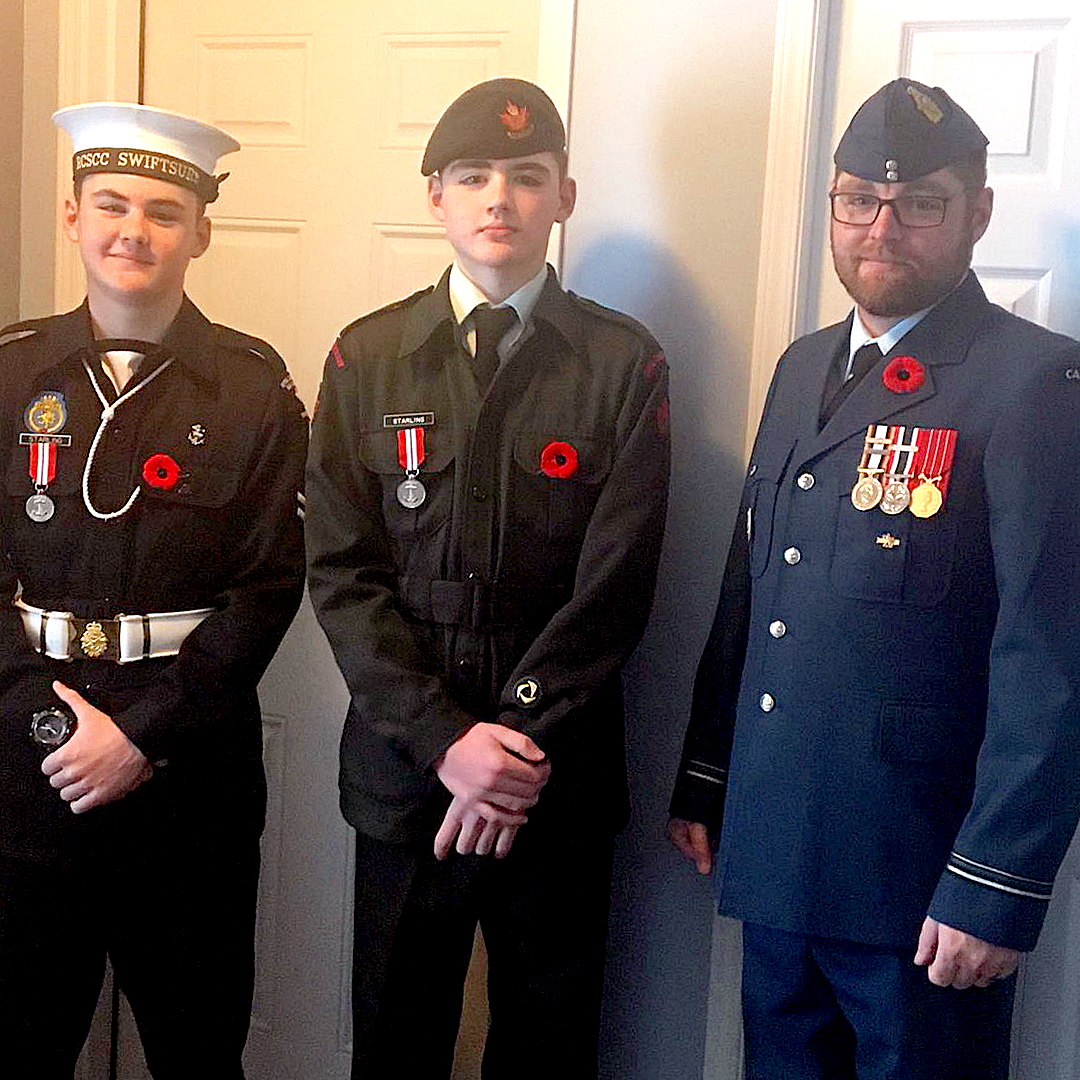
As we reflect on the importance of Remembrance Day and the role the Canadian military has played in conflicts past and present the Free Press reached out Drayton Valley’s Lane Starling on for his thoughts on his life as an active member of Canada’s Armed Forces.
Fredrickson: How long have you served with the Canadian Military?
Starling: I joined the Military in 2003. I was 17 years old and still in high school. I Joined the Reserves (Part time) as a Field Artilleryman with 20 Field Regiment in Edmonton. I found out later, after he passed, that it was the same Regiment my grandfather Chester Vig served in during the Second World War.
Fredrickson: What tours have you done?
Starling: In 2006 I fought in Afghanistan on a 155mm Howitzer crew. It was a “busy” 6 month tour. I took part in dismounted patrols through the mountains looking for Taliban, was once ambushed outside Khandahar City, and fought at the First Battle of Panjwai. There was a second local Drayton Valley resident, a good friend of mine, Keith Alexandrovitch who was with the infantry there at the same time.
Then in 2017 I was in Latvia as part of the NATO Enhanced Forward Presence contingent. I was a Joint Terminal Attack Controller that time. Which is a fancy way of saying that I specialized in calling in airstrikes. That was a much calmer tour and it was great to see and work in that area of the world with all the different countries coming together to form one fighting unit.
Recently I made the switch from the Army over to the Air Force and became an officer. Now I work for NORAD (North American Aerospace Defense) at 22 Wing in North Bay, Ontario. Here I am an Air Battle Manager. Basically I’m Air Traffic Control for military operations. We “manage” air battles (dog fights), air-to-air refueling and conduct 9/11 type intercepts of suspicious and hijacked aircraft. We also track Santa.

Fredrickson: Why did you join the military?
Starling: As to why I joined? I can’t really say. It was more of a calling than anything else. From as early as I can remember I never really had a question as to doing something else. I’ve had other jobs, worked at the sawmill, and in the oilfield for a time however nothing really stuck. It wasn’t until I came back from Afghanistan that it solidified for me. I realized it was just what I was meant to do. In 2007 I went over to the Regular Force. Been here ever since.

Fredrickson: What does Remembrance Day mean to you?
Starling: When I was younger, Remembrance day wasn’t really a big deal. It wasn’t, truly. It seemed to me to be a faceless war, where someone would call off a list of names that I had absolutely no connection with. Coming from a small town in rural Alberta, I think we could count on one hand the number of living Vets we had in the community. My Grandfather never talked about the war, at least certainly not with me and I never knew any of the other vets. Everyone else would try to explain why it was important; however it all seemed very hollow and disconnected, far away and impersonal. Obviously that has changed. For me now Remembrance Day is very much a personal thing. For me it’s not about the wars and conflicts we have fought in, it’s about the people that I’ve met and have known along the way and their stories they have shared. The first house my wife and I purchased was from a Korean War vet, our neighbor served in Cyprus and Bosnia. I spent a month in South Korea with several Commonwealth War Vets and walked their old battlefield. Obviously my own stories and people I knew from the Afghan war have an impact, but most importantly it made everything relatable. All the stories, the history. For all the reasons people told me that Remembrance Day was important I now understood. Unfortunately I’m not sure that’s a meaning I can impart on anyone else. For me it was a very personal journey to get to my meaning of Remembrance Day. But if anyone ever wants to have a coffee and hear a story next time they see me around town, don’t hesitate to stop and ask me.
Fredrickson: What challenges/opportunities have you faced during your career?
Starling: A lot of the challenges and the opportunities in my career were the same events. But not solely for me, and not the reasons you might think. My military career isn’t mine alone, it includes my family the entire time. Obviously Afghanistan was a challenge for me but it also left my wife alone as a single parent while I was gone. Our second son was born while I was in Panjwai and when I came home my oldest son (not yet two at the time) took a while to even remember who I was. One of the biggest challenges was the biggest opportunity. Moving away for the first time. It was hard. The Starling family is pretty rooted in Drayton Valley. It’s all my wife and I have ever known, and so to pack up and move to New Brunswick was a big challenge. Since then we have lived in four different provinces and each time my wife has had to restart her career or find a new job. My kids adjust to another new school and new friends. I’ve been gone a lot with work. In the last year, I’ve been gone nine months. My family has more or less become accustomed to me entering and exiting the family routine and picking up as we go. But on the same token, we have a really close knit family because of all that. When we move to someplace new, the first people we know are each other. My kids have lived on the east and west sides of Canada and everywhere in-between. They have seen and appreciated Canadian culture across the whole country. They have been introduced to different ideas and views that are important to different people across the country. We have lived in bilingual communities and my kids can now speak French because of it. Everyone has learned how to meet new people and friends. Whenever we have to move now, we see it as an opportunity instead of a challenge.
The funniest thing is though, no matter where we live in the country, whenever I hit the Thorsby bend on the way back to Drayton to visit, I get the weirdest nostalgic feeling of “I’m home.”