You are currently viewing County budget in the books

County budget in the books

Facebook
Email
LinkedIn
WhatsApp

Graham Long, Free Press

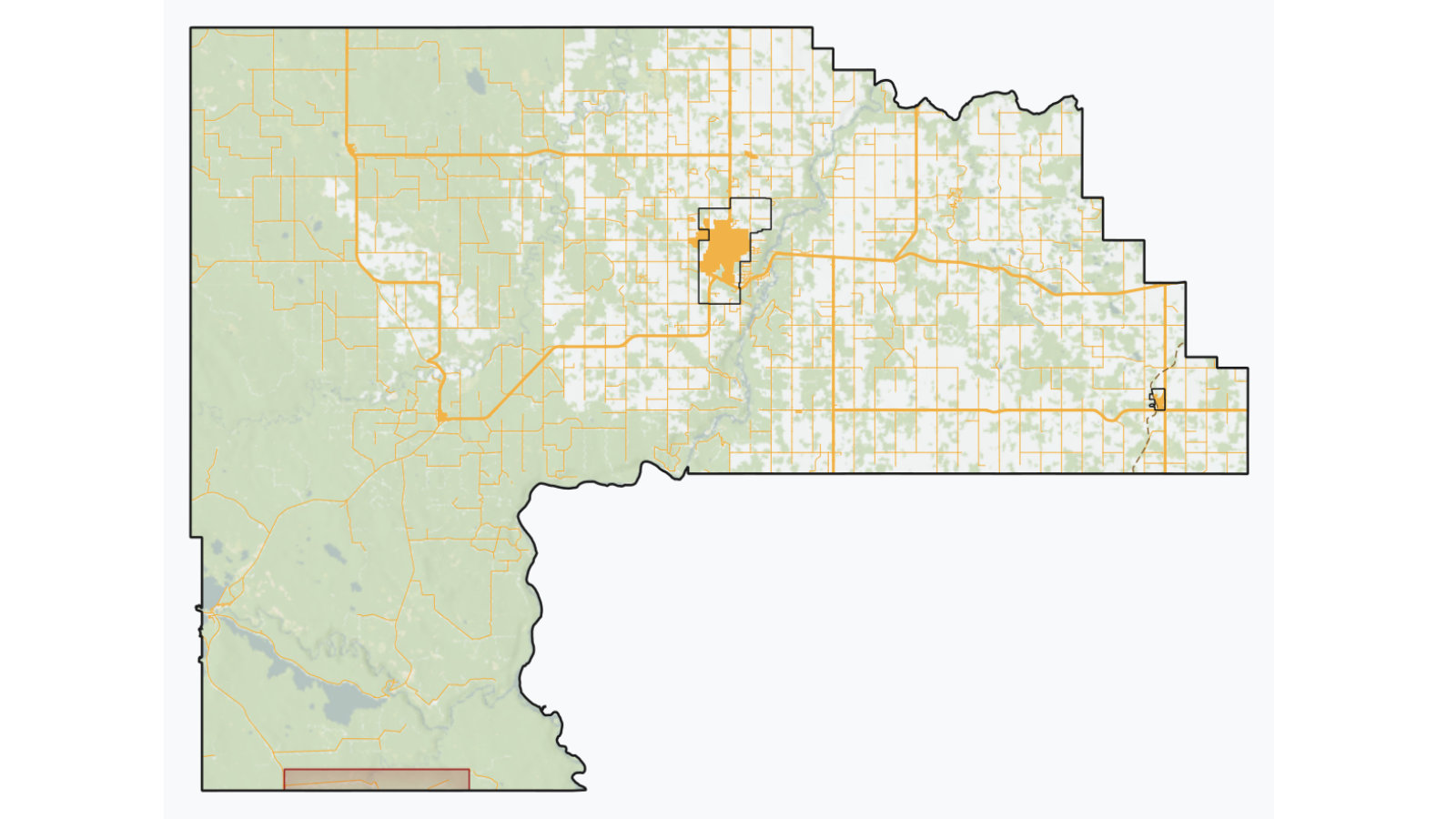
Brazeau County’s final budget for 2021 was approved by council last week with an operating shortfall of a little over $1.2 million. That money will be drawn from the County’s buildings reserve. 

As previously decided at a meeting last month, the budget includes a 30 percent rebate for residential, farmland and commercial property taxes. To qualify for the rebate taxes must be paid in full prior to the June 30 deadline. This is the sixth year the County has  granted a tax rebate to commercial businesses in Brazeau County and the second year the  rebate has also been applied to residential and farmland properties. 

The rebate applies only to the municipal portion of property taxes. Like all Alberta municipalities, the County collects education taxes on behalf of the province. There is also a requisition to support the Brazeau Seniors Foundation. The County has no control over either of those amounts and does not keep the money collected. Those amounts are both expected to increase slightly this year. 

Looking forward to a nice relaxing summer? Not so fast. As we (finally!) approach the nice bit of 2026, I thought  it would be useful to put together a list of the things I am currently worried about. And if I’m going to worry about them, so should you.

I’m worried about the way our provincial government is extending its own powers. The UCP is attempting to broaden its authority in areas that have traditionally been under federal jurisdiction. At the same time they are limiting the powers of municipalities and school boards to act without provincial approval. If all this comes to pass we are going to have one honking big (and powerful) government in Edmonton. That should give every one the collywobbles. If the NDP had tried something like this while they were in power we’d have been screaming to the high heavens. 

I’m worried about our friends to the south. Every time you think America can’t get any more dystopian they find a way to prove you wrong. And the noise! It’s like living next door to a frat house. 

I’m worried about retirement. The Canada Pension Plan works just fine. I’m looking forward to collecting my CPP in a year or two. Brand name beer here I come! The thought of ditching the CPP for a new and untried Alberta Pension Plan makes me more nervous than a long tailed cat in a room full of rocking chairs.  And yet that’s what the provincial government seems intent on doing. I’m sorry, I’m sure Danielle and the gang have nothing but good intentions, but I don’t trust them not to make a complete and utter mess of things. If they feel like gambling I wish they’d do it with their own money.

I’m worried about the amount of ill-informed bile I see on social media and elsewhere directed at immigrants and refugees. This stuff invariably comes from people who claim to be acting to protect Canadian values. Clearly we have a different view on exactly what Canadian values are. 

I’m worried that our thoughts and prayers don’t seem to be doing enough to prevent school shootings, public transit attacks or any of a raft of other atrocities. And I’m worried that I seem to have lost count of the number of those atrocities that have happened already this year. Perhaps we should all try thinking and praying harder?

I’m worried that we seem to spend more time focussing on the things that divide us than on the things that unite us.

I’m worried that these days, when you come across something that doesn’t match your own narrow world view, you’re free to select your own set of alternative facts to back up whatever bonkers theory you’re supporting. And if someone points out that your set of facts aren’t actually very, umm, factual, you’re able to label him as a stooge of big government who’s too blind to see that the Earth really is flat, 9/11 was the work of the Illuminati, the Kremlin is controlled by Disney etc. etc. etc.

I’m worried about inflation. I’m worried about Iran. I’m worried about the Blue Jays’ pitching. I’m worried about gas prices and I’m worried about property tax.

There. I’m glad that’s off my chest. Now It’s time to get out and enjoy that sunshine!

Three degrees with a chance of flurries? I did not see that coming. Dammit!

Facebook
Email

The Hearts and Hands Quilters’ Guild did more than just draw winners for their annual quilt raffle last week. They also presented 14 quilts to All Are Daughters for use at their women’s rehabilitation facility.

The guild boasts 28 members from the community, and all of them work to build quilts that can be donated to people in need. Each year, they hold a raffle fundraiser for three quilts, and the proceeds are then split between three different organizations.

This year they raised about $700 for their guild, the Kickstand Youth Hub, and STARS, along with their donation of quilts to All Are Daughters.

Trina Beckett, the vice president of All Are Daughters, was on hand at their meeting to accept the donation. 

“About a year-and-a-half ago, a group of us women got together to start working on this dream of so many of us to open this recovery centre for women,” says Beckett.

She says there are members of the board who have gone through addiction and have been in recovery for years. Beckett is the mother of an addict, and her experience helping her daughter get through the first few months of recovery made her want to help others going through something similar.

“As a parent, you do anything to help your child because you know they’re in there somewhere,” she says.

Beckett says her daughter was involved with the centre before she passed away last summer. Despite the loss of her daughter, Beckett still wants to see the centre completed.

Right now, the facility is ready to go, but they don’t have an open date just yet. The organization is currently waiting for funding from the Province to cover operating costs, as well as getting licensing in order.

“We do have all our rooms spoken for as sponsor rooms right now,” she says. “We are just waiting for the go-ahead to get open.”

She says there aren’t any recovery centres for women in rural communities. Having both a men’s and a women’s centre is a positive thing, she says.

“We thank you guys for your support as well,” she told the guild. “Without the support of the community, we wouldn’t be able to do so far what we’ve done.”

The winners of this year’s raffles were Mel Sibley from Warburg, who took home Wolves on the Prowl; Pam Baker, who won Winter’s Day; and Wendy Nordell received One Up One Down.

The guild is always looking for new members, and they meet on the third Thursday of each month at the Beehive Support Services Building, but don’t meet in July or August. They also have regular sewing days on Wednesdays. 

Spring Shaker sells out

Facebook
Email

Opportunity Home’s first Spring Shaker was a success, says executive director Danna Cropley.

“The event sold out within the first few weeks,” says Cropley. “Beyond that, the event went absolutely amazingly.”

The evening had a dance, a catered dinner, and silent auction items to help raise funds for the rehabilitation centre. Cropley says it wouldn’t have been possible without the volunteers who helped put the event together. About 230 people attended.

“Jen Winter, Janice Kupsch, and their crew organized the event. The room was full of energy and community; it was so great,” says Cropley.

One of the reasons for the event, along with raising funds to help run the facility, was to educate the public about what the facility does and how it helps those in need. Opportunity Home opened its doors in February 2023, and has seen numerous people complete the 90-day program during its three years of operation.

Earlier in the week, Cropley also spoke to town council with the same goal in mind.

“Because the council is fairly new… we just wanted to update them on Opportunity Home’s mission, vision, and values, [as well] as the value our project brings, not only to the municipality but also our provincial community and out to our country.”

Cropley says the facility has offered beds to people from across the province, British Columbia, and some from the United States. She says she wanted council to see the reach that they have now and how they are supporting Recovery Alberta’s response to the current opioid crisis.

In her presentation to council, Cropley touched on the community, social, and economic value the centre brought to the community. This included the volunteer work the clients provided, homelessness and poverty prevention, as well as reducing taxpayer costs for emergency, health, and justice services.

She says community investment is a crucial part of the success of the centre, not in terms of dollars, but in terms of interest from the community, volunteers, and feedback. 

“I just really wanted to make sure that town council was aware of who we are and what we do,” says Cropley.

Opportunity Home is hosting another event on June 19 from 11 a.m. to 2 p.m. that is open to the public: a memorial tree planting ceremony, along with a barbecue and tour of the facility. Cropley says they will also have different resources and services at the event for people to connect with if needed. 

She says the tree-planting ceremony will be in honour of some community members who have recently passed away. Members of the public are welcome to donate to plant a tree in memory of someone they have lost. 

Kiss me I’m Albertan

It seems that those pushing for Alberta independence have enough signatures to force a referendum on the issue. That put me in mind of something I wrote a few years ago that I think still holds water. 

If Alberta’s going to ditch the rest of Canada we need to set a few rules. This is going to take a while, so it’s best to start talking about it now so we know where we stand if and when it comes to a vote.

First we have to figure out what an Albertan actually is.

There used to be a guy who lived down the street from me who had a bumper sticker that said, “Canadian by birth, Albertan by the grace of God.” It always struck me as a little odd.  That was partly because it was on the rear bumper of the first Toyota Prius I’d ever seen with a gun rack. But it’s also because I’ve lived in this province for well over three decades, and I’ve never been able to figure out what makes an Albertan an Albertan.

OK, so an Albertan is someone who comes from Alberta. That’s according to no less a source than the Oxford Canadian Dictionary so I’m not about to start arguing.  But the results of the most recent federal census suggest that’s a pretty broad group. If the number and variety of languages spoken in this province is any kind of a guide, Albertans come from all over the place, both within Canada and from every corner of the globe.

That’s true of other places too of course. Places like London and New York are breathtaking in their diversity.  What makes Alberta different is that everything here is so new. We’ve been a province for not much more than a century and have evolved so rapidly in such a short time, with so many waves of immigration from so many parts of the world that it sometimes feels as if we’ve never developed a separate sense of ourselves. At least not in the way you’d find among the societies of Africa, Asia or Europe, or even in Newfoundland, Nova Scotia or Quebec. 

So what do we have that binds such a broad group together and sets us apart from the rest of the country? There’s the Flames and the Oilers I suppose. And beef. We like beef and are justifiably proud of both the quality and quantity this province produces. I think it’s also fair to say that we work hard. Not me, obviously, but most of the rest of you. And perhaps most importantly right now, there’s a sense of frustration that we always end up with a federal government that most of us didn’t vote for.  But even at the last election, when dislike of Ottawa was probably at its peak, more than a third of us voted either Liberal or NDP and a significant number of us didn’t vote at all. So things are not as black and white as they may appear.

Anyway, as far as things that set us apart from the folks in Toronto or Tuktoyaktuk, that’s about it. Don’t get me wrong. I love this province and I love the people who live here (most of you anyway)  but it doesn’t feel like we’ve got much to build a country on. Albertans are good people and we have a lot to offer the world. But at the same time we’re an odd and interesting mixture that doesn’t seem quite sure of its own identity. Sort of like a Prius with a gun rack.

Drayton to host regional one act plays

Facebook
Email

The Eleanor Pickup Arts Centre will be hosting the Yellowhead Regional One-Act Plays Festival on April 10 and 11 this year.

Ashley Luckwell, the chair of the board for River Valley Players, says the regional festival will have five performances this year. Cast and crew from Leduc, St. Albert, Devon, Beaumont, and Drayton Valley will be participating in the event.

“There are five different groups from the Yellowhead Region that are coming,” she says.

Luckwell says the event is being put on by the Alberta Drama Festival Association (AFDA). This festival is one of several that are occurring across the province, with the winners from each heading on to the provincial festival in Leduc in May this year.

“We’re really excited to have it here,” says Luckwell. “It’s great to show off the EPAC; it’s great to have them come into our community.”

The festival will take place over two days, with each of the plays lasting anywhere from 30 minutes to about 45 minutes. RVP members Leah Sanderson, Sarah Chapman, Katherine De Varennes, and Jan Wright will be performing their play Overtones on Friday night.

Luckwell says the play is one she directed and was written by Alice Gerstenberg in the early 1900s. It was first performed in 1915 at the Bandox Theatre in New York. 

The play highlights the difference between what people say and what they are actually thinking. Two of the actors will be playing characters having a conversation, and two younger actors will be playing a younger version of themselves giving voice to the first two character’s inner thoughts.

The other plays will be Steven Goes to Japan to Run a Marathon, Crystal Blue Persuasion, The Crimson Cab Ladies Hit the Beach, and Don’t Mention Hollywood.

Luckwell says there has been lots of support from local businesses for this event, with some giving discounts on food and others sponsoring the festival as well. 

“It’s been really great,” she says.

Tickets for the event will be for sale at the doors for $15. Luckwell says cash is preferred as it is not the EPAC that will be taking the funds, but rather volunteers for the AFDA. 

Valley Dental

Facebook
Email
LinkedIn
WhatsApp
Get your perfect smile with specialists in service

Add Your Heading Text Here

At Valley Dental, our goal is to provide great patient care and high quality dentistry with a smile. We offer an extensive range of dentistry from preventative care appointments to smile design and replacement of broken or missing teeth. We offer various products across individual and group space comprising of life, health, child plans, retirement solutions, travel and employee benefit segments. Our primary focus while offering products is to ensure that customer needs are met, through their life cycle – child education, family protection, long term savings, and retirement while ensuring value for money.

The County has faced a number of financial challenges this year, including a provincial ruling which reduced the amount rural municipalities collect in linear assessment from the oil and gas industry. 

In spite of those pressures, the 2021 budget contains funding for a number of capital projects. Those include road projects such as paving in Lodgepole, five km overlay on Twp Rd. 494, microsurfacing on a stretch of  RR73 as well as  base repairs and chip seal on parts of both Twp Rd. 495 and Twp Rd. 480. Another project involves  expansion of the floating wetlands trial project at the Violet Grove Lagoon and refurbishments to the Cynthia Lagoon.

Facebook
Email

The Roots of Resilience Charter School has been receiving attention from education and indigenous authorities, as educators hope to learn from their model.

Charlene Bearhead, the principal of the school, says she has been receiving phone calls from indigenous groups and school divisions that wish to visit the school. Most recently, four educators travelled from the Fisher River Cree Nation in Manitoba for a practicum at the school.

Bearhead says many of these groups heard about RRCS at the National Indigenous Education and Reconciliation Network Gathering last May, before the school was officially approved. Bearhead and Dr. Jennifer Tupper, the dean of education at the University of Alberta, gave a presentation about the school at that time. Once it was announced that the school was approved, inquiries began to come in from many indigenous groups, educators, and other organizations.

“I got an email from a young woman that is a teacher at Fisher River Cree Nation in Manitoba, and she is part of a cohort of 40 indigenous educators that are working on the Education Leadership certificate,” says Bearhead.

Bearhead says there was a component in their practicum that they needed, which was a placement in a school outside of their jurisdiction or in some place that is showing leadership and innovation in education. 

“She found us online and reached out to us to see if she could do her three-day placement in our school,” says Bearhead.

In total, four educators came to RRCS from the Fisher River Cree Nation. Three were teachers and one was the cultural coordinator.

Bearhead says she was a little bit nervous at first, but everything worked out really well. When they first arrived, they were given a history of the school, information about how they teach the students and what’s all involved with their education, and a tour of the school.

“It was so interesting. They said, ‘Can we just sit here for a minute and take this all in?’ This is blowing our minds. This is amazing,’” says Bearhead.

Kea York, the cultural coordinator for the Fisher River Board of Education, says that while RRCS wasn’t on her radar at the time, when she looked into the school after one of her classmates mentioned it, she was excited.

“Their missions and goals were right in line with how I viewed education,” says York in an email interview.

She says she loved the passion that the students and staff had for the way of knowing, being, and doing.

“RRCS was right in line with what we are doing in our community of Ochékwi Sípí with our recently implemented Band Council Resolution to put land, language, and culture first in all subject areas of learning for our students. Seeing this happen in a town was great. As people living on this land, we all need to learn Indigenous education and the reciprocity that goes along with it; the children are learning just that,” says York.

Kaitlyn Bear, an educator who has been with the Fisher River Cree Nation for 10 years, says she was impressed by the way language and culture were being incorporated in the school.

“Not many schools allow that, so it was so amazing to see,” says Bear in an email interview.

She says the energy of the staff and students was different from what she’s experienced in the past and the school felt very welcoming.

“I will definitely be keeping in touch with the staff at RRCS,” says Bear. “Over the three days we made so many wonderful connections and relationships that l will hold closely to my heart.”

Stephanie Cochrane, another teacher at Fisher River Cree, says she hadn’t realized she could pick a placement outside of Manitoba, so she didn’t do much research on RRCS before they came out.

“I did not know what RRCS was all about, except that it was a charter school. I did not have many expectations,” says Cochrane in an email interview. “What I found was an amazing, close-knit professional family that consists of super passionate teaching staff and students who have found an academic foundation that nourishes their curiosity as they learn using a First Nation pedagogy.”

Cochrane says the in-house elder at RRCS is a benefit to the students in that he can offer teachings, oral stories, songs, and values that are embedded in the indigenous culture. 

“It was so beautiful to witness and be a part of sharing circles that happened right in the

classrooms of RRCS,” she says.

Bearhead says she is happy to have people come visit the school and see how they are doing things.

“Public charter schools are intended to be model schools to show how education might work, or what it could look like,” says Bearhead.

She says it was interesting to hear from these visitors that they have access to knowledge holders and they aren’t yet at the point that RRCS is already at.

“It’s interesting to us because we know we’re not even close to where we want to be yet, but we know we have a really good start,” she says.

During their time at the school, the teachers spent time teaching cooking classes, helping with hot lunch, teaching other classes, scraping a buffalo hide, and reading stories. 

“They were just all in with every aspect of the school,” says Bearhead.

Though their time at RRCS is done, each of the educators interviewed said they would highly recommend other school divisions and indigenous groups visit the school and see what they’ve accomplished thus far.

I suggested to my daughter that she name her first child Grahamina if it’s a girl. I haven’t managed to come up with a good boy’s name yet. 

Here in Alberta, Noah is once again the most popular name for newborn boys, according to info that winged its way into my inbox a couple of weeks ago from the nice people at Service Alberta. On the girls’ side Olivia took the top spot in 2025, as she has done for the last several years.

It’s an interesting phenomenon* that kids’ names seem to drift in and out of fashion, like long hair, flared jeans and the federal New Democrats. Some of that is probably due to the impact of celebrities. It should surprise nobody if we see an uptick in Taylors due to the global dominance of Taylor Swift, while recent events mean the popularity of Andrew is likely to fall off a cliff.**

Looking back at my elementary school class, we had a couple of Davids, a Stephen, an Allan… on the girls’ side there was Jennifer, June, Dorothy and Elspeth. There was also a cluster of more overtly Scottish names:  Alastair, Fraser, Morag and several Fionas. Little did any of them dream that more than 50 years later they’d be name checked in the Drayton Valley and District Free Press. What a strange world we live in. 

Anyway, there were certainly no Noahs, apart from that guy with the boat from the Bible, who was not in my class (I’m old but not that old) so doesn’t really count. I don’t remember any Olivias either, although back then girls were both terrifying and mysterious to me, so who knows.  

What I can tell you is that you couldn’t swing a cat in 1960s Glasgow without hitting a Graham.*** At one point there were three of us in my elementary class. Since I moved to Canada I believe I’ve only met one. ****

Meanwhile here in present day Alberta the rest of the top six boys’ names for last year were Theodore, Oliver, Henry, Jack and Lucas. Amelia, Emma, Sophia, Charlotte, and Violet round out the girls’ side. 

There were more than 52,000 little bundles of joy registered in this province in 2025, with 14,500 unique names. That sounds like a lot, but presumably some are close to duplicates, so Brandy, Brandi and Brandee counts three times, which doesn’t seem fair really.

Anyway, it doesn’t look like there were any Grahaminas, and my daughter didn’t appear to be particularly taken with the suggestion. So if anyone out there is looking for a unique name for their newborn, Grahamina is there for the taking. You can thank me later. Although I suspect your daughter may not be so grateful 

* Disclaimer: Phenomenon may not actually be interesting.

** That’s cliff as in geographical feature, not Cliff as in Clifford. Writing is hard.

***This was before the European Union stepped in and banned cat swinging across the continent. 

**** I mean one Graham. I’ve met lots of cats. That’s cats as in Tom Kitten, not cats as in Cat Stevens. I’ve never met him.

Facebook
Email

After hearing the concerns of teachers and parents during the teachers’ strike last October, the provincial government has assigned their first phase of complexity teams to schools across the province.

“The classroom complexity [teams are] the Alberta Government’s response .. (to) the labour action,” says Jodie Mattia, the superintendent of Wild Rose School Division. “Classroom complexity was one of those pieces.”

Last fall, the province began collecting data surrounding the issue. The final report was released on November 21. The list of school divisions that have been assigned complexity teams was released on February 12. Teams consisting of one teacher and two educational assistants (EAs) are being sent to 476 schools with K-6 students.

“If there are additional dollars, those can be used for therapeutic supports,” says Mattia. She says the Province gave the divisions a list of supports that can be selected from in these cases, which may include speech therapists, occupational therapists, among others.

The divisions will have to send in quarterly reports to the Province, but Mattia says at this point she doesn’t know if those teams will be offering pull-out supports or inclusive supports for the students.

WRSD was assigned one team, which will be working at Rocky Christian School in Rocky Mountain House. The St. Thomas Aquinas Roman Catholic School Division was assigned two teams, which will be placed at Sacred Heart School in Wetaskiwin and St. Augustine School in Ponoka.

At this point, no teams have been assigned to any schools in this area. More than 75 percent of the teams were assigned to urban centres like Edmonton, Calgary, Lethbridge, Medicine Hat, Grande Prairie, and Fort McMurray.

Schools with K-6 students in Drayton Valley, Breton, Entwistle, Evansburg, and Tomahawk do not have complexity teams assigned to them at the time of publication.

Mattia says the divisions didn’t have any say in where the teams were originally assigned. However, the Province has allowed the divisions to submit a change request by February 20. Whether those changes will be accepted remains to be seen.

“In our school division, every single one of our schools has complexity,” says Mattia. “It’s throughout the division; it’s at all grade levels.”

She says as a division, they continue to tackle complexity through their staffing, support teams, and divisional support.

“It’s not like we don’t have speech-language assistants, speech-language pathologists, occupational therapists. [The complexity teams are] additional support,” she says.

In some ways, the complexity team at Rocky Christian School may allow the division to allocate some funds to other schools, says Mattia. With extra support for that school from the Province, they may be able to save a little bit of money on additional supports they might have had to provide for the school.

Mattia says they have already received the funding for the teams, but one of the issues is finding the staff to comprise those teams. “Staffing, recruitment, and retention is a significant challenge for rural education,” she says.

She says the division has positions that have been open since the fall, and they are aware it may not be easy to hire staff for the team. Recruitment and retention of teachers in the rural areas of the province has been an ongoing challenge for many years.

Though this first phase has seen most of the supports going toward urban centres, Mattia says they are hopeful there will be more available for rural communities in the future. In the meantime, she says the division offers great supports for their students and families.

“The divisional team and our school teams, they really do phenomenal work with our students and for our families,” says Mattia. “We’re going to continue to support, in our best possible way, student success. That won’t change.”

The Free Press reached out to the STAR Catholic School Division, but did not receive a response before the publication deadline.

Facebook
Email

One of Canada’s most sought-after rodeo announcers and motivational speakers returned to his hometown last weekend as the keynote speaker at the Mental Health Awareness Symposium.

Brett Gardiner was born and raised near Drayton Valley and has a grad photo hanging on the walls of Frank Maddock High School. Last weekend, he returned to FMHS to share his own mental health journey and different strategies people can use if they are facing similar struggles.

Elaine Tamboline, the past president of the Drayton Valley Rotary Club, says picking Gardiner for the role of keynote speaker was an easy one. As the most awarded announcer in Canadian history, Gardiner has won Pro Rodeo Announcer of the Year 14 times, she says. He has announced at the Canadian Finals Rodeo, the Calgary Stampede, and since 2016 has been a regular on TSN’s series for the Professional Bull Riding Canada Cup. 

Along with his awards in announcing, Gardiner holds a master’s degree in counselling and psychology, and has worked with professional athletes, educators, and large business organizations.

But his local connection also recommended him for the event.

“I think that’s how it started. Some of us knew his mother,” says Tamboline.

The symposium took place on February 21 and was hosted by the Drayton Valley Rotary Club in partnership with the Healthy Communities Coalition. The all-day event had 13 breakout sessions for attendees, two of which were hosted by Gardiner.

“Mental health is such a huge umbrella,” says Tamboline.

The symposium tackled some major topics, such as Canada’s Red Flag Law, understanding legal protections for survivors of domestic violence, Men’s Shed, recognizing and preventing sexual exploitation in youth, and 

To make the free event even more accessible for residents, Brighter Futures provided childcare so parents could attend the sessions.

Tamboline says the decision to host the event came from a community needs assessment conducted by the Rotary Club.

“[We wanted to] determine what issues people were most concerned about in our town,” says Tamboline. “That took ten months.”

She says they spoke one-on-one with individuals whose demographics varied from homeless people, business professionals, single parents, seniors, and more.

“Their concerns were many, and they fell under the umbrella of mental health,” she says. “This is not surprising or unique because it has become a topic across Canada and around the world.”

The Rotary Club is most well known for its work on eradicating polio. With 1.2 million members in more than 32,000 clubs in 200 countries, Tamboline says they have many other mandates. Some apply to certain areas, some to certain communities, as well as worldwide concerns. At their last international convention in Singapore, with 20,000 attendees, mental health was a hot topic. 

Tamboline says after their needs assessment, the Rotary Club partnered with the HCC to come up with strategies to help connect people in need to professional resources in the community. The symposium was their solution.

The Rotary Club hopes to make the symposium an annual event that can reverberate throughout the community. Tamboline says they will be watching to see how it has affected the community and if they have achieved any of the outcomes they were hoping for.

Tamboline says the organizers are grateful to all the organizations that came together to make the symposium a reality. 

“[We have] gratitude and appreciation for the generous support and donations, and volunteers who believed this is important.”

Last year we sent our daughter to summer camp, at the request of one of her friends. A text to my husband revealed that this was the summer camp he went to as a kid, as well as his mom and his grandmother. A deeper search showed that his great-grandfather helped build the camp back in 1945. Upon hearing this R- felt such a sense of pride and connection to a whole host of family whom she never met, and have long been dead.  

Family history is often reduced to a series of names, birthdates and death dates. This is a great place to start but the real connection happens when you manage to find a snippet of information or a piece of family lore that gives one of those names a personality. For me this journey began with my Auntie Gwen and her book “The Keystone Legacy.” Writing through the voice of my uncle Mark, they recorded the day to day lives of early black settlers living in Keystone (Breton); clearing land, building tar paper shacks, cold winters, and going to school and church. To anyone living in that time the book would have been a snore. But, the book was published in 1997, 90 years after the first settler moved to the area and guess what happened! More time passed. 

As decades wore on and storytellers died, the value of this book increased. What used to be just a collection of stories and recollections has now become a primary source document for other books and a very cherished piece of family history. 

This week I had the privilege of sharing a bit about my family history at the Drayton Valley Multi Cultural Association’s first black heritage event. As I walked into the room and saw African art lining the walls, vibrant clothing for sale and heard personal stories from those first generation Canadians in attendance, I had a sudden flash of imposter syndrome. Here are people who are so close to their immigration story that my historical stories about slavery, segregation, and land politics seemed old news, and out of touch. 

However, in the scope of history even a century doesn’t seem that long. As I was talking to this group about my story I was inspired to press on them how much their story will mean to their future family. Documenting why you came to Canada, and what early life was like doesn’t seem like much right now but to someone six or seven generations later, it may be just the piece of information they needed to hear to feel that they belong. 

Throughout my genealogy journey I have been lucky to have found shreds of newspaper clippings, land allotment interviews, references to my family in the books, “The Keystone Legacy,” “The Ghost of Crook County,” and “The Black Prairie Archives,” and of course the endless source of information and connection of Allan Goddard and the Breton Historical Society. Some may not be as lucky, but as is the case with my daughter, when her great-grandpa built a camp in 1945 he unintentionally built a bridge to future generations.

Not too long ago, I heard a complaint about youth being too lazy to get jobs nowadays. That annoys me to no end because not only is it painting an entire generation with a broad brush, the blame for lower employment rates is placed solely at the feet of the youth, which is not right.

I started working when I was about 15 years old. At that point, my starting wage was about $6.95, and getting a ten cent an hour raise was awesome. 

I didn’t struggle to find a job. I basically dropped off my resume to several businesses, went for the first interview, and got hired. While I may not have appreciated the job, I never worried about what my work schedule was, if they were paying me what I was owed, or if they were meeting labour laws. 

My parents also didn’t really have to worry about it.

However, my first experience of seeing the abuse (I don’t use this term lightly) of a youth at a job was as an adult, around my mid-20s. At that point, I’d worked enough jobs to understand shady behaviour when I saw it, so it really bothered me to see employers taking advantage of young workers.

Fast forward to about five or six years ago, and things have only gotten worse.

The common misconception that youth just don’t want to work anymore fails to take into consideration the work environment we insist they join. Not only are there fewer jobs available for youth, but many employers are far more interested in making money than introducing youth into the workforce.

For those who have been lucky enough to find jobs, I have heard about some awful, and frankly, downright illegal things taking place. 

In one case, a pizza delivery driver who was paid per delivery and tips was expected to be at the workplace for an entire eight-hour shift without getting paid. If there were only two deliveries that night, their base pay for the entire shift was a whopping $7.

Another situation I’ve heard about is a youth who was hired to work at a new business in the community. They were brought in with numerous other youths in the community for mass orientation sessions. Half of the kids who showed up, having been told they were hired, were turned away at the door or never actually got to work for the company.

This same company would change the shifts for kids with barely 24-hours notice, didn’t fill out any paperwork for their new staff, and made false promises of rewards for teams who worked the hardest.

Once that company decided who they wanted to keep around, they let go of some employees, who were mostly in high school, by text message on a school day. 

Yes. A business that has a name that everyone would recognize fired kids by text message while they were at school. Illegal? No. Unethical? Absolutely; not to mention cowardly and callous.

Imagine how these kids felt learning they’d been fired from their first job, with zero explanation, while they were sitting in class at school. I’m sure they were eager to go out and find another job after that.

Other stories include bringing in a youth to try out for the job for a day without pay, and then ghosting them afterward; convoluted pay structures and bonuses that make it difficult for employees to know if they were being paid appropriately; and sending them out to do dangerous work without the appropriate training.

The moral of this story? Before business owners want to complain about the apathetic youth of today, they need to recognize that their attitudes and practices might just be the reason for this problem.

There are no new fees or increases to current fees this year. 

“This was a team effort with administration and Council to create our sixth balanced budget,” said  Reeve Bart Guyon in a media release after the budget was approved. “We have worked within our means as all governments should. We believe strongly  in leaving as much money as possible in taxpayers’ pockets.” 

The Town of Drayton Valley is expected to pass its final budget for the year in early May, prior to the mailing out of property tax notices. 

Facebook
Email

The Roots of Resilience Charter School has been receiving attention from education and indigenous authorities, as educators hope to learn from their model.

Charlene Bearhead, the principal of the school, says she has been receiving phone calls from indigenous groups and school divisions that wish to visit the school. Most recently, four educators travelled from the Fisher River Cree Nation in Manitoba for a practicum at the school.

Bearhead says many of these groups heard about RRCS at the National Indigenous Education and Reconciliation Network Gathering last May, before the school was officially approved. Bearhead and Dr. Jennifer Tupper, the dean of education at the University of Alberta, gave a presentation about the school at that time. Once it was announced that the school was approved, inquiries began to come in from many indigenous groups, educators, and other organizations.

“I got an email from a young woman that is a teacher at Fisher River Cree Nation in Manitoba, and she is part of a cohort of 40 indigenous educators that are working on the Education Leadership certificate,” says Bearhead.

Bearhead says there was a component in their practicum that they needed, which was a placement in a school outside of their jurisdiction or in some place that is showing leadership and innovation in education. 

“She found us online and reached out to us to see if she could do her three-day placement in our school,” says Bearhead.

In total, four educators came to RRCS from the Fisher River Cree Nation. Three were teachers and one was the cultural coordinator.

Bearhead says she was a little bit nervous at first, but everything worked out really well. When they first arrived, they were given a history of the school, information about how they teach the students and what’s all involved with their education, and a tour of the school.

“It was so interesting. They said, ‘Can we just sit here for a minute and take this all in?’ This is blowing our minds. This is amazing,’” says Bearhead.

Kea York, the cultural coordinator for the Fisher River Board of Education, says that while RRCS wasn’t on her radar at the time, when she looked into the school after one of her classmates mentioned it, she was excited.

“Their missions and goals were right in line with how I viewed education,” says York in an email interview.

She says she loved the passion that the students and staff had for the way of knowing, being, and doing.

“RRCS was right in line with what we are doing in our community of Ochékwi Sípí with our recently implemented Band Council Resolution to put land, language, and culture first in all subject areas of learning for our students. Seeing this happen in a town was great. As people living on this land, we all need to learn Indigenous education and the reciprocity that goes along with it; the children are learning just that,” says York.

Kaitlyn Bear, an educator who has been with the Fisher River Cree Nation for 10 years, says she was impressed by the way language and culture were being incorporated in the school.

“Not many schools allow that, so it was so amazing to see,” says Bear in an email interview.

She says the energy of the staff and students was different from what she’s experienced in the past and the school felt very welcoming.

“I will definitely be keeping in touch with the staff at RRCS,” says Bear. “Over the three days we made so many wonderful connections and relationships that l will hold closely to my heart.”

Stephanie Cochrane, another teacher at Fisher River Cree, says she hadn’t realized she could pick a placement outside of Manitoba, so she didn’t do much research on RRCS before they came out.

“I did not know what RRCS was all about, except that it was a charter school. I did not have many expectations,” says Cochrane in an email interview. “What I found was an amazing, close-knit professional family that consists of super passionate teaching staff and students who have found an academic foundation that nourishes their curiosity as they learn using a First Nation pedagogy.”

Cochrane says the in-house elder at RRCS is a benefit to the students in that he can offer teachings, oral stories, songs, and values that are embedded in the indigenous culture. 

“It was so beautiful to witness and be a part of sharing circles that happened right in the

classrooms of RRCS,” she says.

Bearhead says she is happy to have people come visit the school and see how they are doing things.

“Public charter schools are intended to be model schools to show how education might work, or what it could look like,” says Bearhead.

She says it was interesting to hear from these visitors that they have access to knowledge holders and they aren’t yet at the point that RRCS is already at.

“It’s interesting to us because we know we’re not even close to where we want to be yet, but we know we have a really good start,” she says.

During their time at the school, the teachers spent time teaching cooking classes, helping with hot lunch, teaching other classes, scraping a buffalo hide, and reading stories. 

“They were just all in with every aspect of the school,” says Bearhead.

Though their time at RRCS is done, each of the educators interviewed said they would highly recommend other school divisions and indigenous groups visit the school and see what they’ve accomplished thus far.

I suggested to my daughter that she name her first child Grahamina if it’s a girl. I haven’t managed to come up with a good boy’s name yet. 

Here in Alberta, Noah is once again the most popular name for newborn boys, according to info that winged its way into my inbox a couple of weeks ago from the nice people at Service Alberta. On the girls’ side Olivia took the top spot in 2025, as she has done for the last several years.

It’s an interesting phenomenon* that kids’ names seem to drift in and out of fashion, like long hair, flared jeans and the federal New Democrats. Some of that is probably due to the impact of celebrities. It should surprise nobody if we see an uptick in Taylors due to the global dominance of Taylor Swift, while recent events mean the popularity of Andrew is likely to fall off a cliff.**

Looking back at my elementary school class, we had a couple of Davids, a Stephen, an Allan… on the girls’ side there was Jennifer, June, Dorothy and Elspeth. There was also a cluster of more overtly Scottish names:  Alastair, Fraser, Morag and several Fionas. Little did any of them dream that more than 50 years later they’d be name checked in the Drayton Valley and District Free Press. What a strange world we live in. 

Anyway, there were certainly no Noahs, apart from that guy with the boat from the Bible, who was not in my class (I’m old but not that old) so doesn’t really count. I don’t remember any Olivias either, although back then girls were both terrifying and mysterious to me, so who knows.  

What I can tell you is that you couldn’t swing a cat in 1960s Glasgow without hitting a Graham.*** At one point there were three of us in my elementary class. Since I moved to Canada I believe I’ve only met one. ****

Meanwhile here in present day Alberta the rest of the top six boys’ names for last year were Theodore, Oliver, Henry, Jack and Lucas. Amelia, Emma, Sophia, Charlotte, and Violet round out the girls’ side. 

There were more than 52,000 little bundles of joy registered in this province in 2025, with 14,500 unique names. That sounds like a lot, but presumably some are close to duplicates, so Brandy, Brandi and Brandee counts three times, which doesn’t seem fair really.

Anyway, it doesn’t look like there were any Grahaminas, and my daughter didn’t appear to be particularly taken with the suggestion. So if anyone out there is looking for a unique name for their newborn, Grahamina is there for the taking. You can thank me later. Although I suspect your daughter may not be so grateful 

* Disclaimer: Phenomenon may not actually be interesting.

** That’s cliff as in geographical feature, not Cliff as in Clifford. Writing is hard.

***This was before the European Union stepped in and banned cat swinging across the continent. 

**** I mean one Graham. I’ve met lots of cats. That’s cats as in Tom Kitten, not cats as in Cat Stevens. I’ve never met him.

Facebook
Email

After hearing the concerns of teachers and parents during the teachers’ strike last October, the provincial government has assigned their first phase of complexity teams to schools across the province.

“The classroom complexity [teams are] the Alberta Government’s response .. (to) the labour action,” says Jodie Mattia, the superintendent of Wild Rose School Division. “Classroom complexity was one of those pieces.”

Last fall, the province began collecting data surrounding the issue. The final report was released on November 21. The list of school divisions that have been assigned complexity teams was released on February 12. Teams consisting of one teacher and two educational assistants (EAs) are being sent to 476 schools with K-6 students.

“If there are additional dollars, those can be used for therapeutic supports,” says Mattia. She says the Province gave the divisions a list of supports that can be selected from in these cases, which may include speech therapists, occupational therapists, among others.

The divisions will have to send in quarterly reports to the Province, but Mattia says at this point she doesn’t know if those teams will be offering pull-out supports or inclusive supports for the students.

WRSD was assigned one team, which will be working at Rocky Christian School in Rocky Mountain House. The St. Thomas Aquinas Roman Catholic School Division was assigned two teams, which will be placed at Sacred Heart School in Wetaskiwin and St. Augustine School in Ponoka.

At this point, no teams have been assigned to any schools in this area. More than 75 percent of the teams were assigned to urban centres like Edmonton, Calgary, Lethbridge, Medicine Hat, Grande Prairie, and Fort McMurray.

Schools with K-6 students in Drayton Valley, Breton, Entwistle, Evansburg, and Tomahawk do not have complexity teams assigned to them at the time of publication.

Mattia says the divisions didn’t have any say in where the teams were originally assigned. However, the Province has allowed the divisions to submit a change request by February 20. Whether those changes will be accepted remains to be seen.

“In our school division, every single one of our schools has complexity,” says Mattia. “It’s throughout the division; it’s at all grade levels.”

She says as a division, they continue to tackle complexity through their staffing, support teams, and divisional support.

“It’s not like we don’t have speech-language assistants, speech-language pathologists, occupational therapists. [The complexity teams are] additional support,” she says.

In some ways, the complexity team at Rocky Christian School may allow the division to allocate some funds to other schools, says Mattia. With extra support for that school from the Province, they may be able to save a little bit of money on additional supports they might have had to provide for the school.

Mattia says they have already received the funding for the teams, but one of the issues is finding the staff to comprise those teams. “Staffing, recruitment, and retention is a significant challenge for rural education,” she says.

She says the division has positions that have been open since the fall, and they are aware it may not be easy to hire staff for the team. Recruitment and retention of teachers in the rural areas of the province has been an ongoing challenge for many years.

Though this first phase has seen most of the supports going toward urban centres, Mattia says they are hopeful there will be more available for rural communities in the future. In the meantime, she says the division offers great supports for their students and families.

“The divisional team and our school teams, they really do phenomenal work with our students and for our families,” says Mattia. “We’re going to continue to support, in our best possible way, student success. That won’t change.”

The Free Press reached out to the STAR Catholic School Division, but did not receive a response before the publication deadline.

Facebook
Email

One of Canada’s most sought-after rodeo announcers and motivational speakers returned to his hometown last weekend as the keynote speaker at the Mental Health Awareness Symposium.

Brett Gardiner was born and raised near Drayton Valley and has a grad photo hanging on the walls of Frank Maddock High School. Last weekend, he returned to FMHS to share his own mental health journey and different strategies people can use if they are facing similar struggles.

Elaine Tamboline, the past president of the Drayton Valley Rotary Club, says picking Gardiner for the role of keynote speaker was an easy one. As the most awarded announcer in Canadian history, Gardiner has won Pro Rodeo Announcer of the Year 14 times, she says. He has announced at the Canadian Finals Rodeo, the Calgary Stampede, and since 2016 has been a regular on TSN’s series for the Professional Bull Riding Canada Cup. 

Along with his awards in announcing, Gardiner holds a master’s degree in counselling and psychology, and has worked with professional athletes, educators, and large business organizations.

But his local connection also recommended him for the event.

“I think that’s how it started. Some of us knew his mother,” says Tamboline.

The symposium took place on February 21 and was hosted by the Drayton Valley Rotary Club in partnership with the Healthy Communities Coalition. The all-day event had 13 breakout sessions for attendees, two of which were hosted by Gardiner.

“Mental health is such a huge umbrella,” says Tamboline.

The symposium tackled some major topics, such as Canada’s Red Flag Law, understanding legal protections for survivors of domestic violence, Men’s Shed, recognizing and preventing sexual exploitation in youth, and 

To make the free event even more accessible for residents, Brighter Futures provided childcare so parents could attend the sessions.

Tamboline says the decision to host the event came from a community needs assessment conducted by the Rotary Club.

“[We wanted to] determine what issues people were most concerned about in our town,” says Tamboline. “That took ten months.”

She says they spoke one-on-one with individuals whose demographics varied from homeless people, business professionals, single parents, seniors, and more.

“Their concerns were many, and they fell under the umbrella of mental health,” she says. “This is not surprising or unique because it has become a topic across Canada and around the world.”

The Rotary Club is most well known for its work on eradicating polio. With 1.2 million members in more than 32,000 clubs in 200 countries, Tamboline says they have many other mandates. Some apply to certain areas, some to certain communities, as well as worldwide concerns. At their last international convention in Singapore, with 20,000 attendees, mental health was a hot topic. 

Tamboline says after their needs assessment, the Rotary Club partnered with the HCC to come up with strategies to help connect people in need to professional resources in the community. The symposium was their solution.

The Rotary Club hopes to make the symposium an annual event that can reverberate throughout the community. Tamboline says they will be watching to see how it has affected the community and if they have achieved any of the outcomes they were hoping for.

Tamboline says the organizers are grateful to all the organizations that came together to make the symposium a reality. 

“[We have] gratitude and appreciation for the generous support and donations, and volunteers who believed this is important.”

Last year we sent our daughter to summer camp, at the request of one of her friends. A text to my husband revealed that this was the summer camp he went to as a kid, as well as his mom and his grandmother. A deeper search showed that his great-grandfather helped build the camp back in 1945. Upon hearing this R- felt such a sense of pride and connection to a whole host of family whom she never met, and have long been dead.  

Family history is often reduced to a series of names, birthdates and death dates. This is a great place to start but the real connection happens when you manage to find a snippet of information or a piece of family lore that gives one of those names a personality. For me this journey began with my Auntie Gwen and her book “The Keystone Legacy.” Writing through the voice of my uncle Mark, they recorded the day to day lives of early black settlers living in Keystone (Breton); clearing land, building tar paper shacks, cold winters, and going to school and church. To anyone living in that time the book would have been a snore. But, the book was published in 1997, 90 years after the first settler moved to the area and guess what happened! More time passed. 

As decades wore on and storytellers died, the value of this book increased. What used to be just a collection of stories and recollections has now become a primary source document for other books and a very cherished piece of family history. 

This week I had the privilege of sharing a bit about my family history at the Drayton Valley Multi Cultural Association’s first black heritage event. As I walked into the room and saw African art lining the walls, vibrant clothing for sale and heard personal stories from those first generation Canadians in attendance, I had a sudden flash of imposter syndrome. Here are people who are so close to their immigration story that my historical stories about slavery, segregation, and land politics seemed old news, and out of touch. 

However, in the scope of history even a century doesn’t seem that long. As I was talking to this group about my story I was inspired to press on them how much their story will mean to their future family. Documenting why you came to Canada, and what early life was like doesn’t seem like much right now but to someone six or seven generations later, it may be just the piece of information they needed to hear to feel that they belong. 

Throughout my genealogy journey I have been lucky to have found shreds of newspaper clippings, land allotment interviews, references to my family in the books, “The Keystone Legacy,” “The Ghost of Crook County,” and “The Black Prairie Archives,” and of course the endless source of information and connection of Allan Goddard and the Breton Historical Society. Some may not be as lucky, but as is the case with my daughter, when her great-grandpa built a camp in 1945 he unintentionally built a bridge to future generations.

Not too long ago, I heard a complaint about youth being too lazy to get jobs nowadays. That annoys me to no end because not only is it painting an entire generation with a broad brush, the blame for lower employment rates is placed solely at the feet of the youth, which is not right.

I started working when I was about 15 years old. At that point, my starting wage was about $6.95, and getting a ten cent an hour raise was awesome. 

I didn’t struggle to find a job. I basically dropped off my resume to several businesses, went for the first interview, and got hired. While I may not have appreciated the job, I never worried about what my work schedule was, if they were paying me what I was owed, or if they were meeting labour laws. 

My parents also didn’t really have to worry about it.

However, my first experience of seeing the abuse (I don’t use this term lightly) of a youth at a job was as an adult, around my mid-20s. At that point, I’d worked enough jobs to understand shady behaviour when I saw it, so it really bothered me to see employers taking advantage of young workers.

Fast forward to about five or six years ago, and things have only gotten worse.

The common misconception that youth just don’t want to work anymore fails to take into consideration the work environment we insist they join. Not only are there fewer jobs available for youth, but many employers are far more interested in making money than introducing youth into the workforce.

For those who have been lucky enough to find jobs, I have heard about some awful, and frankly, downright illegal things taking place. 

In one case, a pizza delivery driver who was paid per delivery and tips was expected to be at the workplace for an entire eight-hour shift without getting paid. If there were only two deliveries that night, their base pay for the entire shift was a whopping $7.

Another situation I’ve heard about is a youth who was hired to work at a new business in the community. They were brought in with numerous other youths in the community for mass orientation sessions. Half of the kids who showed up, having been told they were hired, were turned away at the door or never actually got to work for the company.

This same company would change the shifts for kids with barely 24-hours notice, didn’t fill out any paperwork for their new staff, and made false promises of rewards for teams who worked the hardest.

Once that company decided who they wanted to keep around, they let go of some employees, who were mostly in high school, by text message on a school day. 

Yes. A business that has a name that everyone would recognize fired kids by text message while they were at school. Illegal? No. Unethical? Absolutely; not to mention cowardly and callous.

Imagine how these kids felt learning they’d been fired from their first job, with zero explanation, while they were sitting in class at school. I’m sure they were eager to go out and find another job after that.

Other stories include bringing in a youth to try out for the job for a day without pay, and then ghosting them afterward; convoluted pay structures and bonuses that make it difficult for employees to know if they were being paid appropriately; and sending them out to do dangerous work without the appropriate training.

The moral of this story? Before business owners want to complain about the apathetic youth of today, they need to recognize that their attitudes and practices might just be the reason for this problem.

Charter school draws attention

The Roots of Resilience Charter School has been receiving attention from education and indigenous authorities, as educators hope to learn from their model.
Charlene Bearhead, the principal of the school, says she has been receiving phone calls from indigenous groups and school divisions that wish to visit the school.

Read More »
Drayton Valley Free Press newspaper logo

Classroom complexity an issue

After hearing the concerns of teachers and parents during the teachers’ strike last October, the provincial government has assigned their first phase of complexity teams to schools across the province.
“The classroom complexity [teams are] the Alberta Government’s response .. (to) the labour action,” says Jodie Mattia, the superintendent of Wild Rose School Division.

Read More »

Graham Long

Graham Long has over 20 years journalism experience working with rural Alberta newspapers. He has experience in municipal communication has has sat on numerous board in his capacity as a former town councillor. He is currently the Editor at the Drayton Valley and District Free Press.