
You are currently viewing The keeper of the Keystone legacy

The keeper of the Keystone legacy

Facebook
Email
LinkedIn
WhatsApp

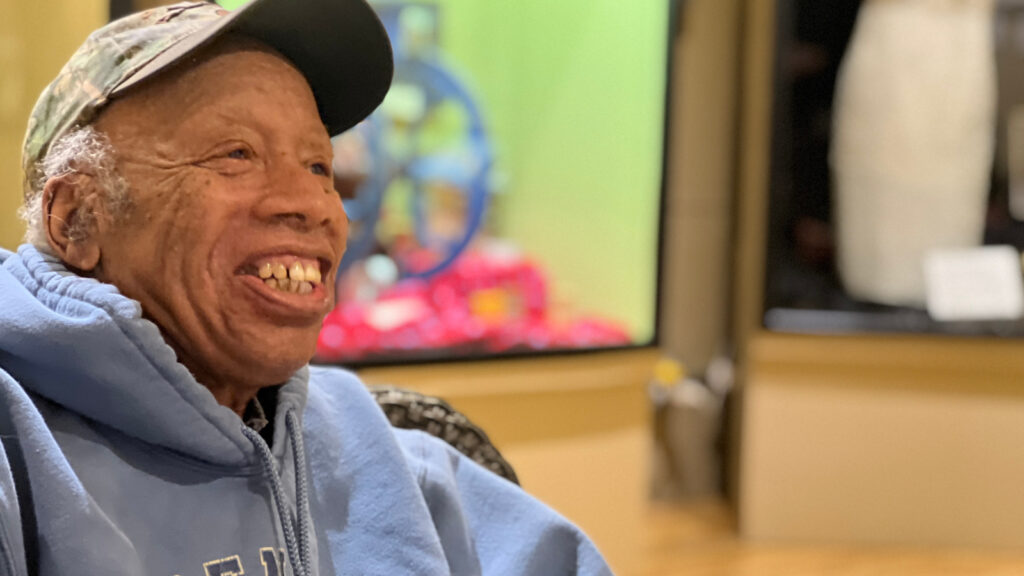
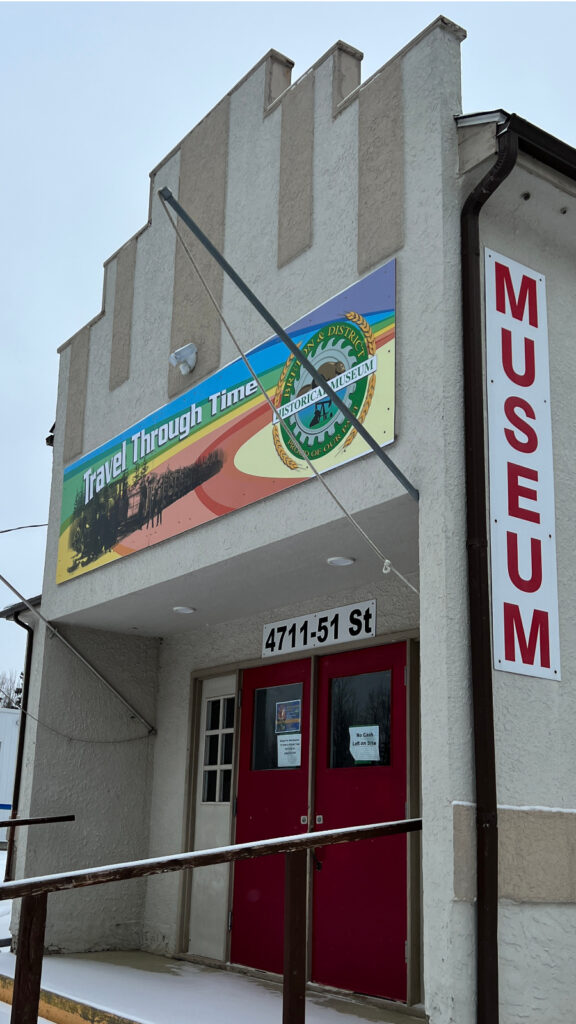
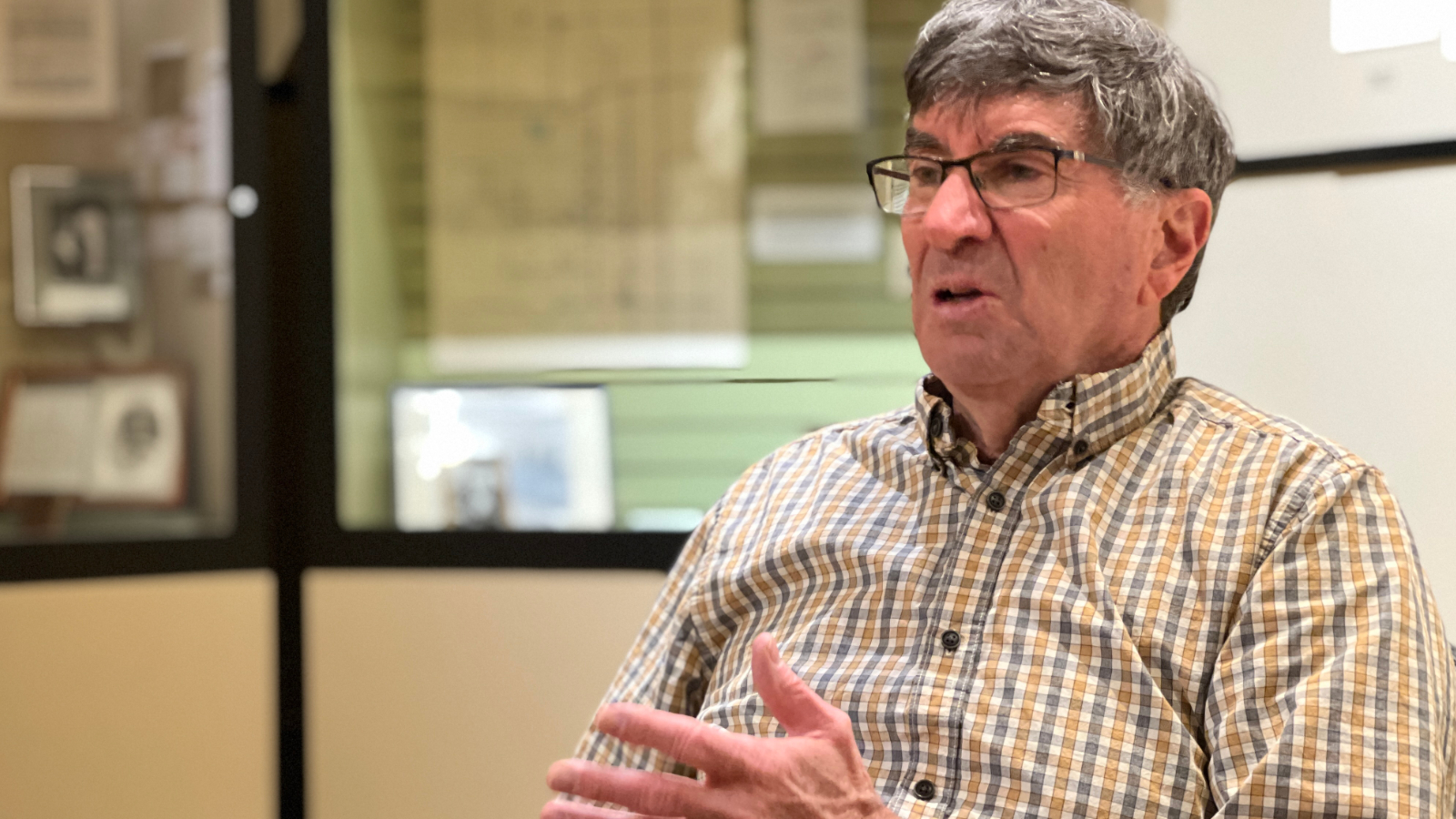
February is Black History Month. Local historian Allan Goddard has dedicated over three decades to keeping the memory of Keystone settlers and the history of Breton alive. We sat down with him for a question and answer session to get insight on his journey.

How long have you been involved in the Breton Historical Society?

I became involved with the Historical Society in the fall of 1987.That makes it about 35 years that I have been involved with the Historical Society. At that time Gwen Hooks was President of the Society.  Over the years I held the positions of President and Treasurer on the Historical Society Board. For quite a number of years the Board served both the role of the governing body of the museum and also acted as administration to carry out the day-to-day activities of the museum.  In about 2009 I resigned as a board member and took on the role of museum manager/curator.  The museum was growing, which required more time to meet the administrative duties, also the level of expertise needed to meet the higher standards of the Recognized Museum Program required someone with at least a basic knowledge of museum standards.  I have remained in this role since then.

What got you involved in the society in the first place?

I think it was an ad in maybe the Breton Booster, or just a poster around Breton that the Society was in the initial stages of starting a museum in Breton and looking for volunteers to help with establishing the museum.  The Society had recently entered into a lease with the then Leduc School Division for the use of the two-room school located on the Breton Elementary school site.  The school division had stopped using the building prior to this for school classes, I think the playschool had occupied the building at the last but must have moved from the building as the building was vacant when the historical Society leased it.  It needed a lot of upgrades over the years. From reviewing some of the records and minutes of the Society it appears that the topic of establishing a museum had been talked about at various times previous to 1987.

I had always had an interest in history from the time I had been small. Both my father and my mother’s family had been longtime residents of the Carnwood and Moose Hill area.  They both had homesteaded in the early 1920’s. As a young child, I can remember asking my mom to tell me about the “olden days”. So when this opportunity came with the Breton museum I thought here is a cute little project that I can volunteer a couple hours a month to help them out. I can paint a wall, do minor carpentry, well it has taken on a life of its own in the years since then.  I didn’t know anything about what it took to operate a museum… none of the people involved did. It was a steep learning curve for everyone.   It has become clear over the years/decades since then that there is much more to running a museum than putting some old items out in a cabinet or on a shelf for people to look at to be a museum. It’s about having the artifacts help tell a story.  

How has black history impacted the Village of Breton and the place it has in Alberta’s history?

The Board of the Society, soon after establishing the museum,received some advice from the Historic Resource’s Branch of the Alberta government about starting a museum. One of the things they talked about was to determine what themes /stories you want to tell in your museum.  I believe the Board of the time did a good job in considering this question.  While most small rural museums focus on the settlement history of their community and Breton was no different to some extent, the Board settled on 4 themes.  They asked themselves what area of the Breton district history can we focus on that will set us apart from the museum down the road.  

The first theme determined was the history of the Keystone community, established by African American settlers from Oklahoma and a few other states that migrated to Alberta from about 1909-1912. While this initially followed the settlement story of homesteading it has become a much more complex story that goes beyond just the hardships of establishing a homestead and life at the time in Alberta, and the Breton community.  When the museum started documenting this story 30 some years ago the story of black history in Alberta was scarcely mentioned.   What I have come to realize and appreciate, there is much more to this story than a small group of early settlers.  This is a story about the immigration policy of Canada at the time, and how many segments of society pushed back against this group.  It started to become clear that the story of Canada as a kind nation that welcomed all groups of immigrants with open arms has started to unravel as we start to research the topic deeper. There have also been success stories that need to be told.  The story of Keystone, and the other communities in Alberta and Saskatchewan settled by this group is more than just local in scope.  It is part of Alberta history, as well as Canada’s story, with connections back to Oklahoma and the reason this group was leaving the State. 

We try to ask visitors to the museum what brought you to the museum today.  A vast majority will say they wanted to learn about the black history of the area.  This theme has definitely brought the museum, and by extension the community a higher profile beyond just the local community. 

The second theme decided on, was the lumbering industry which played a significant role in the development of the area until the late 1940’s. It was the primary economic driver of the area, once rail service was established in 1926.

The third theme was Agriculture, while this was a more generic theme the Board’s focus was to tell the story of the Breton SoilPlots and the challenges of farming on gray wooded soils. This theme has yet to be fully developed by the museum.

The final theme was Community, this encompasses a lot of different elements and like all the themes is ongoing and can vary from year to year.

I suggested to my daughter that she name her first child Grahamina if it’s a girl. I haven’t managed to come up with a good boy’s name yet. 

Here in Alberta, Noah is once again the most popular name for newborn boys, according to info that winged its way into my inbox a couple of weeks ago from the nice people at Service Alberta. On the girls’ side Olivia took the top spot in 2025, as she has done for the last several years.

It’s an interesting phenomenon* that kids’ names seem to drift in and out of fashion, like long hair, flared jeans and the federal New Democrats. Some of that is probably due to the impact of celebrities. It should surprise nobody if we see an uptick in Taylors due to the global dominance of Taylor Swift, while recent events mean the popularity of Andrew is likely to fall off a cliff.**

Looking back at my elementary school class, we had a couple of Davids, a Stephen, an Allan… on the girls’ side there was Jennifer, June, Dorothy and Elspeth. There was also a cluster of more overtly Scottish names:  Alastair, Fraser, Morag and several Fionas. Little did any of them dream that more than 50 years later they’d be name checked in the Drayton Valley and District Free Press. What a strange world we live in. 

Anyway, there were certainly no Noahs, apart from that guy with the boat from the Bible, who was not in my class (I’m old but not that old) so doesn’t really count. I don’t remember any Olivias either, although back then girls were both terrifying and mysterious to me, so who knows.  

What I can tell you is that you couldn’t swing a cat in 1960s Glasgow without hitting a Graham.*** At one point there were three of us in my elementary class. Since I moved to Canada I believe I’ve only met one. ****

Meanwhile here in present day Alberta the rest of the top six boys’ names for last year were Theodore, Oliver, Henry, Jack and Lucas. Amelia, Emma, Sophia, Charlotte, and Violet round out the girls’ side. 

There were more than 52,000 little bundles of joy registered in this province in 2025, with 14,500 unique names. That sounds like a lot, but presumably some are close to duplicates, so Brandy, Brandi and Brandee counts three times, which doesn’t seem fair really.

Anyway, it doesn’t look like there were any Grahaminas, and my daughter didn’t appear to be particularly taken with the suggestion. So if anyone out there is looking for a unique name for their newborn, Grahamina is there for the taking. You can thank me later. Although I suspect your daughter may not be so grateful 

* Disclaimer: Phenomenon may not actually be interesting.

** That’s cliff as in geographical feature, not Cliff as in Clifford. Writing is hard.

***This was before the European Union stepped in and banned cat swinging across the continent. 

**** I mean one Graham. I’ve met lots of cats. That’s cats as in Tom Kitten, not cats as in Cat Stevens. I’ve never met him.

Facebook
Email

After hearing the concerns of teachers and parents during the teachers’ strike last October, the provincial government has assigned their first phase of complexity teams to schools across the province.

“The classroom complexity [teams are] the Alberta Government’s response .. (to) the labour action,” says Jodie Mattia, the superintendent of Wild Rose School Division. “Classroom complexity was one of those pieces.”

Last fall, the province began collecting data surrounding the issue. The final report was released on November 21. The list of school divisions that have been assigned complexity teams was released on February 12. Teams consisting of one teacher and two educational assistants (EAs) are being sent to 476 schools with K-6 students.

“If there are additional dollars, those can be used for therapeutic supports,” says Mattia. She says the Province gave the divisions a list of supports that can be selected from in these cases, which may include speech therapists, occupational therapists, among others.

The divisions will have to send in quarterly reports to the Province, but Mattia says at this point she doesn’t know if those teams will be offering pull-out supports or inclusive supports for the students.

WRSD was assigned one team, which will be working at Rocky Christian School in Rocky Mountain House. The St. Thomas Aquinas Roman Catholic School Division was assigned two teams, which will be placed at Sacred Heart School in Wetaskiwin and St. Augustine School in Ponoka.

At this point, no teams have been assigned to any schools in this area. More than 75 percent of the teams were assigned to urban centres like Edmonton, Calgary, Lethbridge, Medicine Hat, Grande Prairie, and Fort McMurray.

Schools with K-6 students in Drayton Valley, Breton, Entwistle, Evansburg, and Tomahawk do not have complexity teams assigned to them at the time of publication.

Mattia says the divisions didn’t have any say in where the teams were originally assigned. However, the Province has allowed the divisions to submit a change request by February 20. Whether those changes will be accepted remains to be seen.

“In our school division, every single one of our schools has complexity,” says Mattia. “It’s throughout the division; it’s at all grade levels.”

She says as a division, they continue to tackle complexity through their staffing, support teams, and divisional support.

“It’s not like we don’t have speech-language assistants, speech-language pathologists, occupational therapists. [The complexity teams are] additional support,” she says.

In some ways, the complexity team at Rocky Christian School may allow the division to allocate some funds to other schools, says Mattia. With extra support for that school from the Province, they may be able to save a little bit of money on additional supports they might have had to provide for the school.

Mattia says they have already received the funding for the teams, but one of the issues is finding the staff to comprise those teams. “Staffing, recruitment, and retention is a significant challenge for rural education,” she says.

She says the division has positions that have been open since the fall, and they are aware it may not be easy to hire staff for the team. Recruitment and retention of teachers in the rural areas of the province has been an ongoing challenge for many years.

Though this first phase has seen most of the supports going toward urban centres, Mattia says they are hopeful there will be more available for rural communities in the future. In the meantime, she says the division offers great supports for their students and families.

“The divisional team and our school teams, they really do phenomenal work with our students and for our families,” says Mattia. “We’re going to continue to support, in our best possible way, student success. That won’t change.”

The Free Press reached out to the STAR Catholic School Division, but did not receive a response before the publication deadline.

Symposium puts focus on mental health

Facebook
Email

One of Canada’s most sought-after rodeo announcers and motivational speakers returned to his hometown last weekend as the keynote speaker at the Mental Health Awareness Symposium.

Brett Gardiner was born and raised near Drayton Valley and has a grad photo hanging on the walls of Frank Maddock High School. Last weekend, he returned to FMHS to share his own mental health journey and different strategies people can use if they are facing similar struggles.

Elaine Tamboline, the past president of the Drayton Valley Rotary Club, says picking Gardiner for the role of keynote speaker was an easy one. As the most awarded announcer in Canadian history, Gardiner has won Pro Rodeo Announcer of the Year 14 times, she says. He has announced at the Canadian Finals Rodeo, the Calgary Stampede, and since 2016 has been a regular on TSN’s series for the Professional Bull Riding Canada Cup. 

Along with his awards in announcing, Gardiner holds a master’s degree in counselling and psychology, and has worked with professional athletes, educators, and large business organizations.

But his local connection also recommended him for the event.

“I think that’s how it started. Some of us knew his mother,” says Tamboline.

The symposium took place on February 21 and was hosted by the Drayton Valley Rotary Club in partnership with the Healthy Communities Coalition. The all-day event had 13 breakout sessions for attendees, two of which were hosted by Gardiner.

“Mental health is such a huge umbrella,” says Tamboline.

The symposium tackled some major topics, such as Canada’s Red Flag Law, understanding legal protections for survivors of domestic violence, Men’s Shed, recognizing and preventing sexual exploitation in youth, and 

To make the free event even more accessible for residents, Brighter Futures provided childcare so parents could attend the sessions.

Tamboline says the decision to host the event came from a community needs assessment conducted by the Rotary Club.

“[We wanted to] determine what issues people were most concerned about in our town,” says Tamboline. “That took ten months.”

She says they spoke one-on-one with individuals whose demographics varied from homeless people, business professionals, single parents, seniors, and more.

“Their concerns were many, and they fell under the umbrella of mental health,” she says. “This is not surprising or unique because it has become a topic across Canada and around the world.”

The Rotary Club is most well known for its work on eradicating polio. With 1.2 million members in more than 32,000 clubs in 200 countries, Tamboline says they have many other mandates. Some apply to certain areas, some to certain communities, as well as worldwide concerns. At their last international convention in Singapore, with 20,000 attendees, mental health was a hot topic. 

Tamboline says after their needs assessment, the Rotary Club partnered with the HCC to come up with strategies to help connect people in need to professional resources in the community. The symposium was their solution.

The Rotary Club hopes to make the symposium an annual event that can reverberate throughout the community. Tamboline says they will be watching to see how it has affected the community and if they have achieved any of the outcomes they were hoping for.

Tamboline says the organizers are grateful to all the organizations that came together to make the symposium a reality. 

“[We have] gratitude and appreciation for the generous support and donations, and volunteers who believed this is important.”

Shared history is a foundation for the future

Last year we sent our daughter to summer camp, at the request of one of her friends. A text to my husband revealed that this was the summer camp he went to as a kid, as well as his mom and his grandmother. A deeper search showed that his great-grandfather helped build the camp back in 1945. Upon hearing this R- felt such a sense of pride and connection to a whole host of family whom she never met, and have long been dead.  

Family history is often reduced to a series of names, birthdates and death dates. This is a great place to start but the real connection happens when you manage to find a snippet of information or a piece of family lore that gives one of those names a personality. For me this journey began with my Auntie Gwen and her book “The Keystone Legacy.” Writing through the voice of my uncle Mark, they recorded the day to day lives of early black settlers living in Keystone (Breton); clearing land, building tar paper shacks, cold winters, and going to school and church. To anyone living in that time the book would have been a snore. But, the book was published in 1997, 90 years after the first settler moved to the area and guess what happened! More time passed. 

As decades wore on and storytellers died, the value of this book increased. What used to be just a collection of stories and recollections has now become a primary source document for other books and a very cherished piece of family history. 

This week I had the privilege of sharing a bit about my family history at the Drayton Valley Multi Cultural Association’s first black heritage event. As I walked into the room and saw African art lining the walls, vibrant clothing for sale and heard personal stories from those first generation Canadians in attendance, I had a sudden flash of imposter syndrome. Here are people who are so close to their immigration story that my historical stories about slavery, segregation, and land politics seemed old news, and out of touch. 

However, in the scope of history even a century doesn’t seem that long. As I was talking to this group about my story I was inspired to press on them how much their story will mean to their future family. Documenting why you came to Canada, and what early life was like doesn’t seem like much right now but to someone six or seven generations later, it may be just the piece of information they needed to hear to feel that they belong. 

Throughout my genealogy journey I have been lucky to have found shreds of newspaper clippings, land allotment interviews, references to my family in the books, “The Keystone Legacy,” “The Ghost of Crook County,” and “The Black Prairie Archives,” and of course the endless source of information and connection of Allan Goddard and the Breton Historical Society. Some may not be as lucky, but as is the case with my daughter, when her great-grandpa built a camp in 1945 he unintentionally built a bridge to future generations.

Working youth are suffering

Not too long ago, I heard a complaint about youth being too lazy to get jobs nowadays. That annoys me to no end because not only is it painting an entire generation with a broad brush, the blame for lower employment rates is placed solely at the feet of the youth, which is not right.

I started working when I was about 15 years old. At that point, my starting wage was about $6.95, and getting a ten cent an hour raise was awesome. 

I didn’t struggle to find a job. I basically dropped off my resume to several businesses, went for the first interview, and got hired. While I may not have appreciated the job, I never worried about what my work schedule was, if they were paying me what I was owed, or if they were meeting labour laws. 

My parents also didn’t really have to worry about it.

However, my first experience of seeing the abuse (I don’t use this term lightly) of a youth at a job was as an adult, around my mid-20s. At that point, I’d worked enough jobs to understand shady behaviour when I saw it, so it really bothered me to see employers taking advantage of young workers.

Fast forward to about five or six years ago, and things have only gotten worse.

The common misconception that youth just don’t want to work anymore fails to take into consideration the work environment we insist they join. Not only are there fewer jobs available for youth, but many employers are far more interested in making money than introducing youth into the workforce.

For those who have been lucky enough to find jobs, I have heard about some awful, and frankly, downright illegal things taking place. 

In one case, a pizza delivery driver who was paid per delivery and tips was expected to be at the workplace for an entire eight-hour shift without getting paid. If there were only two deliveries that night, their base pay for the entire shift was a whopping $7.

Another situation I’ve heard about is a youth who was hired to work at a new business in the community. They were brought in with numerous other youths in the community for mass orientation sessions. Half of the kids who showed up, having been told they were hired, were turned away at the door or never actually got to work for the company.

This same company would change the shifts for kids with barely 24-hours notice, didn’t fill out any paperwork for their new staff, and made false promises of rewards for teams who worked the hardest.

Once that company decided who they wanted to keep around, they let go of some employees, who were mostly in high school, by text message on a school day. 

Yes. A business that has a name that everyone would recognize fired kids by text message while they were at school. Illegal? No. Unethical? Absolutely; not to mention cowardly and callous.

Imagine how these kids felt learning they’d been fired from their first job, with zero explanation, while they were sitting in class at school. I’m sure they were eager to go out and find another job after that.

Other stories include bringing in a youth to try out for the job for a day without pay, and then ghosting them afterward; convoluted pay structures and bonuses that make it difficult for employees to know if they were being paid appropriately; and sending them out to do dangerous work without the appropriate training.

The moral of this story? Before business owners want to complain about the apathetic youth of today, they need to recognize that their attitudes and practices might just be the reason for this problem.

Drayton to host U11 finals

Facebook
Email

The Team Auctions Centre will be a busy place in March as it hosts the U11 A and B teams Division Finals on two different weekends.

Kara Westerlund, a member of the social committee for the event, says this community was selected after the Drayton Valley Minor Hockey Association put in a bid with Hockey Alberta.

“We came out on top,” says Westerlund. “I’ve been involved in hockey for a while; this is the first time we’ve ever been successful  … so it’s quite exciting.”

DVMHA is expecting up to nine teams for the finals. Two of those teams will be from Drayton, as the host team always gets a spot, even if they aren’t in the top spot to make the finals.

“The neat thing is that both the A and the B team are at the top of their league right now, but that could change in a heartbeat with the games that are remaining,” says Westerlund.

The first weekend, March 7 and 8, will be the finals for the B teams, and the second weekend, March 14 and 15, will be for the A team.

Putting on the event will take the work of many volunteers, says Westerlund. She says they will need people to organize volunteers, to put together the player bags, cover the clocks for the games, score keep, play the music, man the penalty boxes, and more to keep everything running smoothly.

Some local businesses have also stepped up to help out with the finals, says Westerlund, with one providing all the hockey pucks for the event.

“Outside of the hockey… it’s so cool for our community to be picked to host something like this,” says Westerlund. “There’s potentially up to nine teams that are going to be in town, and there’s an average of 16 to 18 kids on a team.”

Westerlund says they already know they are going to fill up at least one hotel, with a high likelihood of filling two or more for both weekends in March.

“When they come, they bring their families and they have to eat, so the whole hospitality side and service industry in Drayton is going to see a massive boost that weekend for sure,” she says.

Ryan Fynn, the president of the Drayton Valley Hospitality and Tourism Authority, says these types of events are always great for the community.

He says with 150 hotel rooms being booked for two nights, the food, the fuel, and possible shopping, the economic impact will be around $200,000 put back into the community.

“Any time these finals come to Drayton, it’s always been how can we help them the best,” he says. “The biggest thing is highlighting the community and making these teams want to come back to Drayton.”

Fynn says the DVHTA has always supported minor hockey with sponsorship funds, marketing opportunities, or items for the players’ bags. 

“It definitely falls right in line with what we’re all about,” he says. “We’re excited that they were awarded the bid from Hockey Alberta and glad they’re able to follow through with it.”

Westerlund says aside from the economic benefits of these events, there’s something that’s even more important.

“All the work is worth it; it’s for the kids at the end of the day,” says Westerlund. “We all know, even as adults, that moments like this and weekends like this are memorable for the rest of their lives. They will remember this.”

She says they want to make sure the event is special for the kids and shows off the community.

Over the years of managing the museum what is the most interesting artifact, or fact that you have stumbled across as it pertains to the black community or the area?

I had to think about this question for a while. There are two or three artifacts that piqued my interest and we can connect to the families that settled Keystone. One is a mule shoe found on the property originally settled by Rolla Ramsey. It was turned up in a field in later years, long after the Ramsey family had moved from the community. We can see from some records that some of the families owned mules which they brought from the US with them.  Mules were often used in the south as they were tough, and for their size could pull more.  

The second is part of a child’s toy, it is a metal horse that likely had a wagon or something more to the toy. It too was found in a field in later years, on property owned by another black family of the area.  While it is only partly there, we can imagine there was a little boy who likely prized that toy.

The third is a small rubber stamp that was found in the Funnell School/Community Centre when they were cleaned up about 10 years ago.   The stamp says Keystone. What purpose it was used for we don’t know, but it must have been made for a purpose. 

From an archival perspective, I think the minute book from the Good Hope Baptist Mission is wonderful, especially the opening entry.  “We the people of township 48 range 4– west of the 5th meridian, met together at Wm Allen’s house at 11 o’clock on September 10,1911 for the purpose of organizing a church.” The museum is very lucky to have these records, thanks to Mrs. Emma King who had a number of records pertaining to Keystone and passed them on to Mark and Gwen Hooks who donated them to the museum when it was established.  

The last archival item isn’t something the museum has, but comes from the homestead records held at the Provincial Archives of Alberta. These records show who filed on a homestead, and contain a variety of information about the individual. The first form that every person who filed on a homestead  filled out had the usual information you would expect: their name, the land location, if they were married and had a family, their address, their nationality and if they were a Canadian citizen. What I found interesting was that on many of the homestead records filed by the black settlers they listed their nationality as American, which they were, but down in the corner of the form a government official has written the word Black, Colored or Negro.  They were being identified beyond what any white homesteader was.  Now we don’t know if they were being directed to certain areas for settlement or for some other purpose.

Why do you continue to be involved? 

There are days when you wonder if anyone notices or cares what the museum is doing, but then you get the days when you meet visitors and you can help them and the gratitude they have to the museum for taking the time to help. Or people commenting on how much they enjoy the articles I write for the Breton Booster, then you know what you are doing does make a difference. Isn’t there a line in an old Joni Mitchell song that says “you don’t know what you got till it’s gone”. 

What keeps me coming back is what I will discover next week or next month that will add to the story.   It’s like having a box of jigsaw puzzles and the box contains numerous puzzles, and each puzzle has some of the pieces but not all of them. 

Anything else you feel is important to talk about? 

This year will mark the 45th anniversary of the formation of the Breton and District Historical Society. While their original purpose was to publish a community history book. I think a lot of credit has to go to the people who were involved in the formation of the Historical Society to have the vision to start preserving the history of the community.  If they hadn’t started the Historical Society then, would there be a Breton Museum.  The majority of those individuals have now become part of the community’s history.

Image of columnist Graham Long in front of heading tired and emotional

Did somebody say the F word?

A long, long time ago there was a push to build a fieldhouse in Drayton Valley. It began as an idea to create a dedicated space for indoor soccer. That sounded just dandy. Then some other folks got involved and they added all sorts of stuff to the proposal

Read More »

Wild Rose to charge for busing

Due to a gap between provincial funding and actual transportation costs, the Wild Rose School Division will be charging busing fees for students beginning in the 2026/27 school year.

Read More »

Opinion: Don’t write off seniors

There is a little bit of a stereotype around newspapers. Some people think that the only people who read them are seniors. Our data shows otherwise. Typically as soon as you own property or enter the family phase of life, you get more involved in the community.
Read More »

Hockey and firefighting go hand in hand

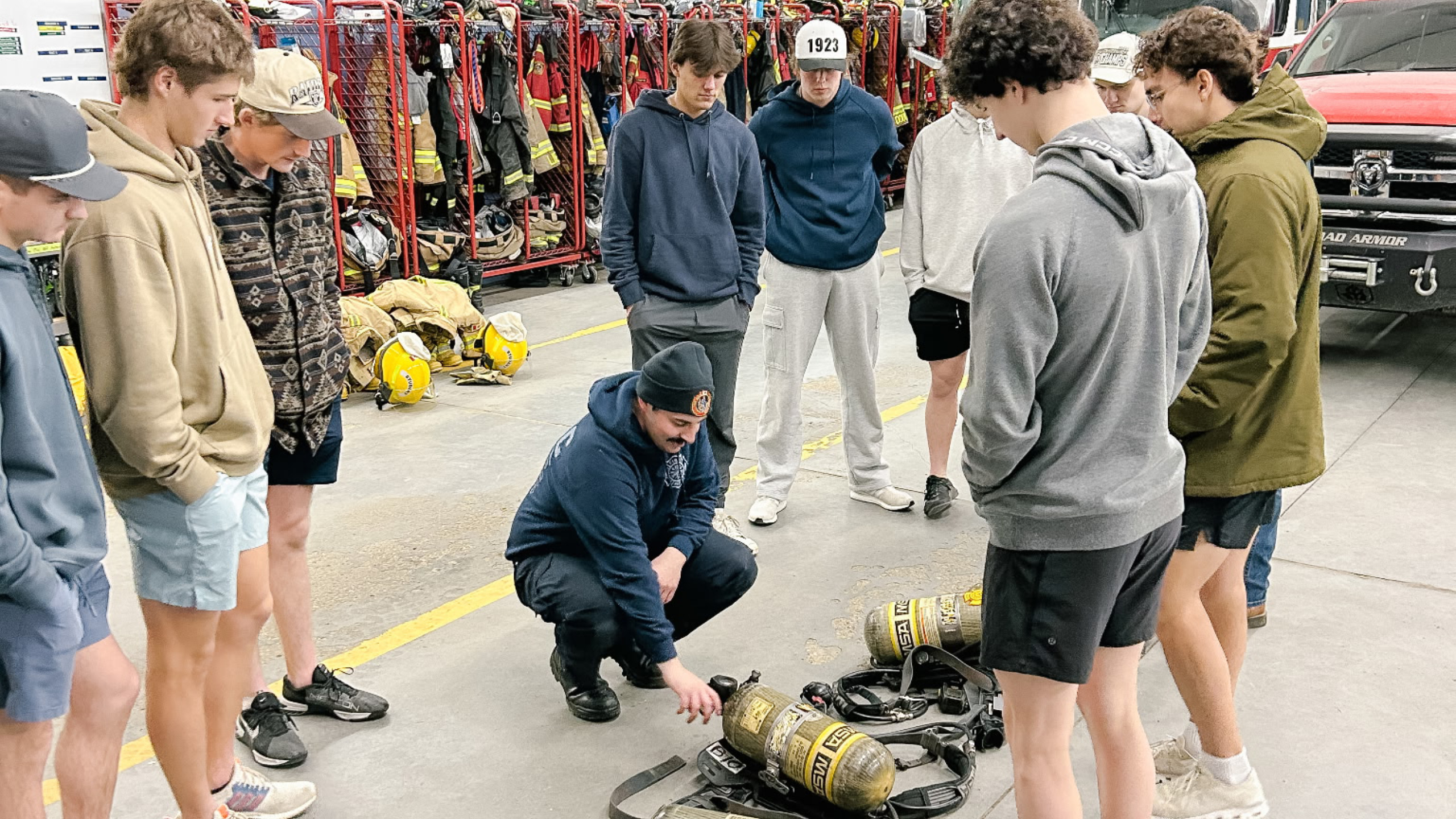
The Drayton Valley Thunder players recently had the chance to see if their team-building skills held up off the ice.
Drayton Valley/Brazeau County Fire Services Chief Tom Thomson says the team has been getting to meet and exercise with fire services members for some time.

Read More »