
You are currently viewing The Voice of the rural rodeo

The Voice of the rural rodeo

Facebook
Email
LinkedIn
WhatsApp

You might not recognize him if you saw him on the street,  but I bet you’d know him if you heard him. For 31 years Tyson Pietsch has been the voice of the rural rodeo scene.

When you first meet Pietsch you immediately find he’s a hard man not to like; with a big smile, a welcoming attitude and general curiosity. You quickly understand what draws neighbours from around the region to his Winfield store for coffee. Pietsch has the gift of the gab, and so naturally when it came time to choose a career path he went to school for broadcasting.

But he soon realized that to be a broadcaster in the early 90’s wasn’t going to work out. There just weren’t any jobs. As luck would have it, Pietsch would soon find out that when one door closed another would open. That other door was rodeo. 

I suggested to my daughter that she name her first child Grahamina if it’s a girl. I haven’t managed to come up with a good boy’s name yet. 

Here in Alberta, Noah is once again the most popular name for newborn boys, according to info that winged its way into my inbox a couple of weeks ago from the nice people at Service Alberta. On the girls’ side Olivia took the top spot in 2025, as she has done for the last several years.

It’s an interesting phenomenon* that kids’ names seem to drift in and out of fashion, like long hair, flared jeans and the federal New Democrats. Some of that is probably due to the impact of celebrities. It should surprise nobody if we see an uptick in Taylors due to the global dominance of Taylor Swift, while recent events mean the popularity of Andrew is likely to fall off a cliff.**

Looking back at my elementary school class, we had a couple of Davids, a Stephen, an Allan… on the girls’ side there was Jennifer, June, Dorothy and Elspeth. There was also a cluster of more overtly Scottish names:  Alastair, Fraser, Morag and several Fionas. Little did any of them dream that more than 50 years later they’d be name checked in the Drayton Valley and District Free Press. What a strange world we live in. 

Anyway, there were certainly no Noahs, apart from that guy with the boat from the Bible, who was not in my class (I’m old but not that old) so doesn’t really count. I don’t remember any Olivias either, although back then girls were both terrifying and mysterious to me, so who knows.  

What I can tell you is that you couldn’t swing a cat in 1960s Glasgow without hitting a Graham.*** At one point there were three of us in my elementary class. Since I moved to Canada I believe I’ve only met one. ****

Meanwhile here in present day Alberta the rest of the top six boys’ names for last year were Theodore, Oliver, Henry, Jack and Lucas. Amelia, Emma, Sophia, Charlotte, and Violet round out the girls’ side. 

There were more than 52,000 little bundles of joy registered in this province in 2025, with 14,500 unique names. That sounds like a lot, but presumably some are close to duplicates, so Brandy, Brandi and Brandee counts three times, which doesn’t seem fair really.

Anyway, it doesn’t look like there were any Grahaminas, and my daughter didn’t appear to be particularly taken with the suggestion. So if anyone out there is looking for a unique name for their newborn, Grahamina is there for the taking. You can thank me later. Although I suspect your daughter may not be so grateful 

* Disclaimer: Phenomenon may not actually be interesting.

** That’s cliff as in geographical feature, not Cliff as in Clifford. Writing is hard.

***This was before the European Union stepped in and banned cat swinging across the continent. 

**** I mean one Graham. I’ve met lots of cats. That’s cats as in Tom Kitten, not cats as in Cat Stevens. I’ve never met him.

Facebook
Email

After hearing the concerns of teachers and parents during the teachers’ strike last October, the provincial government has assigned their first phase of complexity teams to schools across the province.

“The classroom complexity [teams are] the Alberta Government’s response .. (to) the labour action,” says Jodie Mattia, the superintendent of Wild Rose School Division. “Classroom complexity was one of those pieces.”

Last fall, the province began collecting data surrounding the issue. The final report was released on November 21. The list of school divisions that have been assigned complexity teams was released on February 12. Teams consisting of one teacher and two educational assistants (EAs) are being sent to 476 schools with K-6 students.

“If there are additional dollars, those can be used for therapeutic supports,” says Mattia. She says the Province gave the divisions a list of supports that can be selected from in these cases, which may include speech therapists, occupational therapists, among others.

The divisions will have to send in quarterly reports to the Province, but Mattia says at this point she doesn’t know if those teams will be offering pull-out supports or inclusive supports for the students.

WRSD was assigned one team, which will be working at Rocky Christian School in Rocky Mountain House. The St. Thomas Aquinas Roman Catholic School Division was assigned two teams, which will be placed at Sacred Heart School in Wetaskiwin and St. Augustine School in Ponoka.

At this point, no teams have been assigned to any schools in this area. More than 75 percent of the teams were assigned to urban centres like Edmonton, Calgary, Lethbridge, Medicine Hat, Grande Prairie, and Fort McMurray.

Schools with K-6 students in Drayton Valley, Breton, Entwistle, Evansburg, and Tomahawk do not have complexity teams assigned to them at the time of publication.

Mattia says the divisions didn’t have any say in where the teams were originally assigned. However, the Province has allowed the divisions to submit a change request by February 20. Whether those changes will be accepted remains to be seen.

“In our school division, every single one of our schools has complexity,” says Mattia. “It’s throughout the division; it’s at all grade levels.”

She says as a division, they continue to tackle complexity through their staffing, support teams, and divisional support.

“It’s not like we don’t have speech-language assistants, speech-language pathologists, occupational therapists. [The complexity teams are] additional support,” she says.

In some ways, the complexity team at Rocky Christian School may allow the division to allocate some funds to other schools, says Mattia. With extra support for that school from the Province, they may be able to save a little bit of money on additional supports they might have had to provide for the school.

Mattia says they have already received the funding for the teams, but one of the issues is finding the staff to comprise those teams. “Staffing, recruitment, and retention is a significant challenge for rural education,” she says.

She says the division has positions that have been open since the fall, and they are aware it may not be easy to hire staff for the team. Recruitment and retention of teachers in the rural areas of the province has been an ongoing challenge for many years.

Though this first phase has seen most of the supports going toward urban centres, Mattia says they are hopeful there will be more available for rural communities in the future. In the meantime, she says the division offers great supports for their students and families.

“The divisional team and our school teams, they really do phenomenal work with our students and for our families,” says Mattia. “We’re going to continue to support, in our best possible way, student success. That won’t change.”

The Free Press reached out to the STAR Catholic School Division, but did not receive a response before the publication deadline.

Facebook
Email

One of Canada’s most sought-after rodeo announcers and motivational speakers returned to his hometown last weekend as the keynote speaker at the Mental Health Awareness Symposium.

Brett Gardiner was born and raised near Drayton Valley and has a grad photo hanging on the walls of Frank Maddock High School. Last weekend, he returned to FMHS to share his own mental health journey and different strategies people can use if they are facing similar struggles.

Elaine Tamboline, the past president of the Drayton Valley Rotary Club, says picking Gardiner for the role of keynote speaker was an easy one. As the most awarded announcer in Canadian history, Gardiner has won Pro Rodeo Announcer of the Year 14 times, she says. He has announced at the Canadian Finals Rodeo, the Calgary Stampede, and since 2016 has been a regular on TSN’s series for the Professional Bull Riding Canada Cup. 

Along with his awards in announcing, Gardiner holds a master’s degree in counselling and psychology, and has worked with professional athletes, educators, and large business organizations.

But his local connection also recommended him for the event.

“I think that’s how it started. Some of us knew his mother,” says Tamboline.

The symposium took place on February 21 and was hosted by the Drayton Valley Rotary Club in partnership with the Healthy Communities Coalition. The all-day event had 13 breakout sessions for attendees, two of which were hosted by Gardiner.

“Mental health is such a huge umbrella,” says Tamboline.

The symposium tackled some major topics, such as Canada’s Red Flag Law, understanding legal protections for survivors of domestic violence, Men’s Shed, recognizing and preventing sexual exploitation in youth, and 

To make the free event even more accessible for residents, Brighter Futures provided childcare so parents could attend the sessions.

Tamboline says the decision to host the event came from a community needs assessment conducted by the Rotary Club.

“[We wanted to] determine what issues people were most concerned about in our town,” says Tamboline. “That took ten months.”

She says they spoke one-on-one with individuals whose demographics varied from homeless people, business professionals, single parents, seniors, and more.

“Their concerns were many, and they fell under the umbrella of mental health,” she says. “This is not surprising or unique because it has become a topic across Canada and around the world.”

The Rotary Club is most well known for its work on eradicating polio. With 1.2 million members in more than 32,000 clubs in 200 countries, Tamboline says they have many other mandates. Some apply to certain areas, some to certain communities, as well as worldwide concerns. At their last international convention in Singapore, with 20,000 attendees, mental health was a hot topic. 

Tamboline says after their needs assessment, the Rotary Club partnered with the HCC to come up with strategies to help connect people in need to professional resources in the community. The symposium was their solution.

The Rotary Club hopes to make the symposium an annual event that can reverberate throughout the community. Tamboline says they will be watching to see how it has affected the community and if they have achieved any of the outcomes they were hoping for.

Tamboline says the organizers are grateful to all the organizations that came together to make the symposium a reality. 

“[We have] gratitude and appreciation for the generous support and donations, and volunteers who believed this is important.”

Last year we sent our daughter to summer camp, at the request of one of her friends. A text to my husband revealed that this was the summer camp he went to as a kid, as well as his mom and his grandmother. A deeper search showed that his great-grandfather helped build the camp back in 1945. Upon hearing this R- felt such a sense of pride and connection to a whole host of family whom she never met, and have long been dead.  

Family history is often reduced to a series of names, birthdates and death dates. This is a great place to start but the real connection happens when you manage to find a snippet of information or a piece of family lore that gives one of those names a personality. For me this journey began with my Auntie Gwen and her book “The Keystone Legacy.” Writing through the voice of my uncle Mark, they recorded the day to day lives of early black settlers living in Keystone (Breton); clearing land, building tar paper shacks, cold winters, and going to school and church. To anyone living in that time the book would have been a snore. But, the book was published in 1997, 90 years after the first settler moved to the area and guess what happened! More time passed. 

As decades wore on and storytellers died, the value of this book increased. What used to be just a collection of stories and recollections has now become a primary source document for other books and a very cherished piece of family history. 

This week I had the privilege of sharing a bit about my family history at the Drayton Valley Multi Cultural Association’s first black heritage event. As I walked into the room and saw African art lining the walls, vibrant clothing for sale and heard personal stories from those first generation Canadians in attendance, I had a sudden flash of imposter syndrome. Here are people who are so close to their immigration story that my historical stories about slavery, segregation, and land politics seemed old news, and out of touch. 

However, in the scope of history even a century doesn’t seem that long. As I was talking to this group about my story I was inspired to press on them how much their story will mean to their future family. Documenting why you came to Canada, and what early life was like doesn’t seem like much right now but to someone six or seven generations later, it may be just the piece of information they needed to hear to feel that they belong. 

Throughout my genealogy journey I have been lucky to have found shreds of newspaper clippings, land allotment interviews, references to my family in the books, “The Keystone Legacy,” “The Ghost of Crook County,” and “The Black Prairie Archives,” and of course the endless source of information and connection of Allan Goddard and the Breton Historical Society. Some may not be as lucky, but as is the case with my daughter, when her great-grandpa built a camp in 1945 he unintentionally built a bridge to future generations.

Not too long ago, I heard a complaint about youth being too lazy to get jobs nowadays. That annoys me to no end because not only is it painting an entire generation with a broad brush, the blame for lower employment rates is placed solely at the feet of the youth, which is not right.

I started working when I was about 15 years old. At that point, my starting wage was about $6.95, and getting a ten cent an hour raise was awesome. 

I didn’t struggle to find a job. I basically dropped off my resume to several businesses, went for the first interview, and got hired. While I may not have appreciated the job, I never worried about what my work schedule was, if they were paying me what I was owed, or if they were meeting labour laws. 

My parents also didn’t really have to worry about it.

However, my first experience of seeing the abuse (I don’t use this term lightly) of a youth at a job was as an adult, around my mid-20s. At that point, I’d worked enough jobs to understand shady behaviour when I saw it, so it really bothered me to see employers taking advantage of young workers.

Fast forward to about five or six years ago, and things have only gotten worse.

The common misconception that youth just don’t want to work anymore fails to take into consideration the work environment we insist they join. Not only are there fewer jobs available for youth, but many employers are far more interested in making money than introducing youth into the workforce.

For those who have been lucky enough to find jobs, I have heard about some awful, and frankly, downright illegal things taking place. 

In one case, a pizza delivery driver who was paid per delivery and tips was expected to be at the workplace for an entire eight-hour shift without getting paid. If there were only two deliveries that night, their base pay for the entire shift was a whopping $7.

Another situation I’ve heard about is a youth who was hired to work at a new business in the community. They were brought in with numerous other youths in the community for mass orientation sessions. Half of the kids who showed up, having been told they were hired, were turned away at the door or never actually got to work for the company.

This same company would change the shifts for kids with barely 24-hours notice, didn’t fill out any paperwork for their new staff, and made false promises of rewards for teams who worked the hardest.

Once that company decided who they wanted to keep around, they let go of some employees, who were mostly in high school, by text message on a school day. 

Yes. A business that has a name that everyone would recognize fired kids by text message while they were at school. Illegal? No. Unethical? Absolutely; not to mention cowardly and callous.

Imagine how these kids felt learning they’d been fired from their first job, with zero explanation, while they were sitting in class at school. I’m sure they were eager to go out and find another job after that.

Other stories include bringing in a youth to try out for the job for a day without pay, and then ghosting them afterward; convoluted pay structures and bonuses that make it difficult for employees to know if they were being paid appropriately; and sending them out to do dangerous work without the appropriate training.

The moral of this story? Before business owners want to complain about the apathetic youth of today, they need to recognize that their attitudes and practices might just be the reason for this problem.

Facebook
Email

The Team Auctions Centre will be a busy place in March as it hosts the U11 A and B teams Division Finals on two different weekends.

Kara Westerlund, a member of the social committee for the event, says this community was selected after the Drayton Valley Minor Hockey Association put in a bid with Hockey Alberta.

“We came out on top,” says Westerlund. “I’ve been involved in hockey for a while; this is the first time we’ve ever been successful  … so it’s quite exciting.”

DVMHA is expecting up to nine teams for the finals. Two of those teams will be from Drayton, as the host team always gets a spot, even if they aren’t in the top spot to make the finals.

“The neat thing is that both the A and the B team are at the top of their league right now, but that could change in a heartbeat with the games that are remaining,” says Westerlund.

The first weekend, March 7 and 8, will be the finals for the B teams, and the second weekend, March 14 and 15, will be for the A team.

Putting on the event will take the work of many volunteers, says Westerlund. She says they will need people to organize volunteers, to put together the player bags, cover the clocks for the games, score keep, play the music, man the penalty boxes, and more to keep everything running smoothly.

Some local businesses have also stepped up to help out with the finals, says Westerlund, with one providing all the hockey pucks for the event.

“Outside of the hockey… it’s so cool for our community to be picked to host something like this,” says Westerlund. “There’s potentially up to nine teams that are going to be in town, and there’s an average of 16 to 18 kids on a team.”

Westerlund says they already know they are going to fill up at least one hotel, with a high likelihood of filling two or more for both weekends in March.

“When they come, they bring their families and they have to eat, so the whole hospitality side and service industry in Drayton is going to see a massive boost that weekend for sure,” she says.

Ryan Fynn, the president of the Drayton Valley Hospitality and Tourism Authority, says these types of events are always great for the community.

He says with 150 hotel rooms being booked for two nights, the food, the fuel, and possible shopping, the economic impact will be around $200,000 put back into the community.

“Any time these finals come to Drayton, it’s always been how can we help them the best,” he says. “The biggest thing is highlighting the community and making these teams want to come back to Drayton.”

Fynn says the DVHTA has always supported minor hockey with sponsorship funds, marketing opportunities, or items for the players’ bags. 

“It definitely falls right in line with what we’re all about,” he says. “We’re excited that they were awarded the bid from Hockey Alberta and glad they’re able to follow through with it.”

Westerlund says aside from the economic benefits of these events, there’s something that’s even more important.

“All the work is worth it; it’s for the kids at the end of the day,” says Westerlund. “We all know, even as adults, that moments like this and weekends like this are memorable for the rest of their lives. They will remember this.”

She says they want to make sure the event is special for the kids and shows off the community.

“My father in law, John Duffy, started producing rodeos and asked if I thought about announcing,”  he said. 

That was more than three decades ago, and the rest is Canadian rodeo history. 

Pietsch grew up on a farm in the Buck Lake area and so it wasn’t much of a stretch to get into rodeo announcing. He was familiar with the terms and the territory so he jumped in with both feet.

“My first rodeo was the Red Deer College Rodeo. It was a really positive experience and a lot of fun,” said Pietsch. 

“I always like to say; what do you call a cowboy who can’t ride and can’t bull? An announcer. I was lucky to have the opportunity and be in the right place at the right time.”

At the height of his career Pietsch would announce up to 30 rodeos in a season covering Alberta and BC from Vancouver Island, Fort Nelson, to La Crete, Medicine Hat and everywhere in between. In Canada there isn’t a rodeo announcers’ job board, or formalized school program so many of the Pietsch bookings came via word of mouth.

“I always like to say; what do you call a cowboy who can’t ride and can’t bull? An announcer. I was lucky to have the opportunity and be in the right place at the right time,” said Pietsch. 

Word soon spread and announcing gigs expanded from rodeos to the Alberta Men’s Curling Championships, figure skating events, football games, horse shows, junior hockey. “I was called on for anything you needed a public service announcer for,” said Pietsch. 

Sitting with Pietsch over a cup of jo in his “coffee shop” I could see him reflecting on his 31 year career. 

One of the Crown-given rights of Canadians is the right to complain ad nauseam about anything that mildly irritates them. All Canadians exercise this right at some point or another to varying degrees.

Today, I wish to express my… dissatisfaction with a number of complainers. That does indeed make me a complainer, but as we’ve already covered, this is my Crown-given right.

The motto of the Royal Canadian Mounted Police is Maintiens le Droit, or in English, Uphold the Right. 

While the words themselves may have differing meanings for officers, for many it’s a summary of their core values: take responsibility, show respect, serve with excellence, demonstrate compassion, and act with integrity. The motto can serve as a reminder of why they joined the RCMP.

Though the RCMP mandate is about dealing with crime, their motto could be interpreted as giving guidance for how they do their job. While their main task involves fighting crime, it’s rarely as black and white as people believe.

Anyone who has read the RCMP Report can see that a large portion of the calls they get aren’t about busting criminals. In a lot of cases, the RCMP play the role of referee, mentor, therapist, chauffeur, confidant, supervisor, financial advisor, and many, many others.

I’m going to preempt this next part with a disclaimer — while most RCMP officers exemplify the mandate and motto, there are some who do not, which is no different from any other industry, group, or organization out there.

Many people have two interchangeable perceptions of the RCMP. 

The first perception stems from a need. We have been robbed; we need the police to come help us. 

The second is activated when being caught. I broke the law, and those jerks are going to punish me for it.

It seems strange to me that some people can be angry with the RCMP for “always failing” to do their job and then be equally angry at them for succeeding at their job. 

“People are driving unsafely! Where are the cops when you need them?”

“Wait, what? I just got pulled over for speeding? That other guy was going way faster; this jerk just thinks he’s important and wants to push someone around.”

I have seen people complain about cops wasting their time parked in high-traffic areas often frequented by dangerous drivers. Those same people are up in arms when there isn’t an officer present to crack down on the bad drivers.

On the odd occasion that someone happens to notice an officer has done their job, there is little praise. Instead, the most common response is something along the lines of, “Does he want a cookie every time he does his job?”

I am of the opinion that some of the people who are screaming the loudest about the cops are the ones who have had negative interactions with them. That could look like being disrespectful or aggressive to an officer. Or it could look like breaking the law and getting caught.

In any case, the double standard of many of the complaints is both mind-boggling and somewhat entertaining. The concept of “do your job unless it involves me” speaks to a high level of entitlement. And for the most part, those who are spewing vitriol about the work the RCMP do are saying more about their own character than anything else.

Facebook
Email

The Breton Cougars have made their community proud after winning the Alberta Bowl Provincial Championship for 6 A Side Team Football.

The Cougars faced the Hanna Hawks at the Jasper Place Bowl on November 28, where they came out on top with a score of 36-16.

Coach Corey Colwell says they’ve been close to getting the championship for several years, but never attained the achievement until this year.

“To finally get through was fantastic,” says Colwell. “It was a lot of fun.”

Colwell knew the Cougars had a good chance this year when he saw that the roster had eight grade 12 students on it.

“I told the boys way back in May when we started on May 1 for our spring camp that we were trying to get into that final provincial game,” says Colwell. “That was our goal.”

The players took that goal to heart. 

“The boys, to their credit, showed up for every practice. They put in the work,” says Colwell. “They got better and better.”

He says the defence did the film study, watching game plays and preparing themselves for what their opponents would bring to the game. Colwell says the offence comes down to who can block the best, and his players stepped in to do it.

Putting in the work for this season involved more grit than it did in previous seasons. With the remodel underway at Breton High School, the students have been attending classes in Warburg. After school, they would head down to the Breton football field for their practice, where there was no power, running water, or washrooms.

“It’s been inconvenient and difficult for us all year,” says Colwell. 

But even to make their practices work, they worked as a team. Players took turns bringing home water bottles and filling them up for the next practice. Colwell always made sure there was a clean outhouse and also brought in a generator to use for lights on the field and in the change room.

“Nothing was convenient or easy this year,” he says.

Colwell says what makes the win even sweeter is that Breton High School is the smallest school in the league. They had 74 students to draw from, where Hanna had 240 students.

“Every time we play, we’re punching above our weight class,” says Colwell.

The team had staff and students from the school cheering them on.

“This team has worked so hard to get here. Before school practices, even in the freezing cold! With full course loads, these students spend any spare second watching football tapes, practicing and working hard to be the best,” said principal Shannon Gallant in a statement.

 Now that they’ve won the cup, the team gets to keep it for the year. Colwell says they will bring it back to the Alberta Bowl next year, where he hopes they will win it again.

That ringing noise you hear isn’t sleigh bells, it’s cash registers across the land gearing up for the busiest couple of weeks of the year.

Yes, it’s December, and December means Christmas shopping. And there is no shortage of options to separate you from your hard earned cash at this time of year. Santa’s helpers throughout corporate North America have been working tirelessly since December 26 last year to develop a range of consumer goods that everybody who is anybody simply must have for Christmas 2025. You can ignore them and their wall-to-wall advertising all you like, but ultimately it will make no difference. They will simply do an end run around your wall of indifference and get at you through your kids. Or your wife. Or both.

As always, there will be those among us who pine for the days when Christmas was not about a new video game, the latest Barbie collectible or whatever fresh atrocity the Disney Corporation is about to unleash upon the world. Those are the people for whom Christmas is about rosy faced children singing carols by an open fire as large, soft and fluffy flakes of snow fall from the darkened sky. It’s a Victorian Christmas, just like you see on television. 

There’s no question that that idea of Christmas is an attractive one. But it’s somewhat undermined by the fact that most Victorian children had very little to sing about and the only thing that made their cheeks so rosy were the early symptoms of cholera, diphtheria or rickets.

So much for nostalgia. There will also be those who believe Christmas should still be regarded first and foremost as a religious festival. They may well be right, but try telling that to a rapacious 10-year-old who simply has to have the latest K-Pop Demon Hunters collectable, because all of their friends already have some and if you don’t get it for them it will be The Worst Thing That Ever Happened in the Entire History of the World and you will have failed as a parent.

So let’s face it. You’re kind of screwed. And not in that fun way I read about on the Internet.

The good news is that the big day itself is still  three weeks away, so there’s no need to panic just yet. And the big online retailers will be shipping right up until Christmas Eve. 

It would be foolish, however, to wait too much longer before you venture out to get your shopping done.  You may think there’s still plenty of time, but time has a way of slipping by. If you find yourself touring the streets of Drayton Valley desperately looking for a gas station that’s still open at 11 p.m. on December 24 in the hope that the mysterious object your wife has been dropping hints about for the last six months is either a litre of oil, an air freshener shaped like a pine tree or one of those snow brushes with a retractable handle, don’t blame me.

Besides, a lot of retailers, particularly smaller operations, rely on the money they take in during this month to see them through the other 334 days of the year. Times are tough out there, and we have an economy to support. So it’s almost your patriotic duty to get out and spend, spend, spend.


Facebook
Email

Several Drayton Valley residents are looking to open a rehabilitation centre for women in the community.

While Opportunity Home opened in 2023, the rehabilitation centre only takes in men. All Are Daughters will be able to complement Opportunity Home by offering a centre for women.

At their first public event, All Are Daughters’ president Carrie Popadynetz spoke to a crowd packed into Nodding Donkey Brewing. Popadynetz shared details of her own struggles with addiction and her determination to help others on their own journeys to recovery.

“My name is Carrie Popadynetz, and what you see here tonight is my dream coming to life,” she says.

Popadynetz says she struggled with recovery for more than a decade. She had children, was married and divorced, and moved around to try to prevent a relapse. 

One of her biggest obstacles was the fear of losing her children. Popadynetz says she was afraid to get herself into a facility because she could lose custody.

In 2013, Popadynetz was finally able to succeed with her recovery efforts.

“If I can do it, anyone can do it,” she says. 

Popadynetz says one of her friends lost a sister to an overdose in 2023 because of the wait times in Alberta for a place in a rehabilitation centre. She says for every eight beds that are available for men in recovery, there is only one for women in Alberta.

“In that grief, I felt my higher power calling me — calling us — into action,” says Popadynetz. “I am done watching women die from this disease. I am done watching women forced to choose between getting help and being mothers. I am done watching pregnant mothers face the terror that the moment they deliver the baby’s being taken from their arms.

“I faced the barriers for years, and now I’m committed to tearing those barriers down.”

All Are Daughters was established in the spring of 2025. Local business owner Pat Vos has donated the old Intercon building to the cause, and the renovations are currently underway. Now, they are working to open their doors as soon as possible.

Popadynetz says she wants this facility to offer a more holistic experience for women struggling with addiction abuse disorder. All Are Daughters will be a centre that allows women and children to stay, allowing mothers to heal themselves while caring for their children. They will offer many services that will give women important skills to take out into the world once they have completed the program.

Along with the traditional services offered at a recovery facility, All Are Daughters will also help women work or take university courses to help them succeed.

“I’ve got a vision, and I’m going to build it,” says Popadynetz.

One local mother, Trina Beckett, told the story of her teenage daughter’s addiction, her recovery process, and her completion of the program in 2021. Beckett spoke about the importance of family involvement and support during her daughter’s recovery, even after her daughter had completed the program.

The road wasn’t an easy one, requiring one parent to live in Calgary and open a recovery home for adolescents to stay at while they went through the program. As a result, her family was paying double the household bills, and her husband and children spent hours on the road visiting Beckett and her daughter every couple of weeks.

“Once Bre completed the program at [Adolescent Recovery Centre] I had a dream. A dream born from watching our daughter’s journey and imagining a place where women could heal together, support one another, and rebuild their lives with dignity and love,” says Beckett. 

Beckett says her daughter was excited that Beckett was part of All Are Daughters.

After Bre died in an accident last summer, Beckett says she is working toward this dream for herself and her daughter. 

“Bre and I dreamt it while she was here,” says Beckett. “And I wanted to continue even more after her passing.”

Danna Cropley, the executive director of Opportunity Home, is a member of the board for All Are Daughters.

“Recovery is not about willpower,” says Cropley. “It’s about having the right support, at the right time, in an environment where healing is actually possible. How we as a community understand addiction shapes whether people will reach out at all.”

Cropley says that rural areas face the highest barriers to accessing mental health and substance abuse services. All Are Daughters will help to fill that gap, with ten beds open to women.

“These are not personal failures; these are structural realities,” says Cropley.

All Are Daughters is working with the Province to get the same funding as Opportunity Home gets. Cropley says they will receive about $83 per client per day, but that will only cover a small portion of the costs. 

Popadynetz says there are several ways the community can support All Are Daughters. She says they have been discussing different ways to get funding, such as room sponsorships and advertising packages. They’re also looking for volunteers.

Those looking to donate or find more information on the project can reach out to All Are Daughters at 780-515-1205 or by email at allaredaughters@gmail.com. 

Facebook
Email

The Drake’s Handi-Bus now has a second vehicle to help transport more people in the community.

Sam Hill, one of the drivers for Drake’s Handi-Bus, says the original bus only had room for seven passengers and one wheelchair. The new bus holds 24 passengers or 17 passengers and two wheelchairs.

Hill says that, for the most part, there was enough room for users in the original bus. The only time it was an issue was if there was a larger group of people. However, with only one bus, the organization was limited in how many trips it could make.

For example, if there were people who had appointments in Edmonton, the handi-bus couldn’t be offering services in Drayton Valley.

“What was happening, sometimes, I could hire out one of the little school buses or something, but they’re very expensive,” says Hill.

Given that Drake’s runs on a lean budget, renting other buses wasn’t exactly feasible for them.

Hill says without the support from the Town and local businesses, they wouldn’t be able to offer what they do.

“We’ve survived, basically,” says Hill.

They do charge for the service to help cover the costs of staff and vehicle maintenance. While they do make a little more money for trips to the city, for the most part, they aren’t making much in revenue. On most trips, they break even at best.

Hill says she advocated to the Town for a second vehicle with the idea that getting a bigger one would be better.

“Then you could accommodate the groups,” she says.

Hill says they shopped around and found a used bus that would accommodate their needs. With the second bus, they can offer more services. This includes offering the service to able-bodied individuals.

“We have opened it up,” says Hill. “The schools, if they have a small team or something that needs to travel, we can book that. Or a small class that needs to go to the pool, we can do that.”

She says the service is available for others provided a bus is available for use.

Learn. Feel Good. Repeat.

“I enjoy the people. I enjoy going to the communities and I get to see the communities at their best. The rodeo is usually the biggest event of the year for these small towns. Everyone comes home for the rodeo. This is when they do parades, pancake breakfasts… It’s their best weekend,” said Pietsch. 

As our conversation came to a close it’s clear that Pietsch has a deep love of rural Alberta and the sense of community he feels from the people who call this part of the world home.

“I am so happy for the people I can call friends and I can call on them to help,” said Pietsch. “I’d say my career highlight has been meeting all the people I’ve had a chance to meet and making all the friends I’ve made.”

Even after more than 30 years, Pietsch’s enthusiasm for rodeo remains undimmed. This year you’ll hear him at the Drayton Valley Pro Rodeo, which his family organizes, and at the Buck Lake Stampede in July.

Gratitude can go too far

I am grateful that I don’t have to be grateful for something every single day.
Yes, you read that correctly. I don’t have to find something to be thankful for on a day when
Read More »

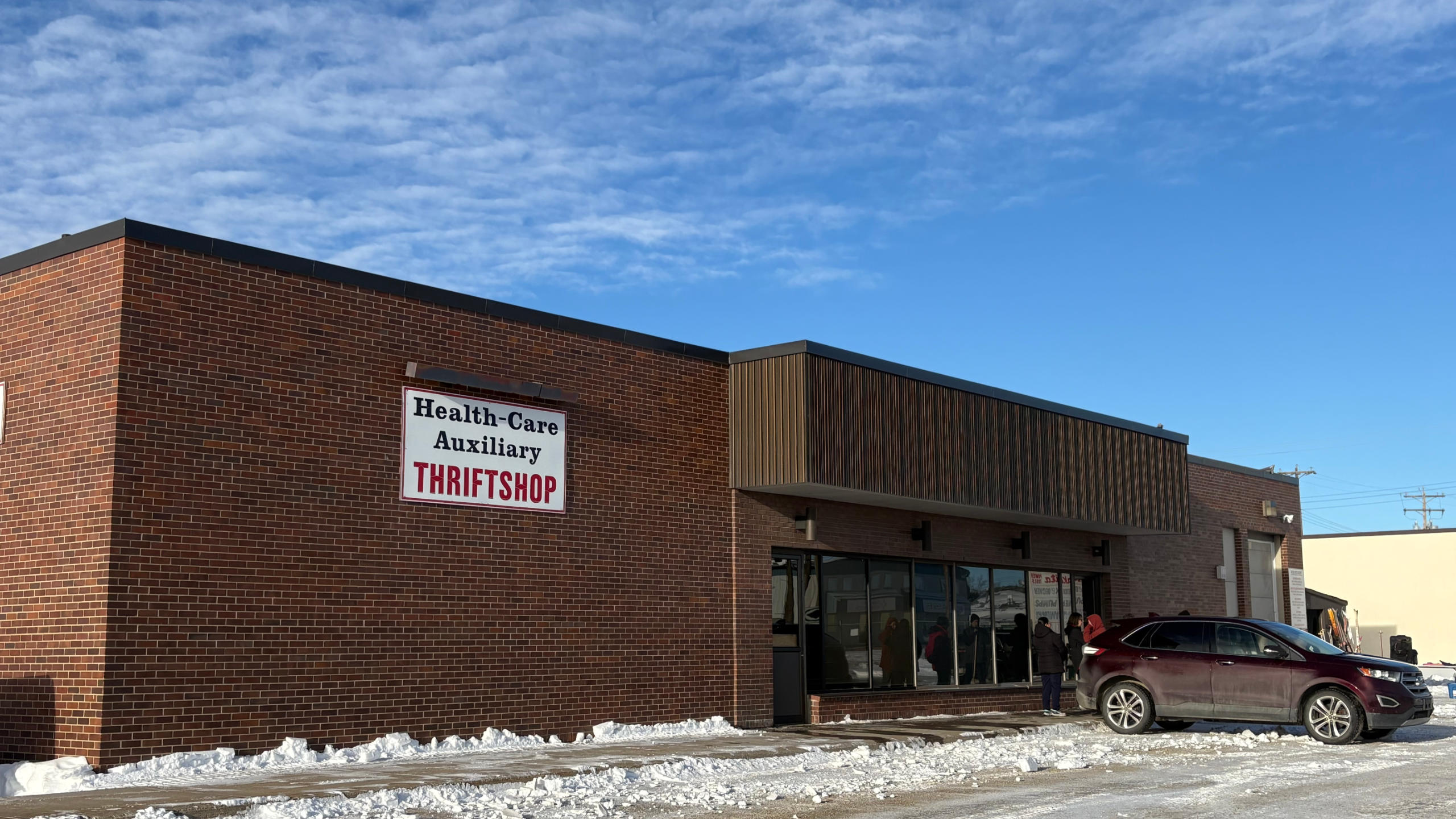
Auxiliary supports several important services

Last year was a busy one for the Drayton Valley Healthcare Auxiliary.
Doreen Beckett, the president and manager of the Drayton Valley Healthcare Auxiliary Thrift Store, says they raise funds for the Drayton Valley Hospital, the Serenity House, and the Breton Extended Care facility.


Read More »