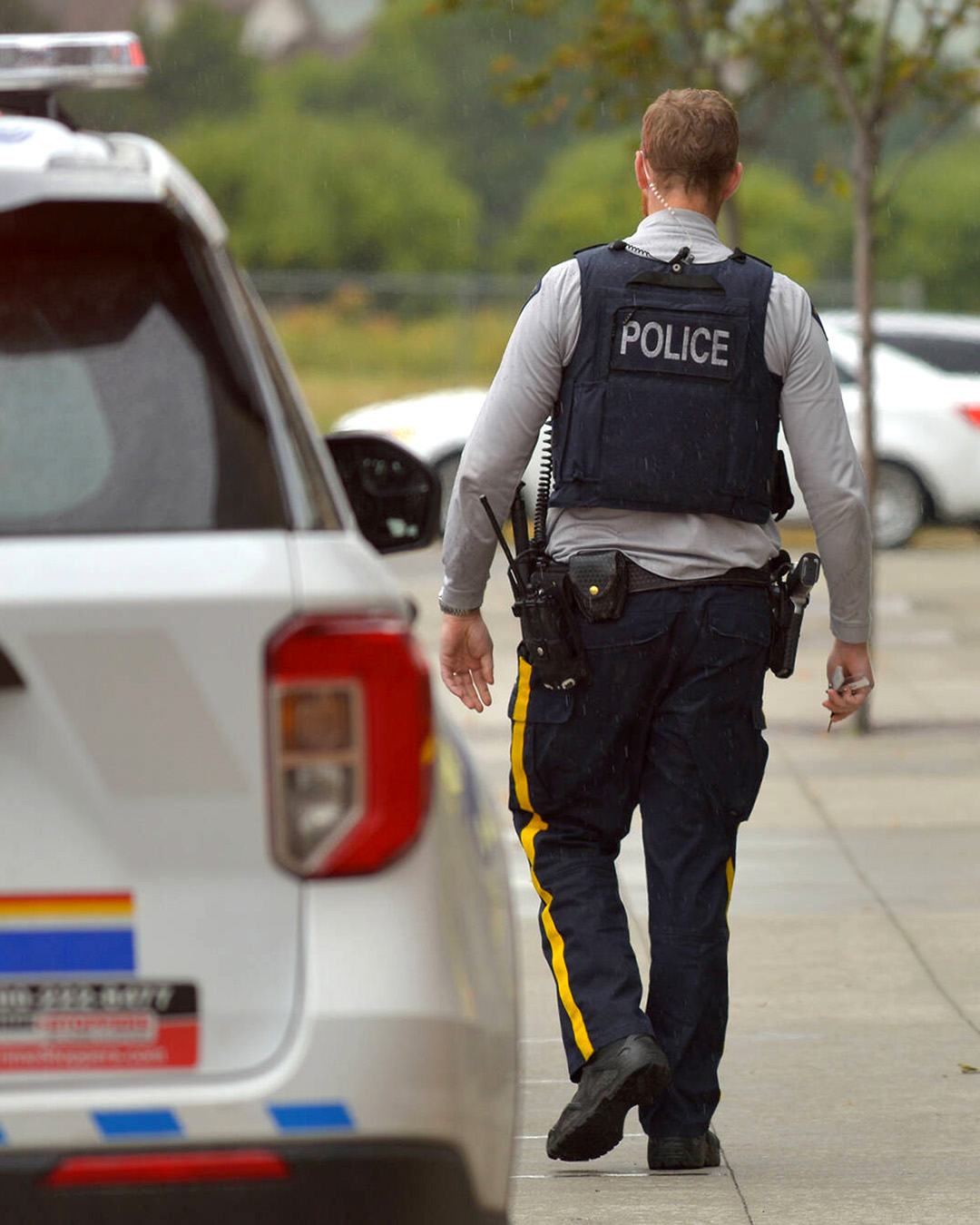
In the past few years, the Drayton Valley area RCMP have seen an increase of 358 percent in mental health calls.
This significant increase led Staff Sgt. Erin Matthews to explore ways that can help ease the situation. The program that captured her intention the most was the Rural Police And Crisis Team (RPACT). While it isn’t currently in place in Drayton Valley, she says it is in operation in other communities such as Leduc and Rocky Mountain House.
Currently, if an RCMP officer is called to a scene involving a mental health issue, they are limited in their ability to deal with the situation.
“Police are kind of like a catch-all for everything,” says Matthews. “But it’s very difficult for us. We are not mental health professionals by any means.”
The avenue they have available to them is a Form 10, and individuals have to meet certain criteria if RCMP are using it. If the person is deemed to be a threat to themselves or someone else they have to fill out a Form 10 and take the individual to a mental health facility.
“We have to make those decisions, which is very difficult,” she says.
However, the Drayton Valley Hospital is not a designated hospital for mental health issues. Instead, the RCMP have to drive the individual either to the Centennial Centre in Ponoka or to one of the facilities in Edmonton.
Matthews says the problem with this is that the individuals being transported are not necessarily guilty of any crimes. Yet, they are forced to ride in the back seat of an RCMP cruiser.
“It’s not because they committed any kind of a criminal act. It’s because they’re experiencing a mental health episode.”
She says they also get calls out for individuals who are not necessarily a danger to anyone but are definitely going through an episode. In that situation there is little the police can do.
With RPACT, a police officer is paired with a mental health professional who can attend mental health calls with them. The mental health professional will have access to records of the individuals in question and they can help to determine how to deal with the situation. They can also help to diffuse a situation because they are experienced at dealing with a range of conditions.
“The mental health workers, through [Alberta Health Services], have the patient’s information. They have access to reports and other information for the individual,” says Matthews.
She says in some cases, just the idea of an officer showing up in a uniform can send someone into a spiral. If they have the mental health worker with them in their civilian clothes, it might be less stressful.
Matthews says that while they have been using the RPACT from Rocky, it can be difficult because that team has such a large area to cover. She says they do consult with them, and have had the team come out six times since it was established in February.
However, Matthews says the RPACT in Rocky always follows up with the individuals afterward to ensure they are taking their medication and doing well.
In an email to the Free Press, Matthews says that mental health episodes can be extremely detrimental to individuals and their families.
“Mental health is an issue that affects the entire community. It is not discriminatory and affects individuals from all walks of life. Young, old, rich, poor. In some cases it can be as a result of illicit drug use, however, in many cases it is not. I have seen the devastating effects of Mental health on individuals and their families. RPACT is helpful to the police as we are not mental health professionals, therefore, having a mental health professional assist is greatly appreciated. The RPACT team will also follow up with individuals who have experienced a mental health crisis to ensure they are taking their medication and to just check on their welfare.”
Matthews says that anyone who would like to support her in her effort to bring a team to Drayton Valley can send letters to MLA Mark Smith or the Alberta Health Minister Jason Copping.