Kathy Schwengler, Education & Outreach Coordinator Eagle Point-Blue Rapids Parks Council
I grew up on a farm at the edge of crown land about 30 minutes south of Drayton Valley. We had a huge garden, a small herd of beef cows, a few dairy cows, chickens, pigs and turkeys. When I wasn’t busy doing farm chores, I spent my summers exploring the forests around our farm, learning about the mushrooms and plants that provided additional food for our table. As a family, we collected three or four kinds of mushrooms, we picked wild raspberries, gooseberries, blueberries, low bush cranberries and strawberries
When I left home, it became apparent that my childhood forest foraging experience was unique. Sadly, the majority of Canadians can’t even identify 10 trees, plants or mushrooms! The good news is that foraging and forest exploration are becoming more and more popular. If you are keen to learn more about foraging, start by finding a forager in your area who can take you out on a walk of discovery.
I reached out to avid local forager Rose Letourneau, a member of the Alberta Mycological Society. When she’s not out foraging on her own, she joins the groups for forays around Alberta. I interviewed Rose to get her take on foraging.
When did you become interested in foraging?
My interest began as a child in Camrose, picking field or horse mushrooms (Agaricus campestris) with my mom. When we moved to the Alder Flats area, having forests to explore just fed my interest.
Which is your favourite mushroom?
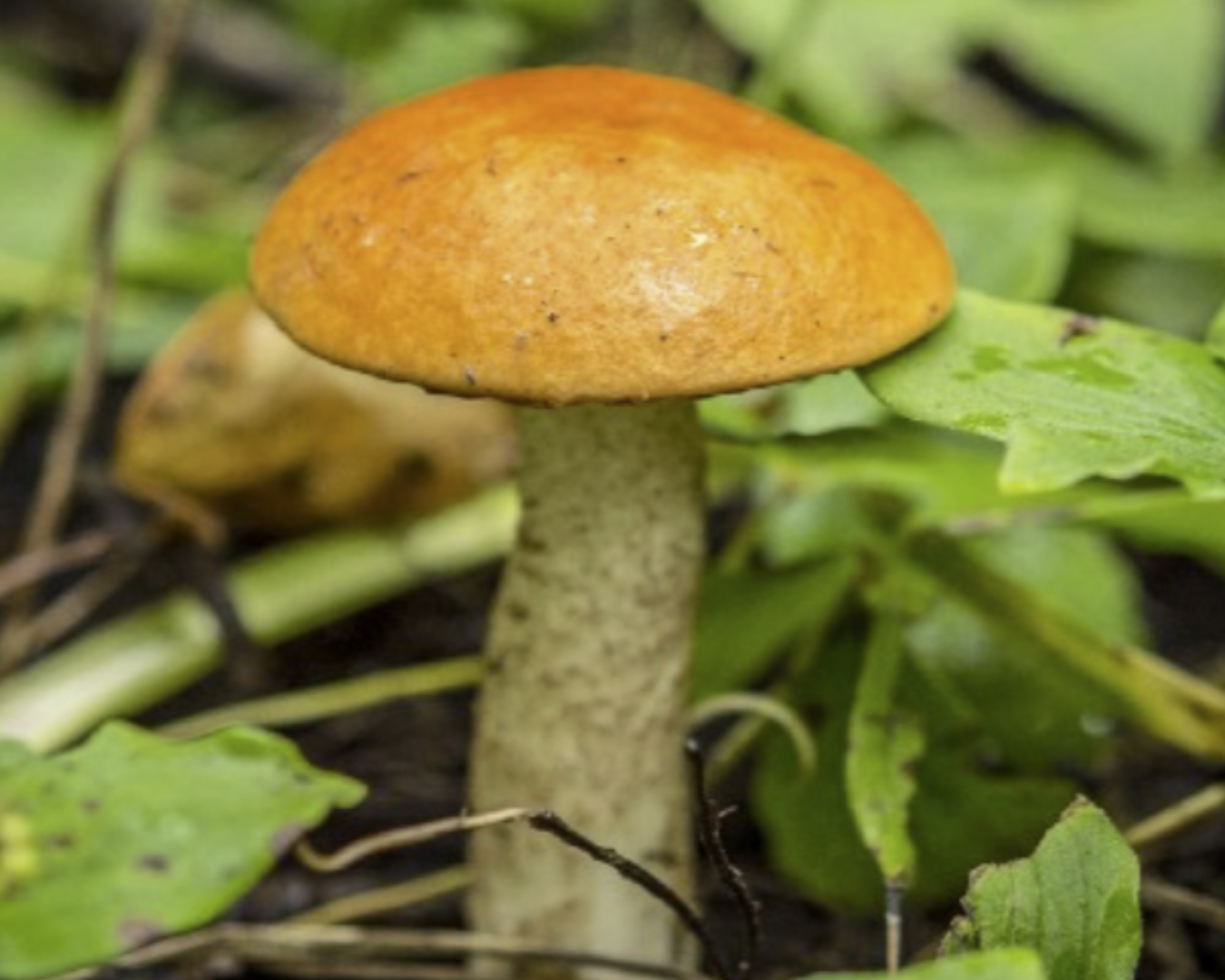
I have to say King Boletes (Boletus edulis), which you find in mature aspen stands in late August.
If you were to go out mushroom hunting today, what varieties could you expect to find?
Right now, the Rough Stems (Leccinum sp.) are up. You can also find crown tipped corals (Artomyces pyxidatus) growing out of rotten stumps and Comb Tooth (Hericium coralloides)
mushrooms under fallen, rotting trees. I am still seeing oyster (Pleurotus ostreatus) mushrooms here and there too.
Do you eat the wild mushrooms you collect?
Yes!
How do you prepare them?
It depends on the mushroom variety, but usually I sauté them in butter and a little olive oil with diced garlic.
What do you do when you pick more than you can eat?
I dehydrate most of the varieties I pick. You can freeze them too, but some types get rubbery.
Are there any non edible mushrooms that you harvest?
I collect a small amount of Chaga (Inonotus obliquus). Chaga is a fungus that grows on old birch trees. I make a tincture out of it which can be used as an anti-inflammatory.
Besides mushrooms, do you forage for plants?
Yes, I pick berries – everything from raspberries and saskatoons to choke cherries and pin cherries. I’m not crazy about picking wild blueberries, though.
I also harvest plantain (Plantago major) leaves to make a salve. You can make the salve by washing and drying the leaves, then stuffing the leaves tightly in a jar, covered by olive oil. Let the leaves steep in the olive oil for about two weeks, then strain the now green tinged oil. Heat the oil and add a little beeswax until your mix has a spreadable texture. You can use the salve on cuts and bee stings. It actually pulls a stinger out!
What advice would you give to new foragers?
I have to say that you should learn to recognize all the stages of a mushroom and learn how to do a spore print. Go with an experienced mushroom forager and “When in doubt, throw it out!”
We cannot stress enough that foraging wild edibles requires dedication, study and real, outdoor experience! Some of our local mushrooms and berries are extremely poisonous and you should never eat something that you’re not 100 percent sure of!
Interested in going on an Afternoon Mushroom Walk?
Register to join us for a two hour foray on July 27, starting at 5:00 pm. We will be announcing the location to those who register.
Register at www.epbrparkscouncil.org/events/mushroom-walk-2022/