

You are currently viewing Daughter of missing man seeks answers

Daughter of missing man seeks answers

Facebook
Email
LinkedIn
WhatsApp

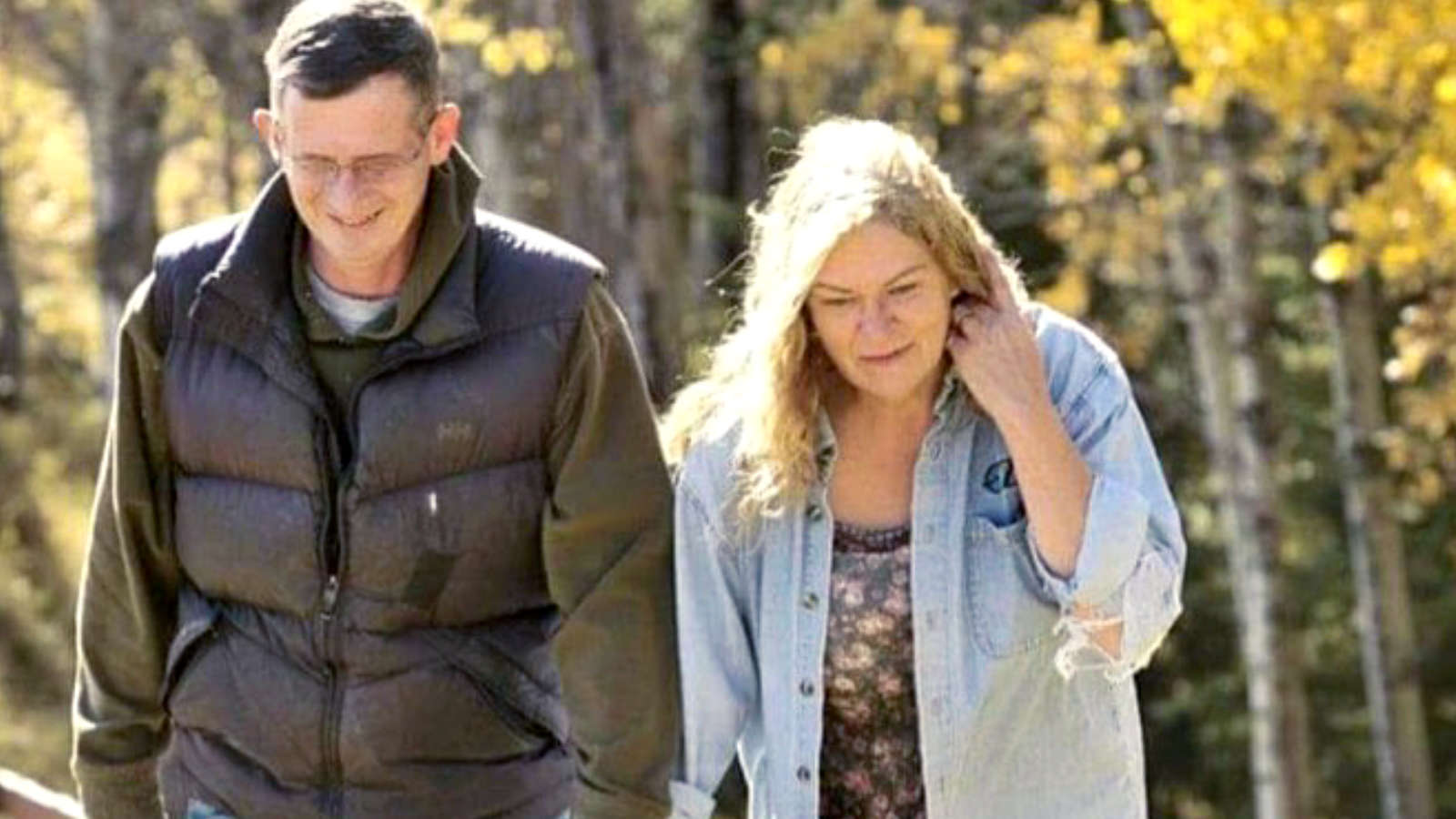
The family of a missing Breton man who disappeared seven years ago are still hoping for help from the public.

Andrew George Nicoll was last heard from on April 21, 2014. His daughter, Bronwyn Taylor, had just been to visit him for Easter the day before. 

Taylor says she and her father were very close and had been texting throughout the day. The last text she received from him was at 3:15 p.m. At that time Nicoll was outside working on his deck. At 4 p.m. Taylor sent him another text, but this one was never read.

When the text message went unanswered, Taylor wasn’t initially concerned. Her father lived on a large piece of land near Breton. The area was isolated and the cell service wasn’t always great, so she assumed it just hadn’t gone through.

It was when she received the call that he hadn’t shown up for work the next morning that she knew something was wrong.

As a former member of the Royal Navy, police officer and volunteer firefighter, Taylor knew that her father would not be irresponsible about his work shift. His employer, who also recognized that this was abnormal behaviour, had gone out to his home to check on him, but he wasn’t there.

Taylor called the RCMP immediately and travelled out to his house. She says she can remember some people suggesting he just took off or perhaps killed himself – his wife had died of cancer two years prior – but what Taylor saw told her this wasn’t the case.

Taylor had just been to visit him the day before he disappeared. “He was in really good spirits. No indication of [him] being suicidal. He was not, whatsoever,” she said.

Nicoll had been working on his deck, getting his place ready to be sold. All of his tools were left out and he’d been in the middle of adding oil to his chainsaw.

He’d also put both dogs inside the house, something he only did when there were visitors coming up the driveway. Inside they could see that he’d gone grocery shopping that day, there was chicken thawing for supper in the microwave, and the dog dishes were filled with food and sitting on the countertop.

“The only reason the dogs would ever be locked inside the house would be if someone was coming down the driveway or he was using his chainsaw,” she said.

After a quick search, they also found his keys, wallet and jacket. His vehicle was still in the driveway.

There was no indication that Nicoll had plans to go anywhere at that time. “We were texting for most of the day,” said Taylor.

Seven years later, Taylor says she’s still hoping for answers. “To this date, we still have no idea what happened to my dad,” she said.

Taylor said her first thought when she arrived was that there had been a medical situation. She said there were several areas on his property that he liked to visit and they immediately checked all of those areas. 

RCMP searched the property for more than a day. When they didn’t find him, Taylor used her connections as a volunteer firefighter and a peace officer for nine years, to ask for volunteers to complete a detailed search of the property. 

“We did an extensive five-month search,” she said. 

Unfortunately, nothing was found.

At one point they brought dogs out to the property, and the dogs indicated that there was something at one point in a creek that runs through his property. Because of the level of silt in that area, rescue workers were unable to use ground-penetrating radar technology to check for anything under the creek bed. And despite numerous efforts, they were never able to find what it was the dogs had located.

I suggested to my daughter that she name her first child Grahamina if it’s a girl. I haven’t managed to come up with a good boy’s name yet. 

Here in Alberta, Noah is once again the most popular name for newborn boys, according to info that winged its way into my inbox a couple of weeks ago from the nice people at Service Alberta. On the girls’ side Olivia took the top spot in 2025, as she has done for the last several years.

It’s an interesting phenomenon* that kids’ names seem to drift in and out of fashion, like long hair, flared jeans and the federal New Democrats. Some of that is probably due to the impact of celebrities. It should surprise nobody if we see an uptick in Taylors due to the global dominance of Taylor Swift, while recent events mean the popularity of Andrew is likely to fall off a cliff.**

Looking back at my elementary school class, we had a couple of Davids, a Stephen, an Allan… on the girls’ side there was Jennifer, June, Dorothy and Elspeth. There was also a cluster of more overtly Scottish names:  Alastair, Fraser, Morag and several Fionas. Little did any of them dream that more than 50 years later they’d be name checked in the Drayton Valley and District Free Press. What a strange world we live in. 

Anyway, there were certainly no Noahs, apart from that guy with the boat from the Bible, who was not in my class (I’m old but not that old) so doesn’t really count. I don’t remember any Olivias either, although back then girls were both terrifying and mysterious to me, so who knows.  

What I can tell you is that you couldn’t swing a cat in 1960s Glasgow without hitting a Graham.*** At one point there were three of us in my elementary class. Since I moved to Canada I believe I’ve only met one. ****

Meanwhile here in present day Alberta the rest of the top six boys’ names for last year were Theodore, Oliver, Henry, Jack and Lucas. Amelia, Emma, Sophia, Charlotte, and Violet round out the girls’ side. 

There were more than 52,000 little bundles of joy registered in this province in 2025, with 14,500 unique names. That sounds like a lot, but presumably some are close to duplicates, so Brandy, Brandi and Brandee counts three times, which doesn’t seem fair really.

Anyway, it doesn’t look like there were any Grahaminas, and my daughter didn’t appear to be particularly taken with the suggestion. So if anyone out there is looking for a unique name for their newborn, Grahamina is there for the taking. You can thank me later. Although I suspect your daughter may not be so grateful 

* Disclaimer: Phenomenon may not actually be interesting.

** That’s cliff as in geographical feature, not Cliff as in Clifford. Writing is hard.

***This was before the European Union stepped in and banned cat swinging across the continent. 

**** I mean one Graham. I’ve met lots of cats. That’s cats as in Tom Kitten, not cats as in Cat Stevens. I’ve never met him.

Facebook
Email

After hearing the concerns of teachers and parents during the teachers’ strike last October, the provincial government has assigned their first phase of complexity teams to schools across the province.

“The classroom complexity [teams are] the Alberta Government’s response .. (to) the labour action,” says Jodie Mattia, the superintendent of Wild Rose School Division. “Classroom complexity was one of those pieces.”

Last fall, the province began collecting data surrounding the issue. The final report was released on November 21. The list of school divisions that have been assigned complexity teams was released on February 12. Teams consisting of one teacher and two educational assistants (EAs) are being sent to 476 schools with K-6 students.

“If there are additional dollars, those can be used for therapeutic supports,” says Mattia. She says the Province gave the divisions a list of supports that can be selected from in these cases, which may include speech therapists, occupational therapists, among others.

The divisions will have to send in quarterly reports to the Province, but Mattia says at this point she doesn’t know if those teams will be offering pull-out supports or inclusive supports for the students.

WRSD was assigned one team, which will be working at Rocky Christian School in Rocky Mountain House. The St. Thomas Aquinas Roman Catholic School Division was assigned two teams, which will be placed at Sacred Heart School in Wetaskiwin and St. Augustine School in Ponoka.

At this point, no teams have been assigned to any schools in this area. More than 75 percent of the teams were assigned to urban centres like Edmonton, Calgary, Lethbridge, Medicine Hat, Grande Prairie, and Fort McMurray.

Schools with K-6 students in Drayton Valley, Breton, Entwistle, Evansburg, and Tomahawk do not have complexity teams assigned to them at the time of publication.

Mattia says the divisions didn’t have any say in where the teams were originally assigned. However, the Province has allowed the divisions to submit a change request by February 20. Whether those changes will be accepted remains to be seen.

“In our school division, every single one of our schools has complexity,” says Mattia. “It’s throughout the division; it’s at all grade levels.”

She says as a division, they continue to tackle complexity through their staffing, support teams, and divisional support.

“It’s not like we don’t have speech-language assistants, speech-language pathologists, occupational therapists. [The complexity teams are] additional support,” she says.

In some ways, the complexity team at Rocky Christian School may allow the division to allocate some funds to other schools, says Mattia. With extra support for that school from the Province, they may be able to save a little bit of money on additional supports they might have had to provide for the school.

Mattia says they have already received the funding for the teams, but one of the issues is finding the staff to comprise those teams. “Staffing, recruitment, and retention is a significant challenge for rural education,” she says.

She says the division has positions that have been open since the fall, and they are aware it may not be easy to hire staff for the team. Recruitment and retention of teachers in the rural areas of the province has been an ongoing challenge for many years.

Though this first phase has seen most of the supports going toward urban centres, Mattia says they are hopeful there will be more available for rural communities in the future. In the meantime, she says the division offers great supports for their students and families.

“The divisional team and our school teams, they really do phenomenal work with our students and for our families,” says Mattia. “We’re going to continue to support, in our best possible way, student success. That won’t change.”

The Free Press reached out to the STAR Catholic School Division, but did not receive a response before the publication deadline.

Symposium puts focus on mental health

Facebook
Email

One of Canada’s most sought-after rodeo announcers and motivational speakers returned to his hometown last weekend as the keynote speaker at the Mental Health Awareness Symposium.

Brett Gardiner was born and raised near Drayton Valley and has a grad photo hanging on the walls of Frank Maddock High School. Last weekend, he returned to FMHS to share his own mental health journey and different strategies people can use if they are facing similar struggles.

Elaine Tamboline, the past president of the Drayton Valley Rotary Club, says picking Gardiner for the role of keynote speaker was an easy one. As the most awarded announcer in Canadian history, Gardiner has won Pro Rodeo Announcer of the Year 14 times, she says. He has announced at the Canadian Finals Rodeo, the Calgary Stampede, and since 2016 has been a regular on TSN’s series for the Professional Bull Riding Canada Cup. 

Along with his awards in announcing, Gardiner holds a master’s degree in counselling and psychology, and has worked with professional athletes, educators, and large business organizations.

But his local connection also recommended him for the event.

“I think that’s how it started. Some of us knew his mother,” says Tamboline.

The symposium took place on February 21 and was hosted by the Drayton Valley Rotary Club in partnership with the Healthy Communities Coalition. The all-day event had 13 breakout sessions for attendees, two of which were hosted by Gardiner.

“Mental health is such a huge umbrella,” says Tamboline.

The symposium tackled some major topics, such as Canada’s Red Flag Law, understanding legal protections for survivors of domestic violence, Men’s Shed, recognizing and preventing sexual exploitation in youth, and 

To make the free event even more accessible for residents, Brighter Futures provided childcare so parents could attend the sessions.

Tamboline says the decision to host the event came from a community needs assessment conducted by the Rotary Club.

“[We wanted to] determine what issues people were most concerned about in our town,” says Tamboline. “That took ten months.”

She says they spoke one-on-one with individuals whose demographics varied from homeless people, business professionals, single parents, seniors, and more.

“Their concerns were many, and they fell under the umbrella of mental health,” she says. “This is not surprising or unique because it has become a topic across Canada and around the world.”

The Rotary Club is most well known for its work on eradicating polio. With 1.2 million members in more than 32,000 clubs in 200 countries, Tamboline says they have many other mandates. Some apply to certain areas, some to certain communities, as well as worldwide concerns. At their last international convention in Singapore, with 20,000 attendees, mental health was a hot topic. 

Tamboline says after their needs assessment, the Rotary Club partnered with the HCC to come up with strategies to help connect people in need to professional resources in the community. The symposium was their solution.

The Rotary Club hopes to make the symposium an annual event that can reverberate throughout the community. Tamboline says they will be watching to see how it has affected the community and if they have achieved any of the outcomes they were hoping for.

Tamboline says the organizers are grateful to all the organizations that came together to make the symposium a reality. 

“[We have] gratitude and appreciation for the generous support and donations, and volunteers who believed this is important.”

Shared history is a foundation for the future

Last year we sent our daughter to summer camp, at the request of one of her friends. A text to my husband revealed that this was the summer camp he went to as a kid, as well as his mom and his grandmother. A deeper search showed that his great-grandfather helped build the camp back in 1945. Upon hearing this R- felt such a sense of pride and connection to a whole host of family whom she never met, and have long been dead.  

Family history is often reduced to a series of names, birthdates and death dates. This is a great place to start but the real connection happens when you manage to find a snippet of information or a piece of family lore that gives one of those names a personality. For me this journey began with my Auntie Gwen and her book “The Keystone Legacy.” Writing through the voice of my uncle Mark, they recorded the day to day lives of early black settlers living in Keystone (Breton); clearing land, building tar paper shacks, cold winters, and going to school and church. To anyone living in that time the book would have been a snore. But, the book was published in 1997, 90 years after the first settler moved to the area and guess what happened! More time passed. 

As decades wore on and storytellers died, the value of this book increased. What used to be just a collection of stories and recollections has now become a primary source document for other books and a very cherished piece of family history. 

This week I had the privilege of sharing a bit about my family history at the Drayton Valley Multi Cultural Association’s first black heritage event. As I walked into the room and saw African art lining the walls, vibrant clothing for sale and heard personal stories from those first generation Canadians in attendance, I had a sudden flash of imposter syndrome. Here are people who are so close to their immigration story that my historical stories about slavery, segregation, and land politics seemed old news, and out of touch. 

However, in the scope of history even a century doesn’t seem that long. As I was talking to this group about my story I was inspired to press on them how much their story will mean to their future family. Documenting why you came to Canada, and what early life was like doesn’t seem like much right now but to someone six or seven generations later, it may be just the piece of information they needed to hear to feel that they belong. 

Throughout my genealogy journey I have been lucky to have found shreds of newspaper clippings, land allotment interviews, references to my family in the books, “The Keystone Legacy,” “The Ghost of Crook County,” and “The Black Prairie Archives,” and of course the endless source of information and connection of Allan Goddard and the Breton Historical Society. Some may not be as lucky, but as is the case with my daughter, when her great-grandpa built a camp in 1945 he unintentionally built a bridge to future generations.

Working youth are suffering

Not too long ago, I heard a complaint about youth being too lazy to get jobs nowadays. That annoys me to no end because not only is it painting an entire generation with a broad brush, the blame for lower employment rates is placed solely at the feet of the youth, which is not right.

I started working when I was about 15 years old. At that point, my starting wage was about $6.95, and getting a ten cent an hour raise was awesome. 

I didn’t struggle to find a job. I basically dropped off my resume to several businesses, went for the first interview, and got hired. While I may not have appreciated the job, I never worried about what my work schedule was, if they were paying me what I was owed, or if they were meeting labour laws. 

My parents also didn’t really have to worry about it.

However, my first experience of seeing the abuse (I don’t use this term lightly) of a youth at a job was as an adult, around my mid-20s. At that point, I’d worked enough jobs to understand shady behaviour when I saw it, so it really bothered me to see employers taking advantage of young workers.

Fast forward to about five or six years ago, and things have only gotten worse.

The common misconception that youth just don’t want to work anymore fails to take into consideration the work environment we insist they join. Not only are there fewer jobs available for youth, but many employers are far more interested in making money than introducing youth into the workforce.

For those who have been lucky enough to find jobs, I have heard about some awful, and frankly, downright illegal things taking place. 

In one case, a pizza delivery driver who was paid per delivery and tips was expected to be at the workplace for an entire eight-hour shift without getting paid. If there were only two deliveries that night, their base pay for the entire shift was a whopping $7.

Another situation I’ve heard about is a youth who was hired to work at a new business in the community. They were brought in with numerous other youths in the community for mass orientation sessions. Half of the kids who showed up, having been told they were hired, were turned away at the door or never actually got to work for the company.

This same company would change the shifts for kids with barely 24-hours notice, didn’t fill out any paperwork for their new staff, and made false promises of rewards for teams who worked the hardest.

Once that company decided who they wanted to keep around, they let go of some employees, who were mostly in high school, by text message on a school day. 

Yes. A business that has a name that everyone would recognize fired kids by text message while they were at school. Illegal? No. Unethical? Absolutely; not to mention cowardly and callous.

Imagine how these kids felt learning they’d been fired from their first job, with zero explanation, while they were sitting in class at school. I’m sure they were eager to go out and find another job after that.

Other stories include bringing in a youth to try out for the job for a day without pay, and then ghosting them afterward; convoluted pay structures and bonuses that make it difficult for employees to know if they were being paid appropriately; and sending them out to do dangerous work without the appropriate training.

The moral of this story? Before business owners want to complain about the apathetic youth of today, they need to recognize that their attitudes and practices might just be the reason for this problem.

Drayton to host U11 finals

Facebook
Email

The Team Auctions Centre will be a busy place in March as it hosts the U11 A and B teams Division Finals on two different weekends.

Kara Westerlund, a member of the social committee for the event, says this community was selected after the Drayton Valley Minor Hockey Association put in a bid with Hockey Alberta.

“We came out on top,” says Westerlund. “I’ve been involved in hockey for a while; this is the first time we’ve ever been successful  … so it’s quite exciting.”

DVMHA is expecting up to nine teams for the finals. Two of those teams will be from Drayton, as the host team always gets a spot, even if they aren’t in the top spot to make the finals.

“The neat thing is that both the A and the B team are at the top of their league right now, but that could change in a heartbeat with the games that are remaining,” says Westerlund.

The first weekend, March 7 and 8, will be the finals for the B teams, and the second weekend, March 14 and 15, will be for the A team.

Putting on the event will take the work of many volunteers, says Westerlund. She says they will need people to organize volunteers, to put together the player bags, cover the clocks for the games, score keep, play the music, man the penalty boxes, and more to keep everything running smoothly.

Some local businesses have also stepped up to help out with the finals, says Westerlund, with one providing all the hockey pucks for the event.

“Outside of the hockey… it’s so cool for our community to be picked to host something like this,” says Westerlund. “There’s potentially up to nine teams that are going to be in town, and there’s an average of 16 to 18 kids on a team.”

Westerlund says they already know they are going to fill up at least one hotel, with a high likelihood of filling two or more for both weekends in March.

“When they come, they bring their families and they have to eat, so the whole hospitality side and service industry in Drayton is going to see a massive boost that weekend for sure,” she says.

Ryan Fynn, the president of the Drayton Valley Hospitality and Tourism Authority, says these types of events are always great for the community.

He says with 150 hotel rooms being booked for two nights, the food, the fuel, and possible shopping, the economic impact will be around $200,000 put back into the community.

“Any time these finals come to Drayton, it’s always been how can we help them the best,” he says. “The biggest thing is highlighting the community and making these teams want to come back to Drayton.”

Fynn says the DVHTA has always supported minor hockey with sponsorship funds, marketing opportunities, or items for the players’ bags. 

“It definitely falls right in line with what we’re all about,” he says. “We’re excited that they were awarded the bid from Hockey Alberta and glad they’re able to follow through with it.”

Westerlund says aside from the economic benefits of these events, there’s something that’s even more important.

“All the work is worth it; it’s for the kids at the end of the day,” says Westerlund. “We all know, even as adults, that moments like this and weekends like this are memorable for the rest of their lives. They will remember this.”

She says they want to make sure the event is special for the kids and shows off the community.

“I strongly believe that if it had been a suicide or a medical event, we would have found the body on that very first day,” said Taylor.

Since there were no leads, the case eventually went cold. But Taylor never gave up hope. Every year she would post information to social media in the hopes of jogging someone’s memory.

This year she received a call from the Alberta RCMP Missing Persons Unit. They indicated that they were taking a look at the file and hoping to find something that might have been missed. However, since that time the home and land have been purchased by different owners and the situation might be more complicated.

“He was just such an amazing dad,” said Taylor. She says Nicoll originally met her mother in Prince Rupert, B.C. when she was a nurse. The two ended up getting married and living in England for the first eight years of Taylor’s life. 

“They were soulmates,” says Taylor. 

During that time her father was a police officer.

When they relocated to this country, Taylor says her dad was very proud to call Canada his home. Taylor was an only child, and because there was no family nearby, the three of them were very close.

“He was really just proud to be in Canada. He was so excited to be in Canada and have the opportunity here,” she said. 

The family resided in the Edmonton area and Nicoll went into security, originally starting at the Royal Alexandra Hospital. It was there that he made many friends that would soon become his extended family.

“I’m still in contact with all of his friends that he made throughout his career. They’ve become like family to me,” said Taylor. “He just made an impact on everyone he met.”

Marvin Chick was one of the close friends that Nicoll made while working at the Royal Alex. He said he also worked with Nicoll when he started working with Transit, where Nicoll was a peace officer. 

Facebook
Email

Residents were lined up all the way out of the doors of the MacKenzie Conference Centre last week to sign the Stay Free Alberta petition, which aims to bring a referendum for Alberta separating from Canada.

Marlin MacDonald, the co-provincial lead for the area covering Drayton Valley, Devon, Beaumont, Leduc, Spruce Grove, and Stony Plain, says the petition only needs 177,000 signatures to be put forward to the province for a referendum on the question of separation.

The proposed question for the referendum is: Do you agree that the Province of Alberta should cease to be a part of Canada to become an independent state?

Officially, the petition kicked off on January 3, and canvassers have until approximately May 2, to collect the signatures. Should they have enough signatories, MacDonald says the referendum could take place as early as the fall.

January 16 was the first time the petition was available in Drayton Valley as there were delays in getting the pages printed. However, more than 200,000 people had signed a letter of intent to help speed up the petition process, allowing canvassers or members of the organization to reach out to those individuals for signing the petition.

MacDonald says he’s not worried about the 465,000 signatures that the rival Forever Canadian petition garnered earlier this year.

“Their question is on policy, where ours is on constitution,” says MacDonald. “Their referendum was to… change policy so that we couldn’t have another referendum for five years.”

The petition ran from 5 p.m. to 9 p.m. and was located next to an information session about Alberta independence that ran from 6 p.m. to 8 p.m.

Jason Lavigne was the emcee for the event and introduced attendees to Nadine Wellwood, a chartered investment manager, and Bruce Pardy, a law professor from Queens University, respectively.

About 200 people listened as Wellwood discussed the economic viability of separation and Pardy spoke about possibilities open to a new country with the chance to create a new constitution.

A similar event took place on Saturday afternoon at the Buck Creek Hall and drew a steady steam of people looking to sign the petition. 

Facebook
Email

  The devastation caused by Typhoon Kalmaegi left shockwaves around the world, and one local resident knew she had to step up to help with relief efforts.

Before Kalmaegi hit Thailand and Vietnam in the beginning of November 2025, it ran through the central provinces of the Philippines, where it was known as Typhoon Tino. Several provinces were hit hard, but the most damage was in the Cebu province, where Marve Walwal grew up.

According to GMA Integrated News, 150 of the 269 recorded deaths in the Philippines were in Cebu. Walwal says her hometown, San Isidro, Talisay City, was only a 20-minute walk from one of the hardest hit areas in Cebu.

When Walwal heard about the effects of the typhoon, she had already had a trip planned to visit her father toward the end of November. 

“At first, I was just collecting bottles and clothes to help a little bit,” says Walwal.

Then her boss suggested she reach out to the Drayton Valley Community Foundation about their crisis relief grant. After applying through the Drayton Valley Multicultural Association, Walwal was granted $10,000 to offer aid to those affected by the typhoon. She also partnered with the Cebu chapter of the UNIFIED Inglewood Association, which is a Filipino teacher association based in California, United States, to secure the grant.

Walwal says Inglewood was already involved in relief efforts after a 6.9 earthquake hit only a month before the typhoon.

Because Tino had hit so close to home, some of Walwal’s childhood friends and acquaintances were affected. She also had the benefit of connections with people who worked in the local government for the area. 

“Most people in the town office are mostly my childhood friends,” says Walwal. 

While she was down there from November 28 to December 18, Walwal did her best to ensure the funds went directly to those in need to avoid any corruption. The only organizations involved were the multicultural association and UNIFIED Inglewood, and the relief efforts provided by the funding are still underway in Cebu.

Walwal started at the relief centre in her hometown, bringing the donated goods with her and inquiring about how she could help. She says they chose to help those who were at the relief centre because those individuals did not have family or other support they could go to for help.

“We made a list,” says Walwal. “We needed some utensils, medication, this and that. We were able to help at least 250 people at the time.”

She says there were a lot of volunteers at the centre, and she had brought together several volunteers and family members to help her with her own efforts to help. Knowing the patrons at the relief centre were being looked after, she decided to look for areas where she could be more effective. 

“Then I met some people who said the government hadn’t gone to their place because it’s a remote area,” says Walwal. “[They were in] an area where no vehicles can go there …and they don’t have transportation to go there.”

Across the Philippines, more than 600,000 homes were damaged, with 75,000 needing to be replaced. Walwal’s father encouraged her to build homes, but she knew they were limited to how many they could build. They had to carefully consider which families they could help out.

She says they plan to build six homes for families in remote areas. They already have contractors who have stepped up to the task and are volunteering their time. All Walwal has to do is provide the supplies.

Since Walwal is back in Canada, the UNIFIED Inglewood Association is acting on her behalf in Cebu. As the housing projects come up, Walwal is sending them money to cover the costs of roofing materials, lumber, and other items necessary for building a home.

While she’s confident she will be able to help some families, Walwal says she’s paying attention to the costs of goods. Once the rebuilds start on a larger scale across the province, the prices of some commodities will rise due to demand, and it may impact the number of homes she can build.

Though her trip home was tempered by the damage caused by Tino, Walwal says she still enjoyed reconnecting with friends and loved ones. She says there were moments that showed the resilience of the people in her hometown.

“They are already devastated, but children still play there as if nothing [had happened],” says Walwal. “They are resilient.”

Anyone who is interested in donating funds to help with the relief efforts can reach out to the Drayton Valley Multicultural Association at 780-514-5249 

I am grateful that I don’t have to be grateful for something every single day.

Yes, you read that correctly. I don’t have to find something to be thankful for on a day when my car breaks down on the way to work, I find out I forgot to send off that one cheque, and my child tells me at about 8:30 p.m. that they need two dozen home made cupcakes for the next morning.

Gratitude is something we all need to practice more often, but the current trend of journaling about the many things you appreciate each day can be toxic. I mean, honestly, how many times can you be sincerely grateful for that first sip of coffee every morning?

To use a word my dad always used when I was little, people are putting a little too much em-PHAS-is on the wrong thing.

A rote practice of gratitude journaling can lead to something called toxic positivity. This is a condition in which people feel it’s so important to be positive that they ignore their negative emotions and don’t process them. 

A good example of this trait is Dolores Umbridge from Harry Potter. This is a woman who at first appears to be a kind older woman who loves cats way too much. But as we get to know the character, we see that all of her cheerfulness and positive attitude are a cover up for her anger and racism.

The movie Inside Out also demonstrates this point as we see the character Joy, who also deals with toxic positivity, try to suppress Sadness because she believes Riley should always be happy. The main conflict in the movie is Riley’s struggle with accepting and processing the negative emotions that are a normal part of life.

We even have an idiom for this kind of situation. Someone who is looking at a situation through rose-coloured glasses is indeed seeing all the positives in a situation, but they are also overlooking important details that they don’t want to accept. Sometimes, a car is a lemon, and the salesperson’s fumbling attempts at flirting are just a scheme to get you to let your guard down.

Scientifically, studies have been done showing the benefits of gratitude journals. It can reduce stress, help with sleep, reduce anxiety and depression, and do numerous other things. However, those achievements are only successful when the person genuinely feels the gratitude.

Imagine coming home after a long weekend away to two feet of fresh snow on your driveway and six inches of compacted snow on your front sidewalk. You are tired, cold, and looking forward to getting into your favourite pair of pyjamas, but when you get to your front door, you see a ticket for failing to clear your sidewalks.

The argument for gratitude could be something like, at least I have a sidewalk and driveway to shovel, or this is a great opportunity for me to try out my new snowblower. However, another healthy way to look at the situation is saying, well this sucks, and I’m not happy about this.

Another commonly used idiom is everything in moderation. The same goes for gratitude. Yes, you should be grateful for many of the things in your life, and if you feel like your life is lacking, you should look at what you do have. At the same time, it’s important to acknowledge and feel the negative things. 

Go forth, dear reader, and allow yourself to feel the anger. The next time your coworker steals your pop out of the fridge, I encourage you to drop an f-bomb and express yourself. You’ll feel much better.

Facebook
Email

Last year was a busy one for the Drayton Valley Healthcare Auxiliary.

Doreen Beckett, the president and manager of the Drayton Valley Healthcare Auxiliary Thrift Store, says they raise funds for the Drayton Valley Hospital, the Serenity House, and the Breton Extended Care facility. Last year, they spent several hundred thousand to support those spaces.

The organization, which raises funds through sales at the Thrift Store and at the gift shop in the Drayton Valley Hospital, was able to donate $180,000 to the renovation of the palliative care room, $70,000 to the eSIM lab, while also purchasing an ICG machine, an ultrasound machine, replaced windows, replaced furniture, and more in the last year.

Along with practical donations, the Auxiliary also spent money on Christmas decorations to help keep spirits high. 

Beckett says in the past, the facilities would provide the Auxiliary with a wish list of items they wanted, and the organization would put funds towards those projects or equipment. Today, they receive information packets about different projects and from there they choose how to spend their funds.

“We have purchased a lot of things last year,” says Beckett.

While they spent a lot of money in 2025, it isn’t always easy for them to raise the funds in the first place. The Thrift Store relies on donations from the public as well as the sales to the public. However, over the years, they’ve had to adjust the times they’ve had to make changes to what donations they will accept and what conditions those donations need to be in, as well.

“It’s been good since we put the gate on,” says Beckett. “We cannot go without having the gate closed.”

She says volunteers have to go through every donation they receive to make sure it is fit to be sold. In many cases, people have donated items they believe still have some use or use the drop-off as a place to save some money rather than going to the dump.

“It’s cheaper to dump it there than it is to take it to the dump,” says Beckett.

With the gate up, Beckett says donors have to wait until someone is present to accept the items. At that point, the volunteers can turn some of the items away. If unwanted donations are left, then the Auxiliary has to cover the cost of the dump fees to get rid of them.

After taking a break over the holidays, the thrift store opened again on January 6. Their hours for drop off are from 9 a.m. to 4 p.m. on Tuesdays and Wednesdays, with shopping hours running from 12:30 p.m. to 4 p.m. On Thursdays, the drop off starts at 7:30 a.m. until 1 p.m. with the store opening from 9 a.m. to 1 p.m.

That’s just about a wrap for 2025. With the end in sight, it’s time to look back and reflect on the good and bad of the last 12 months. 

Starting at the top, it was a mixed year for Justin Trudeau. On one hand he was able to step aside as prime minister without being chased by an angry mob. On the other hand, he had to go on a date with Katy Perry, which was something nobody wanted to see.

It was a bad year for Katy Perry.

In other celebrity news, Taylor Swift took time off from counting her enormous pile of money to get engaged to a man in a ridiculous hat.

We said goodbye to Robert Redford, Ozzy Osbourne, Hulk Hogan, Jane Goodall, Gene Hackman, Connie Francis, Jimmy Swaggart and a host of other people of varying degrees of fame or notoriety, but who are no doubt missed by those who loved them 

Pierre Poilievre probably wishes he could have a do over of the last 12 months. Back in January he seemed all set to be next Top Canadian. A couple of months later he had the look of someone who’s woken up to find his dog had left a little surprise in his favourite underwear and then run off with the next door neighbour. 

Meanwhile Mark Carney spent much of 2025 with the look of a man who’d unexpectedly found fifty bucks in the pocket of an old suit and was wondering if he should tell his wife or keep it to himself. 

In sports, the Blue Jays came this close (I am holding my thumb and forefinger about a centimetre apart) to winning the World Series, but then didn’t. It was fun while it lasted though. 

It was a huge year, spectacular really, very very spectacular, probably the best year ever, for tariffs and the people who like them. 

But it was a dreadful year for the man formerly known as His Royal Highness Prince Andrew, Duke of York, Earl of Inverness and Baron Killyleigh who I think we’re now supposed to refer to as plain old Andy W.

Closer to home, the municipal elections brought some new faces to town and county councils. The new people are still feeling their way in, so we’ll have more of a sense of how things are going to shape up from a municipal perspective in a few months. 

The Omniplex got a new mural on the outside wall and a new name too. It is now called the Team Auctions Centre, for those of you who like to keep track of that sort of thing. I intend to continue to call it the Omniplex, because I am too old and stuck in my ways to change. Incidentally, I noticed a while back that you can tell how long someone has lived in Drayton Valley by what they call the store now known as Your Independent Grocer. To me, it will always be Extra Foods, while some of my friends still call  it Blocks. Keeping up with the times? Not us. No sireee. We’ll leave that to the young folks. 

And that’s your lot. Or at least it’s all I have room for. Thanks for sticking with us through the year that’s (almost) gone by.

There will be no Free Press next week, because of Christmas. We’ll be back, bleary eyed and wondering where we left our car keys, on January 1 of a whole new year!. 

See you in 2026.

Psst….this is just a sample of what we have in the full Free Press.
Subscribe to get your weekly digital issue. 
Facebook
Email

Hamper requests at the Drayton Valley Food Bank have increased this year, but not at the same rate as last year.

Phil Bell, the treasurer for the board, says that along with the increase in hamper requests, there have also been more in-kind donations. 

“[Drayton Valley] is a very generous community,” he says. “It continues to amaze us.”

Bell says last year there was a 50 percent bump in people, but this year the increase was roughly 10 percent, or about 200 family units.

“Last year was probably the biggest increase we’ve ever experienced,” he says.

Over the past 13 years, the most significant increases in usage were in 2015, when the number of hampers jumped up to 948. By 2016, they had doubled the number of hampers they gave out in 2012 and were sitting at 1,262. For the next seven years, the hampers didn’t increase significantly, and even dropped in 2020.

In 2023, the number of hampers spiked to more than 1,600, and in 2024, that number increased to 2,479. The projected total for 2025 is 2,750 hampers.

“We are seeing more working people coming as well,” says Bell. “To me that’s a sign that people are just struggling to make it.”

Only two percent of users have indicated they are unsheltered. Another four percent have given no information. The remainder of the users are from other counties (three percent), Brazeau County (26 percent), and Drayton Valley (65 percent).

The reason for the slowdown isn’t clear, says Bell. He’s not sure if the inflation rate is affecting things or if last year the bulk of the people needing help came forward.

Even though they did see an increase, Bell says this year they haven’t had to cut their hamper sizes, which further goes to show the generosity of the community. They’ve also been able to give out more seasonal items this year because some companies and individuals have given large donations. Hams, chocolates, and Christmas oranges were some of the items that were donated. 

“We were able to supplement all the hampers with those items, which was nice to be able to give to people this time of year,” says Bell.

In order to ensure they can still continue to supply hampers to those that need them, Bell says they have been working to get their Foodbanks Canada accreditation.

“That’s kind of a heavy lift for us to be able to get these standards in place so that we can maintain our membership under Food Banks Alberta, which is under Food Banks Canada,” says Bell.

The accreditation will help the food bank with federal grants as well as the allotment that it gets from Food Banks Alberta. Every year, the food bank pays $150 for a membership with Food Banks Alberta, and in return they get between 3,000 and 4,000 lb of food every month.

“They only charge us $100 to get the food out here,” says Bell. “That’s a refrigerated truck, so we have access to frozen stuff.”

Because of the significance of the allotments, Bell says they are working hard to meet the requirements set forth. He says Drayton Valley is expected to continue to grow, and with that growth could come a higher demand for services, but he’s confident that the community will continue to step up to help those who need it.

Anyone looking to make a donation to the food bank can visit www.draytonvalleyfoodbank.ca/donate. 

“He loved his family and he loved Canada,” he said. Chick said that when the couple moved to the acreage, Nicoll took on his wife’s love of animals and they had quite the menagerie. He said any animal that needed a home found one with the Nicolls.

“He was a friendly guy. He would do anything for anybody,” said Chick. He said that if Nicoll came across someone who was down and out, which he did often in his job, he would go out of his way to buy them lunch or help them out when he could.

Chick said when he first learned that Nicoll was missing he was confused and worried. “He wasn’t a person who would harm himself on purpose,” said Chick. He said that Nicoll loved his daughter too much.

Chick said he helped out with the search. And now he’s just left with questions. He says he has suspicions about what happened, but he doesn’t have any confirmation. “It is a big mystery for me,” he said.

He said that Nicoll had a big heart. He remembers one afternoon when they were going for a walk on Nicoll’s property they came across a porcupine that was drowning in the creek. Nicoll waded out there and rescued the animal, laying it out in the sun so it could warm up. “He went back and checked and it had recovered and gone on its way,” he said.

Tana Vea was another of Nicoll’s close friends, having met him at the Royal Alex. Vea had moved to Edmonton from Hawaii, and since there was little family in the area, they became each other’s family.

Vea said that Nicoll was a stickler for grammar on all of their reports. He said he would bring out his red pen and mark everything up. Vea says there is a man who now works for the Edmonton Police Service who credits Nicoll for his skill in filling out reports. “He said Andy’s teachings with report writing helped him to get the position he has today.”

Vea said he also worked with Nicoll at Transit, where he was Peace Officer. He said Nicoll had eventually gotten promoted through the ranks until he became an investigator, mostly working on internal complaints.

Vea says one thing that makes him sad is that Taylor’s daughter is the same age as his grandson, and he knows that Nicoll and his wife would have loved being grandparents. He said he thinks it’s also hard on Taylor to not have her parents around now that she has children. “[Nicoll and his wife] loved their kid. She was their dream and they treated her as the princess in the house,” he said.

Facebook
Email

Residents were lined up all the way out of the doors of the MacKenzie Conference Centre last week to sign the Stay Free Alberta petition, which aims to bring a referendum for Alberta separating from Canada.

Marlin MacDonald, the co-provincial lead for the area covering Drayton Valley, Devon, Beaumont, Leduc, Spruce Grove, and Stony Plain, says the petition only needs 177,000 signatures to be put forward to the province for a referendum on the question of separation.

The proposed question for the referendum is: Do you agree that the Province of Alberta should cease to be a part of Canada to become an independent state?

Officially, the petition kicked off on January 3, and canvassers have until approximately May 2, to collect the signatures. Should they have enough signatories, MacDonald says the referendum could take place as early as the fall.

January 16 was the first time the petition was available in Drayton Valley as there were delays in getting the pages printed. However, more than 200,000 people had signed a letter of intent to help speed up the petition process, allowing canvassers or members of the organization to reach out to those individuals for signing the petition.

MacDonald says he’s not worried about the 465,000 signatures that the rival Forever Canadian petition garnered earlier this year.

“Their question is on policy, where ours is on constitution,” says MacDonald. “Their referendum was to… change policy so that we couldn’t have another referendum for five years.”

The petition ran from 5 p.m. to 9 p.m. and was located next to an information session about Alberta independence that ran from 6 p.m. to 8 p.m.

Jason Lavigne was the emcee for the event and introduced attendees to Nadine Wellwood, a chartered investment manager, and Bruce Pardy, a law professor from Queens University, respectively.

About 200 people listened as Wellwood discussed the economic viability of separation and Pardy spoke about possibilities open to a new country with the chance to create a new constitution.

A similar event took place on Saturday afternoon at the Buck Creek Hall and drew a steady steam of people looking to sign the petition. 

Facebook
Email

  The devastation caused by Typhoon Kalmaegi left shockwaves around the world, and one local resident knew she had to step up to help with relief efforts.

Before Kalmaegi hit Thailand and Vietnam in the beginning of November 2025, it ran through the central provinces of the Philippines, where it was known as Typhoon Tino. Several provinces were hit hard, but the most damage was in the Cebu province, where Marve Walwal grew up.

According to GMA Integrated News, 150 of the 269 recorded deaths in the Philippines were in Cebu. Walwal says her hometown, San Isidro, Talisay City, was only a 20-minute walk from one of the hardest hit areas in Cebu.

When Walwal heard about the effects of the typhoon, she had already had a trip planned to visit her father toward the end of November. 

“At first, I was just collecting bottles and clothes to help a little bit,” says Walwal.

Then her boss suggested she reach out to the Drayton Valley Community Foundation about their crisis relief grant. After applying through the Drayton Valley Multicultural Association, Walwal was granted $10,000 to offer aid to those affected by the typhoon. She also partnered with the Cebu chapter of the UNIFIED Inglewood Association, which is a Filipino teacher association based in California, United States, to secure the grant.

Walwal says Inglewood was already involved in relief efforts after a 6.9 earthquake hit only a month before the typhoon.

Because Tino had hit so close to home, some of Walwal’s childhood friends and acquaintances were affected. She also had the benefit of connections with people who worked in the local government for the area. 

“Most people in the town office are mostly my childhood friends,” says Walwal. 

While she was down there from November 28 to December 18, Walwal did her best to ensure the funds went directly to those in need to avoid any corruption. The only organizations involved were the multicultural association and UNIFIED Inglewood, and the relief efforts provided by the funding are still underway in Cebu.

Walwal started at the relief centre in her hometown, bringing the donated goods with her and inquiring about how she could help. She says they chose to help those who were at the relief centre because those individuals did not have family or other support they could go to for help.

“We made a list,” says Walwal. “We needed some utensils, medication, this and that. We were able to help at least 250 people at the time.”

She says there were a lot of volunteers at the centre, and she had brought together several volunteers and family members to help her with her own efforts to help. Knowing the patrons at the relief centre were being looked after, she decided to look for areas where she could be more effective. 

“Then I met some people who said the government hadn’t gone to their place because it’s a remote area,” says Walwal. “[They were in] an area where no vehicles can go there …and they don’t have transportation to go there.”

Across the Philippines, more than 600,000 homes were damaged, with 75,000 needing to be replaced. Walwal’s father encouraged her to build homes, but she knew they were limited to how many they could build. They had to carefully consider which families they could help out.

She says they plan to build six homes for families in remote areas. They already have contractors who have stepped up to the task and are volunteering their time. All Walwal has to do is provide the supplies.

Since Walwal is back in Canada, the UNIFIED Inglewood Association is acting on her behalf in Cebu. As the housing projects come up, Walwal is sending them money to cover the costs of roofing materials, lumber, and other items necessary for building a home.

While she’s confident she will be able to help some families, Walwal says she’s paying attention to the costs of goods. Once the rebuilds start on a larger scale across the province, the prices of some commodities will rise due to demand, and it may impact the number of homes she can build.

Though her trip home was tempered by the damage caused by Tino, Walwal says she still enjoyed reconnecting with friends and loved ones. She says there were moments that showed the resilience of the people in her hometown.

“They are already devastated, but children still play there as if nothing [had happened],” says Walwal. “They are resilient.”

Anyone who is interested in donating funds to help with the relief efforts can reach out to the Drayton Valley Multicultural Association at 780-514-5249 

I am grateful that I don’t have to be grateful for something every single day.

Yes, you read that correctly. I don’t have to find something to be thankful for on a day when my car breaks down on the way to work, I find out I forgot to send off that one cheque, and my child tells me at about 8:30 p.m. that they need two dozen home made cupcakes for the next morning.

Gratitude is something we all need to practice more often, but the current trend of journaling about the many things you appreciate each day can be toxic. I mean, honestly, how many times can you be sincerely grateful for that first sip of coffee every morning?

To use a word my dad always used when I was little, people are putting a little too much em-PHAS-is on the wrong thing.

A rote practice of gratitude journaling can lead to something called toxic positivity. This is a condition in which people feel it’s so important to be positive that they ignore their negative emotions and don’t process them. 

A good example of this trait is Dolores Umbridge from Harry Potter. This is a woman who at first appears to be a kind older woman who loves cats way too much. But as we get to know the character, we see that all of her cheerfulness and positive attitude are a cover up for her anger and racism.

The movie Inside Out also demonstrates this point as we see the character Joy, who also deals with toxic positivity, try to suppress Sadness because she believes Riley should always be happy. The main conflict in the movie is Riley’s struggle with accepting and processing the negative emotions that are a normal part of life.

We even have an idiom for this kind of situation. Someone who is looking at a situation through rose-coloured glasses is indeed seeing all the positives in a situation, but they are also overlooking important details that they don’t want to accept. Sometimes, a car is a lemon, and the salesperson’s fumbling attempts at flirting are just a scheme to get you to let your guard down.

Scientifically, studies have been done showing the benefits of gratitude journals. It can reduce stress, help with sleep, reduce anxiety and depression, and do numerous other things. However, those achievements are only successful when the person genuinely feels the gratitude.

Imagine coming home after a long weekend away to two feet of fresh snow on your driveway and six inches of compacted snow on your front sidewalk. You are tired, cold, and looking forward to getting into your favourite pair of pyjamas, but when you get to your front door, you see a ticket for failing to clear your sidewalks.

The argument for gratitude could be something like, at least I have a sidewalk and driveway to shovel, or this is a great opportunity for me to try out my new snowblower. However, another healthy way to look at the situation is saying, well this sucks, and I’m not happy about this.

Another commonly used idiom is everything in moderation. The same goes for gratitude. Yes, you should be grateful for many of the things in your life, and if you feel like your life is lacking, you should look at what you do have. At the same time, it’s important to acknowledge and feel the negative things. 

Go forth, dear reader, and allow yourself to feel the anger. The next time your coworker steals your pop out of the fridge, I encourage you to drop an f-bomb and express yourself. You’ll feel much better.

Facebook
Email

Last year was a busy one for the Drayton Valley Healthcare Auxiliary.

Doreen Beckett, the president and manager of the Drayton Valley Healthcare Auxiliary Thrift Store, says they raise funds for the Drayton Valley Hospital, the Serenity House, and the Breton Extended Care facility. Last year, they spent several hundred thousand to support those spaces.

The organization, which raises funds through sales at the Thrift Store and at the gift shop in the Drayton Valley Hospital, was able to donate $180,000 to the renovation of the palliative care room, $70,000 to the eSIM lab, while also purchasing an ICG machine, an ultrasound machine, replaced windows, replaced furniture, and more in the last year.

Along with practical donations, the Auxiliary also spent money on Christmas decorations to help keep spirits high. 

Beckett says in the past, the facilities would provide the Auxiliary with a wish list of items they wanted, and the organization would put funds towards those projects or equipment. Today, they receive information packets about different projects and from there they choose how to spend their funds.

“We have purchased a lot of things last year,” says Beckett.

While they spent a lot of money in 2025, it isn’t always easy for them to raise the funds in the first place. The Thrift Store relies on donations from the public as well as the sales to the public. However, over the years, they’ve had to adjust the times they’ve had to make changes to what donations they will accept and what conditions those donations need to be in, as well.

“It’s been good since we put the gate on,” says Beckett. “We cannot go without having the gate closed.”

She says volunteers have to go through every donation they receive to make sure it is fit to be sold. In many cases, people have donated items they believe still have some use or use the drop-off as a place to save some money rather than going to the dump.

“It’s cheaper to dump it there than it is to take it to the dump,” says Beckett.

With the gate up, Beckett says donors have to wait until someone is present to accept the items. At that point, the volunteers can turn some of the items away. If unwanted donations are left, then the Auxiliary has to cover the cost of the dump fees to get rid of them.

After taking a break over the holidays, the thrift store opened again on January 6. Their hours for drop off are from 9 a.m. to 4 p.m. on Tuesdays and Wednesdays, with shopping hours running from 12:30 p.m. to 4 p.m. On Thursdays, the drop off starts at 7:30 a.m. until 1 p.m. with the store opening from 9 a.m. to 1 p.m.

That’s just about a wrap for 2025. With the end in sight, it’s time to look back and reflect on the good and bad of the last 12 months. 

Starting at the top, it was a mixed year for Justin Trudeau. On one hand he was able to step aside as prime minister without being chased by an angry mob. On the other hand, he had to go on a date with Katy Perry, which was something nobody wanted to see.

It was a bad year for Katy Perry.

In other celebrity news, Taylor Swift took time off from counting her enormous pile of money to get engaged to a man in a ridiculous hat.

We said goodbye to Robert Redford, Ozzy Osbourne, Hulk Hogan, Jane Goodall, Gene Hackman, Connie Francis, Jimmy Swaggart and a host of other people of varying degrees of fame or notoriety, but who are no doubt missed by those who loved them 

Pierre Poilievre probably wishes he could have a do over of the last 12 months. Back in January he seemed all set to be next Top Canadian. A couple of months later he had the look of someone who’s woken up to find his dog had left a little surprise in his favourite underwear and then run off with the next door neighbour. 

Meanwhile Mark Carney spent much of 2025 with the look of a man who’d unexpectedly found fifty bucks in the pocket of an old suit and was wondering if he should tell his wife or keep it to himself. 

In sports, the Blue Jays came this close (I am holding my thumb and forefinger about a centimetre apart) to winning the World Series, but then didn’t. It was fun while it lasted though. 

It was a huge year, spectacular really, very very spectacular, probably the best year ever, for tariffs and the people who like them. 

But it was a dreadful year for the man formerly known as His Royal Highness Prince Andrew, Duke of York, Earl of Inverness and Baron Killyleigh who I think we’re now supposed to refer to as plain old Andy W.

Closer to home, the municipal elections brought some new faces to town and county councils. The new people are still feeling their way in, so we’ll have more of a sense of how things are going to shape up from a municipal perspective in a few months. 

The Omniplex got a new mural on the outside wall and a new name too. It is now called the Team Auctions Centre, for those of you who like to keep track of that sort of thing. I intend to continue to call it the Omniplex, because I am too old and stuck in my ways to change. Incidentally, I noticed a while back that you can tell how long someone has lived in Drayton Valley by what they call the store now known as Your Independent Grocer. To me, it will always be Extra Foods, while some of my friends still call  it Blocks. Keeping up with the times? Not us. No sireee. We’ll leave that to the young folks. 

And that’s your lot. Or at least it’s all I have room for. Thanks for sticking with us through the year that’s (almost) gone by.

There will be no Free Press next week, because of Christmas. We’ll be back, bleary eyed and wondering where we left our car keys, on January 1 of a whole new year!. 

See you in 2026.

Psst….this is just a sample of what we have in the full Free Press.
Subscribe to get your weekly digital issue. 
Facebook
Email

Hamper requests at the Drayton Valley Food Bank have increased this year, but not at the same rate as last year.

Phil Bell, the treasurer for the board, says that along with the increase in hamper requests, there have also been more in-kind donations. 

“[Drayton Valley] is a very generous community,” he says. “It continues to amaze us.”

Bell says last year there was a 50 percent bump in people, but this year the increase was roughly 10 percent, or about 200 family units.

“Last year was probably the biggest increase we’ve ever experienced,” he says.

Over the past 13 years, the most significant increases in usage were in 2015, when the number of hampers jumped up to 948. By 2016, they had doubled the number of hampers they gave out in 2012 and were sitting at 1,262. For the next seven years, the hampers didn’t increase significantly, and even dropped in 2020.

In 2023, the number of hampers spiked to more than 1,600, and in 2024, that number increased to 2,479. The projected total for 2025 is 2,750 hampers.

“We are seeing more working people coming as well,” says Bell. “To me that’s a sign that people are just struggling to make it.”

Only two percent of users have indicated they are unsheltered. Another four percent have given no information. The remainder of the users are from other counties (three percent), Brazeau County (26 percent), and Drayton Valley (65 percent).

The reason for the slowdown isn’t clear, says Bell. He’s not sure if the inflation rate is affecting things or if last year the bulk of the people needing help came forward.

Even though they did see an increase, Bell says this year they haven’t had to cut their hamper sizes, which further goes to show the generosity of the community. They’ve also been able to give out more seasonal items this year because some companies and individuals have given large donations. Hams, chocolates, and Christmas oranges were some of the items that were donated. 

“We were able to supplement all the hampers with those items, which was nice to be able to give to people this time of year,” says Bell.

In order to ensure they can still continue to supply hampers to those that need them, Bell says they have been working to get their Foodbanks Canada accreditation.

“That’s kind of a heavy lift for us to be able to get these standards in place so that we can maintain our membership under Food Banks Alberta, which is under Food Banks Canada,” says Bell.

The accreditation will help the food bank with federal grants as well as the allotment that it gets from Food Banks Alberta. Every year, the food bank pays $150 for a membership with Food Banks Alberta, and in return they get between 3,000 and 4,000 lb of food every month.

“They only charge us $100 to get the food out here,” says Bell. “That’s a refrigerated truck, so we have access to frozen stuff.”

Because of the significance of the allotments, Bell says they are working hard to meet the requirements set forth. He says Drayton Valley is expected to continue to grow, and with that growth could come a higher demand for services, but he’s confident that the community will continue to step up to help those who need it.

Anyone looking to make a donation to the food bank can visit www.draytonvalleyfoodbank.ca/donate. 

Vea said when he heard about Nicoll’s disappearance, he was shocked. “I was just dumbfounded how that could happen.” He said that the disappearance was not in character with Nicoll at all. Especially with the way he left his house.

He also doesn’t believe that Nicoll would have had issues with anyone from his position as a peace officer. “Andy was never one who dealt with the frontline stuff. He was mostly behind the scene as a supervisor.” 

Taylor says her dad was an intelligent, kind-hearted man who knew how to stand up for himself. Many times he would work with people that he knew were down on their luck and needed a bit of a hand to get started with life again. “He just treated them all with so much respect, and he ended up really being quite a lot of support for them,” she said.

Eventually, they moved out to an acreage near Breton. That was when Taylor’s mom was diagnosed with a very aggressive form of breast cancer, and she only lived for another six months. She passed away on his birthday, two years prior to his disappearance.

Taylor said it was a devastating time for her father. “He was a little bit lost for some time there, but he was my best friend.”

With still no word on his whereabouts, this year Taylor is working to have Nicoll declared as deceased. She said with his career in the Navy, as a police officer and a firefighter, he deserves to have the full honours given to him, rather than just be a missing person. “No one has been able to pay any respects,” she said.

“My gut is telling me that somebody approached him on the property and something transpired,” she said. “I don’t know who or why.”

Nicoll didn’t like guns, and she believes that he would have gone along with whatever the situation was until he could get to a safe location. 

Chick agrees with Taylor’s thoughts. “I think he was offering someone some help and there was some foul play.”

Vea wonders if maybe there was a hunting accident, and perhaps someone tried to cover it up.

“He didn’t have any enemies that anyone knows of, but being in law enforcement for that many years, it’s hard to know,” said Taylor.

Corporal Deanna Fontaine, a media liaison for the Alberta RCMP Missing Persons Unit, said “It can be confirmed that since the initial media release, Andrew George Nicoll, has been entered into the National Missing Persons Database and DNA has been obtained and is on file.”

Fontaine said RCMP are hoping that after this amount of time that someone will provide some answers. Fontaine says that if someone was scared to say something at the time, she hopes they will feel safe in coming forward now.

“If I knew for sure he was out there, I would tell him to come home and see his daughter and what a beautiful young lady she has become. She’s followed in his footsteps in a lot of ways. I wish he could see the eyes of his grandkids, too,” said Vea.

Anyone with information regarding Nicoll’s disappearance is urged to contact the Breton RCMP at 780-696-3520 or your local police. If you wish to remain anonymous, you can contact Crime Stoppers at 1-800-222-8477 (TIPS), online at www.P3Tips.com or by using the “P3 Tips” app available through the Apple App or Google Play Store.


Image of columnist Graham Long in front of heading tired and emotional

Did somebody say the F word?

A long, long time ago there was a push to build a fieldhouse in Drayton Valley. It began as an idea to create a dedicated space for indoor soccer. That sounded just dandy. Then some other folks got involved and they added all sorts of stuff to the proposal

Read More »

Wild Rose to charge for busing

Due to a gap between provincial funding and actual transportation costs, the Wild Rose School Division will be charging busing fees for students beginning in the 2026/27 school year.

Read More »

Opinion: Don’t write off seniors

There is a little bit of a stereotype around newspapers. Some people think that the only people who read them are seniors. Our data shows otherwise. Typically as soon as you own property or enter the family phase of life, you get more involved in the community.
Read More »

Hockey and firefighting go hand in hand

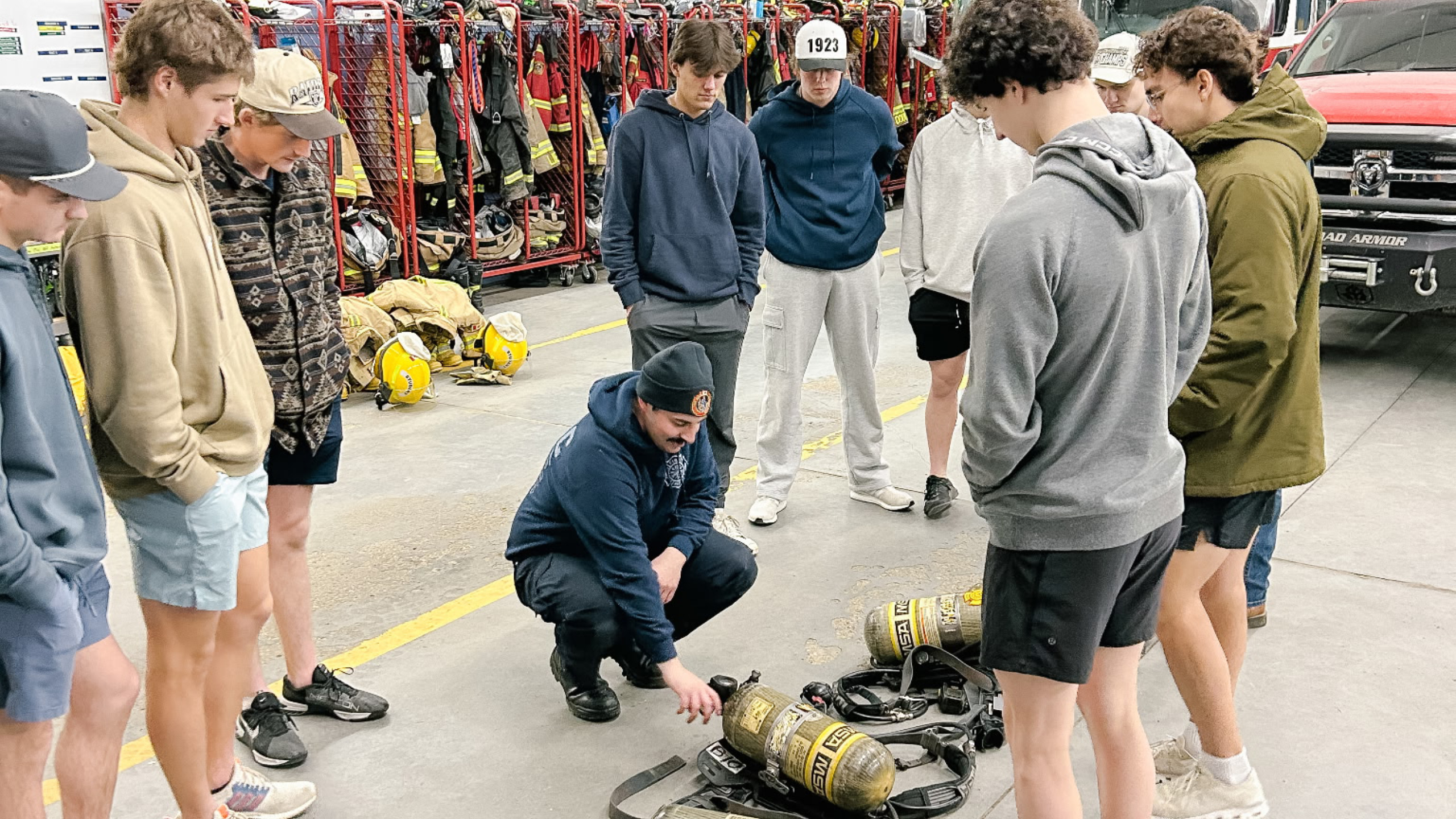
The Drayton Valley Thunder players recently had the chance to see if their team-building skills held up off the ice.
Drayton Valley/Brazeau County Fire Services Chief Tom Thomson says the team has been getting to meet and exercise with fire services members for some time.


Read More »