One area resident is looking to expand the term shop local to include forage local.
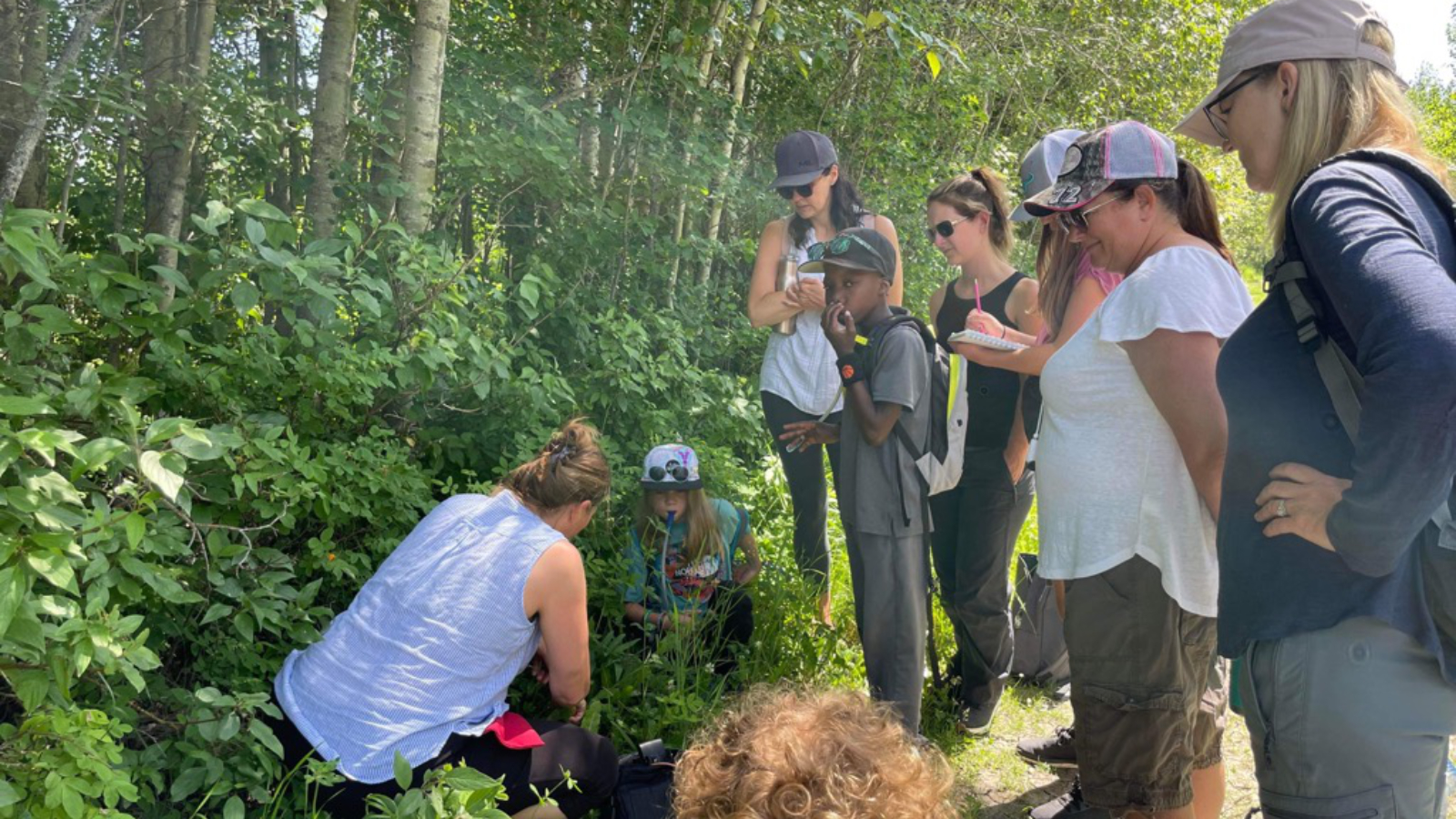
Anita Berger, who grew up in Tomahawk, is a bio-regional herbalist. Her passion for plants led her to take a course at the North Star College. She’s sharing that passion by hosting a series of educational walks this summer with the goal of teaching residents what plants are in their backyards.
She’s launched Walk, Talk, Discover and is planning to spend the summer working with anyone interested. Her latest walk, on July 15, boasted 10 people, which she says was just the right number.
Herbal remedies are closer than you think
Berger says her walks aren’t long or physically exerting.
“It’s not necessarily about going for a three kilometre hike. It’s about seeing what is on our trails,” she says. “We don’t have to go far to find everything we need.”
There are many plants in the area that are more than foliage, says Berger. For example, the plantain plant, not to be confused with the plantain fruits at the grocery store, are great for mosquito bites or a sting.
“When you get a sting, you can chew up plantain and put it on your bites,” says Berger. However, she says it also has strong nutritional benefits as well. “In fact, you can buy plantain juice in some stores.”
Boost your vitamins with wild plants
Another common plant is the wild rose bush. Berger says there are many uses for the petals and the rose hips, which can be dried and put in a tea.
“Rose hips actually have one of the highest vitamin c contents in our local plants,” she says.
However, Berger cautions people to be careful with plants if they don’t know them well. The rose hip has a seed with a hooked barb, so the bud has to be cut in half and the seed removed before drying for teas.
One of Berger’s favourite ways to use the plants is in teas. But she says not all plants maintain the same nutrients if they are dried and stored.
“Some plants, when you dry them, like the plantain, are almost useless. A lot of the qualities that we want are not there anymore if we dry them,” she says.
One of the main precepts that Berger teaches is ethical harvesting. For example, she explains that when taking petals from a wild rose flower, there should be at least two left on the plant. “If you take all of the petals off, you can hamper its ability to produce the rose hips, which is its reseeding.”
When harvesting, Berger says she tries to follow a one to three ratio. She will harvest from one plant in four and leave three of the plants alone.
While Berger encourages people to explore and discover plants, she cautions that apps for plants may not always be accurate. To be certain, she recommends Medicinal Plants of Edmonton’s River Valley by Robert Rogers, a member of the American Herbalist Guild, and co-founder of the North Star College in Edmonton.
Even then, she says it’s best to walk with someone experienced and learn from them. With two years of education under her belt, Berger says she still goes for walks run by others. With hundreds of plants in the area, she says people can always be learning.
She says people should not be harvesting from plants unless they have trained under an expert. To get the best harvest from a plant, there are many things to consider, says Berger. Timing can play a role, as can the part of the plant being harvested, and the way it needs to be harvested.