The Roots of Resilience Charter School has been receiving attention from education and indigenous authorities, as educators hope to learn from their model.
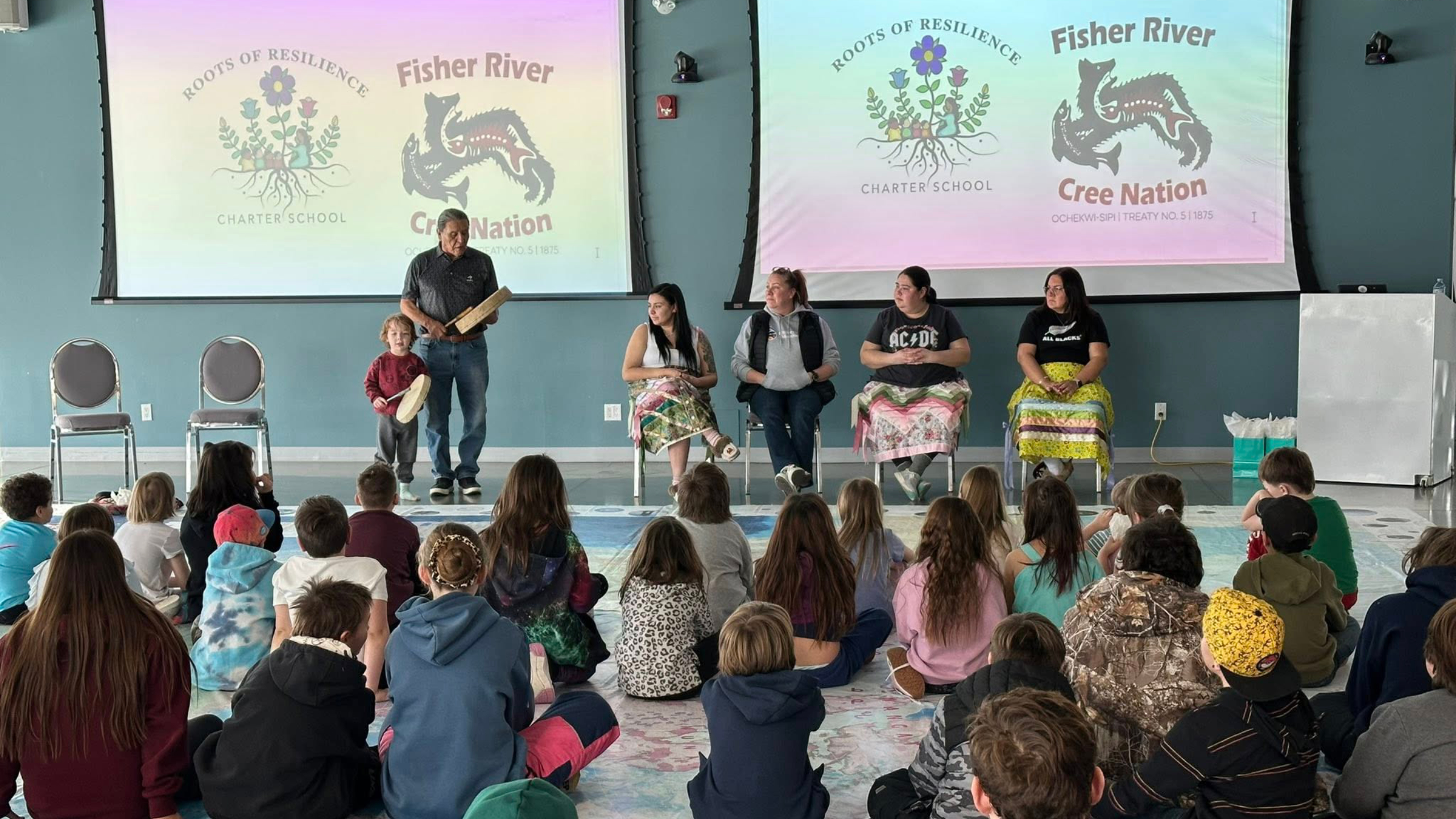
Charlene Bearhead, the principal of the school, says she has been receiving phone calls from indigenous groups and school divisions that wish to visit the school. Most recently, four educators travelled from the Fisher River Cree Nation in Manitoba for a practicum at the school.
Bearhead says many of these groups heard about RRCS at the National Indigenous Education and Reconciliation Network Gathering last May, before the school was officially approved. Bearhead and Dr. Jennifer Tupper, the dean of education at the University of Alberta, gave a presentation about the school at that time. Once it was announced that the school was approved, inquiries began to come in from many indigenous groups, educators, and other organizations.
“I got an email from a young woman that is a teacher at Fisher River Cree Nation in Manitoba, and she is part of a cohort of 40 indigenous educators that are working on the Education Leadership certificate,” says Bearhead.
Bearhead says there was a component in their practicum that they needed, which was a placement in a school outside of their jurisdiction or in some place that is showing leadership and innovation in education.
“She found us online and reached out to us to see if she could do her three-day placement in our school,” says Bearhead.


In total, four educators came to RRCS from the Fisher River Cree Nation. Three were teachers and one was the cultural coordinator.
Bearhead says she was a little bit nervous at first, but everything worked out really well. When they first arrived, they were given a history of the school, information about how they teach the students and what’s all involved with their education, and a tour of the school.
“It was so interesting. They said, ‘Can we just sit here for a minute and take this all in?’ This is blowing our minds. This is amazing,’” says Bearhead.
Kea York, the cultural coordinator for the Fisher River Board of Education, says that while RRCS wasn’t on her radar at the time, when she looked into the school after one of her classmates mentioned it, she was excited.
“Their missions and goals were right in line with how I viewed education,” says York in an email interview.
She says she loved the passion that the students and staff had for the way of knowing, being, and doing.
“RRCS was right in line with what we are doing in our community of Ochékwi Sípí with our recently implemented Band Council Resolution to put land, language, and culture first in all subject areas of learning for our students. Seeing this happen in a town was great. As people living on this land, we all need to learn Indigenous education and the reciprocity that goes along with it; the children are learning just that,” says York.
Kaitlyn Bear, an educator who has been with the Fisher River Cree Nation for 10 years, says she was impressed by the way language and culture were being incorporated in the school.
“Not many schools allow that, so it was so amazing to see,” says Bear in an email interview.
She says the energy of the staff and students was different from what she’s experienced in the past and the school felt very welcoming.

“I will definitely be keeping in touch with the staff at RRCS,” says Bear. “Over the three days we made so many wonderful connections and relationships that l will hold closely to my heart.”
Stephanie Cochrane, another teacher at Fisher River Cree, says she hadn’t realized she could pick a placement outside of Manitoba, so she didn’t do much research on RRCS before they came out.
“I did not know what RRCS was all about, except that it was a charter school. I did not have many expectations,” says Cochrane in an email interview. “What I found was an amazing, close-knit professional family that consists of super passionate teaching staff and students who have found an academic foundation that nourishes their curiosity as they learn using a First Nation pedagogy.”
Cochrane says the in-house elder at RRCS is a benefit to the students in that he can offer teachings, oral stories, songs, and values that are embedded in the indigenous culture.
“It was so beautiful to witness and be a part of sharing circles that happened right in the
classrooms of RRCS,” she says.
Bearhead says she is happy to have people come visit the school and see how they are doing things.
“Public charter schools are intended to be model schools to show how education might work, or what it could look like,” says Bearhead.
She says it was interesting to hear from these visitors that they have access to knowledge holders and they aren’t yet at the point that RRCS is already at.
“It’s interesting to us because we know we’re not even close to where we want to be yet, but we know we have a really good start,” she says.
During their time at the school, the teachers spent time teaching cooking classes, helping with hot lunch, teaching other classes, scraping a buffalo hide, and reading stories.
“They were just all in with every aspect of the school,” says Bearhead.
Though their time at RRCS is done, each of the educators interviewed said they would highly recommend other school divisions and indigenous groups visit the school and see what they’ve accomplished thus far.